

As someone who is of Yoruba heritage, I am very interested in how pre-colonial elements of Yoruba culture and spiritual practice show up and manifest amongst descendants around the world.
– Abiola Onabulé
With a Master of Arts degree from Central Saint Martins and 2020/2021 designer of the Design Museum Residency program, London-based Abiola Onabulé creates clothing influenced by her Yoruba Nigerian heritage, a region of south-western Nigeria, West Africa.
Onabulé describes the role of ‘cloth’ as having its own distinct storytelling, identity, and importance in a person’s life. It has power and infinite value. Cloth created for special occasions is stored and cared for to be brought out and talked about, ‘conjuring up memories of the cloth’s original outing’. She says, “it’s this link between cloth and memory, cloth and sentiment, cloth as a link back to a time in someone’s life, that really inspires me, and encourages me. I think it’s so important to not forget the importance of a material, in a person’s life.”
Inspired by her Nigerian matrilineal roots, Onabulé uses cloth to cast light upon the value and contribution of women of the African diaspora who have contributed to world histories and culture, particularly those who were considered an outcast because of the path they chose: “I am particularly interested in looking at this through the female lens, trying to understand the histories of the women who came before me, who were able to lay out the path that I am then able to continue following, particularly because those women’s narratives are often eclipsed by the paternal narratives within a family tree.”
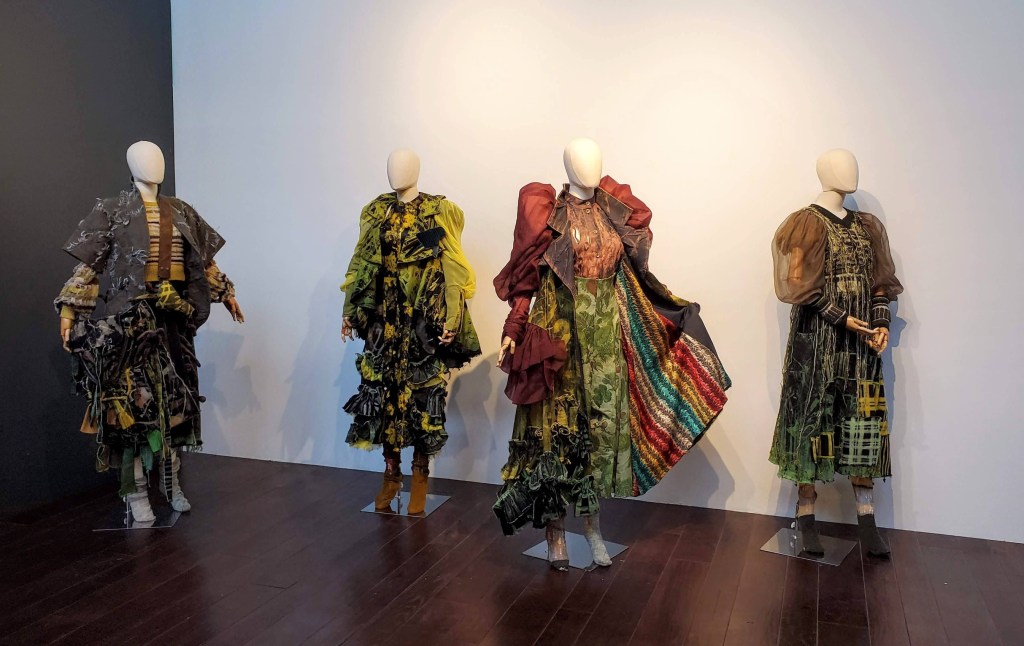
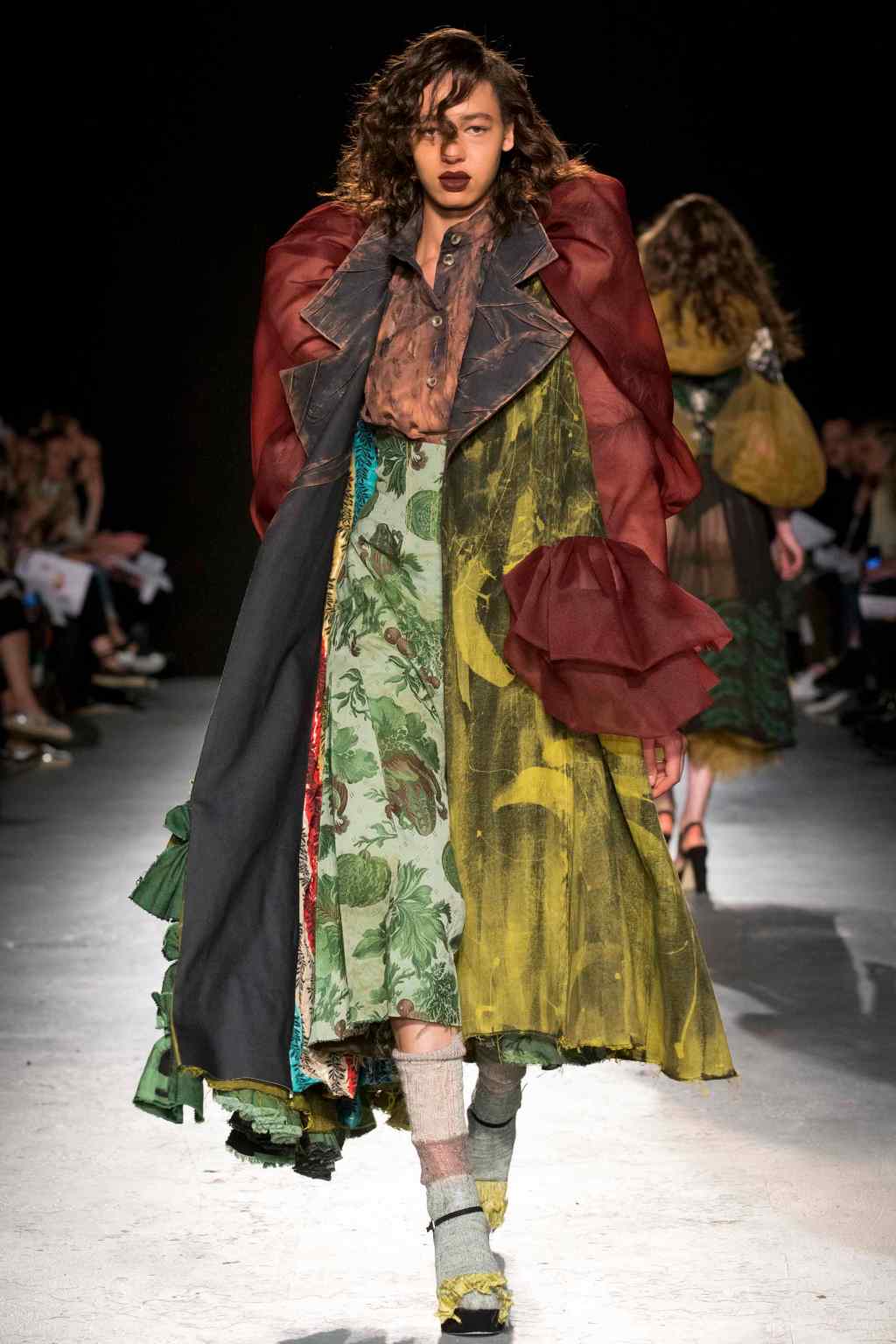
Heirloom, created in 2017, and was featured in Vogue Italia May 2021, is a body of work that taps into an historical account of women who act as witches, healers, witch doctors, and priestesses. Cast aside, they found ways to overcome and survive through strength, creativity, and resilience.
Outlining the inspiration, research and execution of this work, she says, “Heirloom takes inspiration from a multi-generational family of women, who, through wit and strategy, triumph over odds, treated as outsiders in their community, regarded with suspicion and therefore, forced to turn to creativity, thriftiness and innovation to survive. I took an interest in research ranging from stories about witches of Salem, high priestesses of New Orleans, and witch doctors and healers of West Africa. The use of ‘magic’ or ‘alchemy’ is heavily reflected throughout the collection. Trinkets, heirlooms, and items of symbolic value are representative of the pieces of history one carries through life; upcycled sturdy materials convey innate practicality, and thriftiness but are offset with aged opulent velvets and chiffon.”
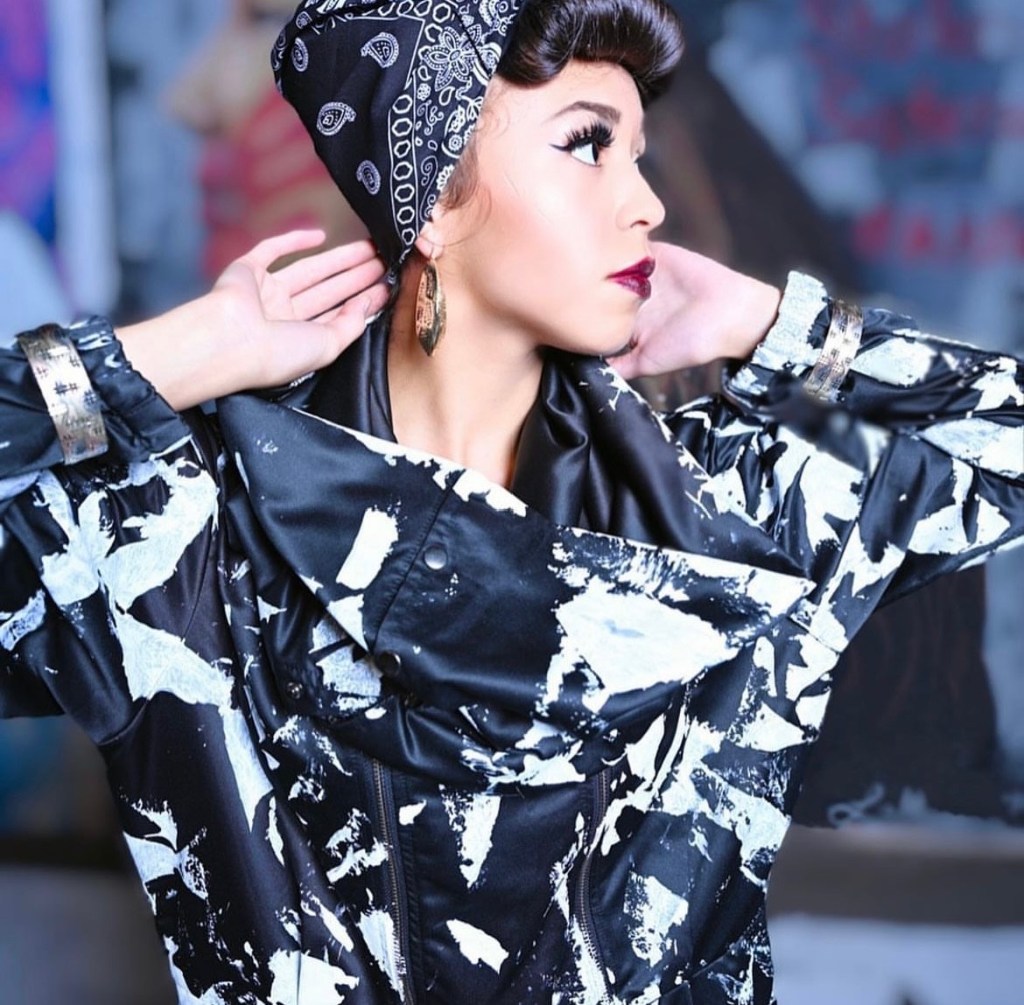
Color, pattern, and texture have its own dimension of character in this body of work echoing traditional Nigerian cloth and àdìrẹ. Earthy, natural greens are shot through with a vibrant, sulphureous yellow. Hand dyeing, hand painting and bleaching have all been used to create water-like textures on denim, with striped, splattered fabrics used for jackets and trousers. Hand knitted ‘threadbare’ pieces echo the toughness of the women’s lives and encrusted, beaded, frayed hems look to highlight and celebrate the beauty of a well-worn material.


@abiolaonabulé
Featured in Vogue Italia
Abiola Onabulé website
Photo credit: Simon Armstrong for the University of Westminster, 2017
 E D G E