

It’s gratifying to create something that people want to own and to wear, but most importantly to appreciate. My hope is to create pieces that are unique now but will still have relevance in twenty years and beyond.
– Alena Kalana

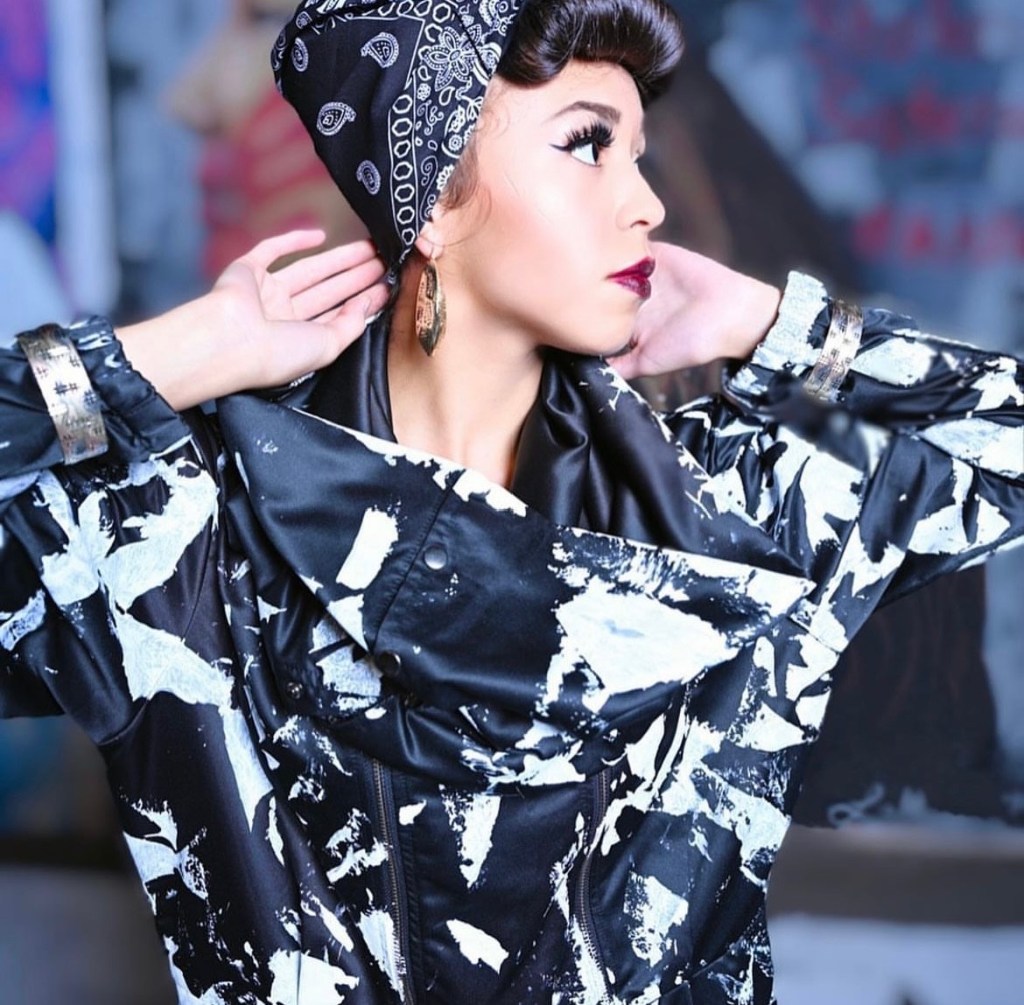
Originally hailing from Guam, greater Los Angeles-based artist and designer Alena Kalana created Tibetan Transplant. A 45-slide presentation of striking images from a costume history study on Tibetan culture fueled this progressive project. Inspired by Tibetan’s use of color, texture, pattern, and conservation of the land, Kalana’s work demonstrates her unique skill in draping, shaping, and layering, creating multi-dimensional ensembles. “There were so many crazy colors,” she said. “I liked the idea of mixing patterns, fabrics, and layering …” Tibetan Transplant acknowledges the culture and dress of Tibetan nomads, a nod to tribal nomadic existence of ecologically minded migration, working in harmony with nature.
Today’s societal norms are a distinct contrast to a nomadic way of life, which is inherently sustainable, protecting the natural environment. Protecting the environment means a continual use of its resources, as Kalana’s body of work proves. She breathed a new life to deadstock materials, some typically used in home interiors, such as carpet grippers, shower curtains, richly textured upholstery, and curtain tie-back tassels, sparking a conversation of how society can better value earth’s resources.
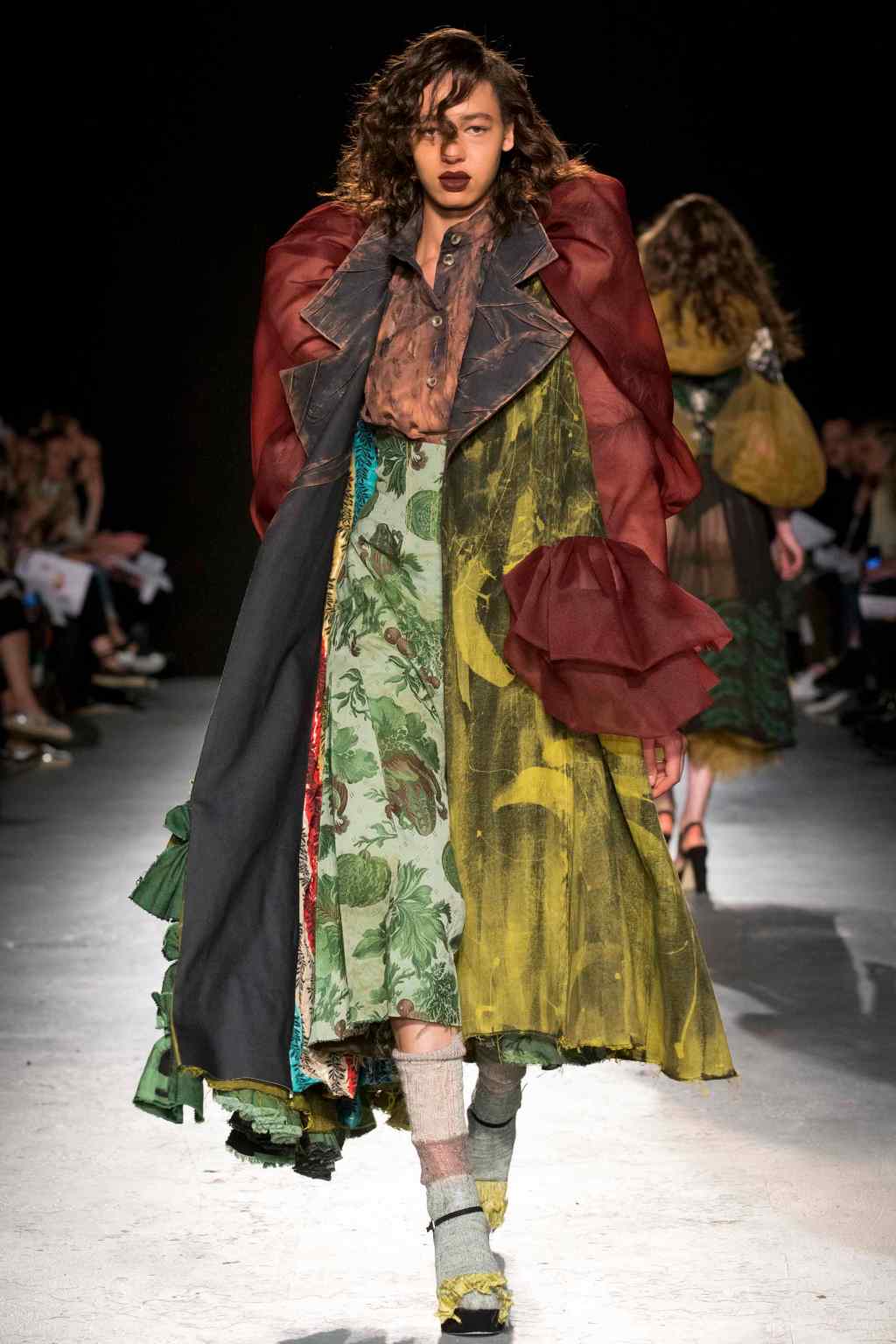
Kalana’s construction technique goes beyond the typical ‘safe’ design practices – the status quo of cutting and sewing the seams of a single material. Instead, her appreciation and study of Tibetan’s dress led her to a fearless multi-dimensional approach, transforming numerous materials not used in fashion by mixing unexpected silhouettes, textures, patterns, trims, and weights of fabric to achieve a harmonious blend.

For example, Look #4, the blouson-tiered top, is constructed using six types of fabric, with 96 pattern pieces sewn together: “What inspired me about their dress was the bundle of different types of material worn, all bunched together, and the layering of different textures.”
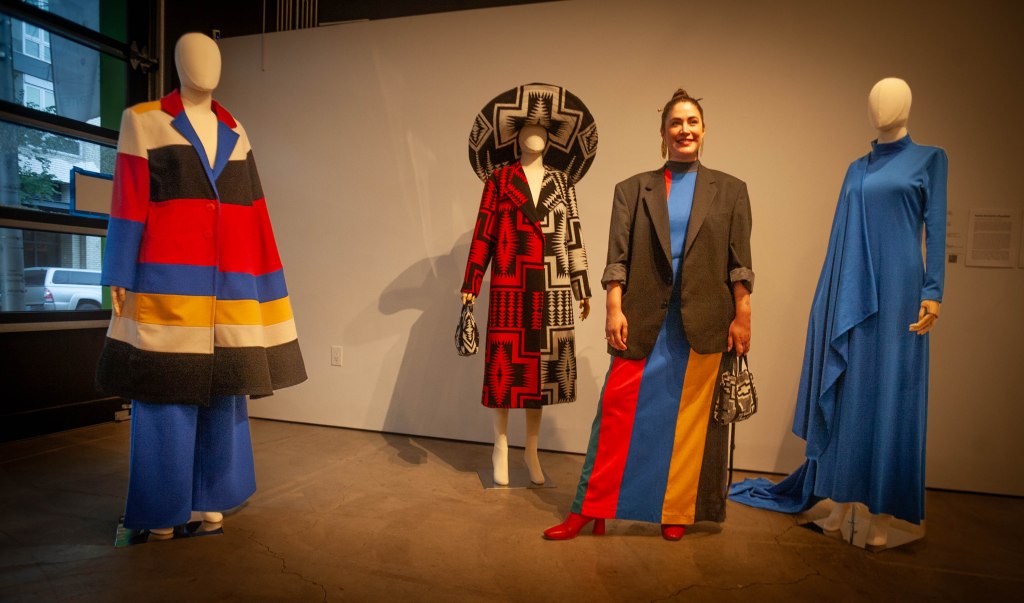
Alena Kalana, [front] Look #4 Blouson Tiered Top with Fringe, Wide Leg Pant, Headdresses designed for “CLOTH Construct, CULTURE: fashion builds a story”, Parallax Art Center, Portland, Oregon, October 2023 | Photo by Rhonda P. Hill
Curating the body, creating around bodies, is not a typical conversation in fashion. Tibetan Transplant can be characterized as a sculptural curation of the body. Using fabric as her guide, one example of this is Kalana’s skill in draping and layering which enabled her to convey movement in this work. Movement as embedded in the nomadic existence.
She is known to sketch after the garment cut-and-sew process, which is not typical of most designers: “I don’t start with sketches. I find the fabric first. It’s the fabric that is going to dictate how it falls and moves.”
A true engineer of fashion, Kalana has repurposed existing materials, building a look that appeals to both function and aesthetic.
Seen on the runway at LA Fashion Week, in a featured article and on the cover of Fine magazine, and exhibited in Santa Barbara, California at the Blurred Boundaries: Fashion as an Art exhibition, Tibetan Transplant defines innovation and beauty in a context of ecological sensitivity. As an advocate for environmental protection, who aligns her design practice with the principles of a circular economy, Kalana’s breadth of work expands beyond women’s fashion.
She launched a children’s line, Luh♥︎duckie, featuring reimagined, repurposed, and upcycled limited-edition pieces, in alignment with her commitment to environmental preservation.
One thing I want to do is figure out a better way to leave less of a footprint. I am not at all interested in mass production. What I create is art. – Alena Kalana

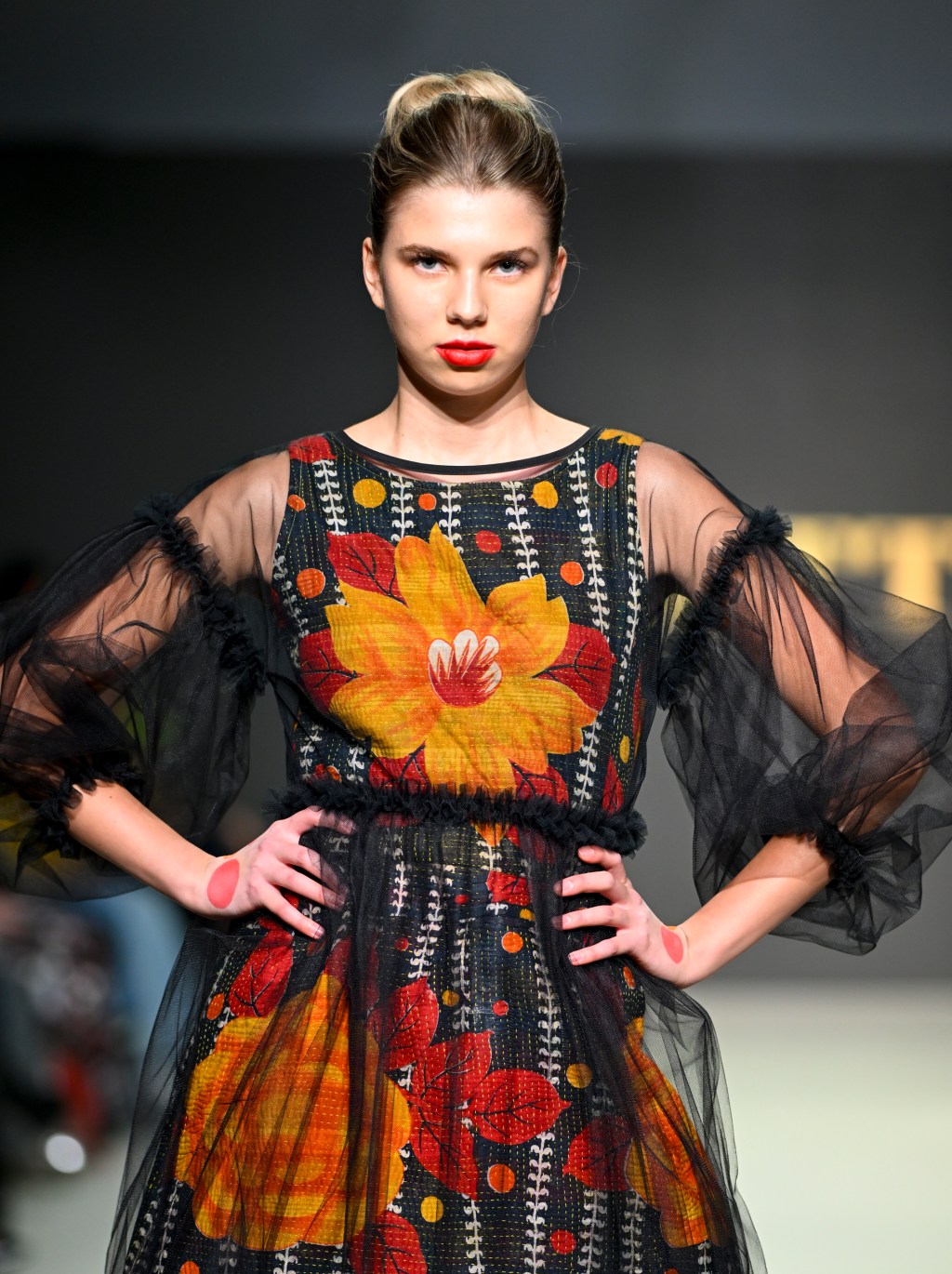
Feature image: Alena Kalana, “Tibetan Transplant”, 2016 | photographer: James Gagos
 E D G E