
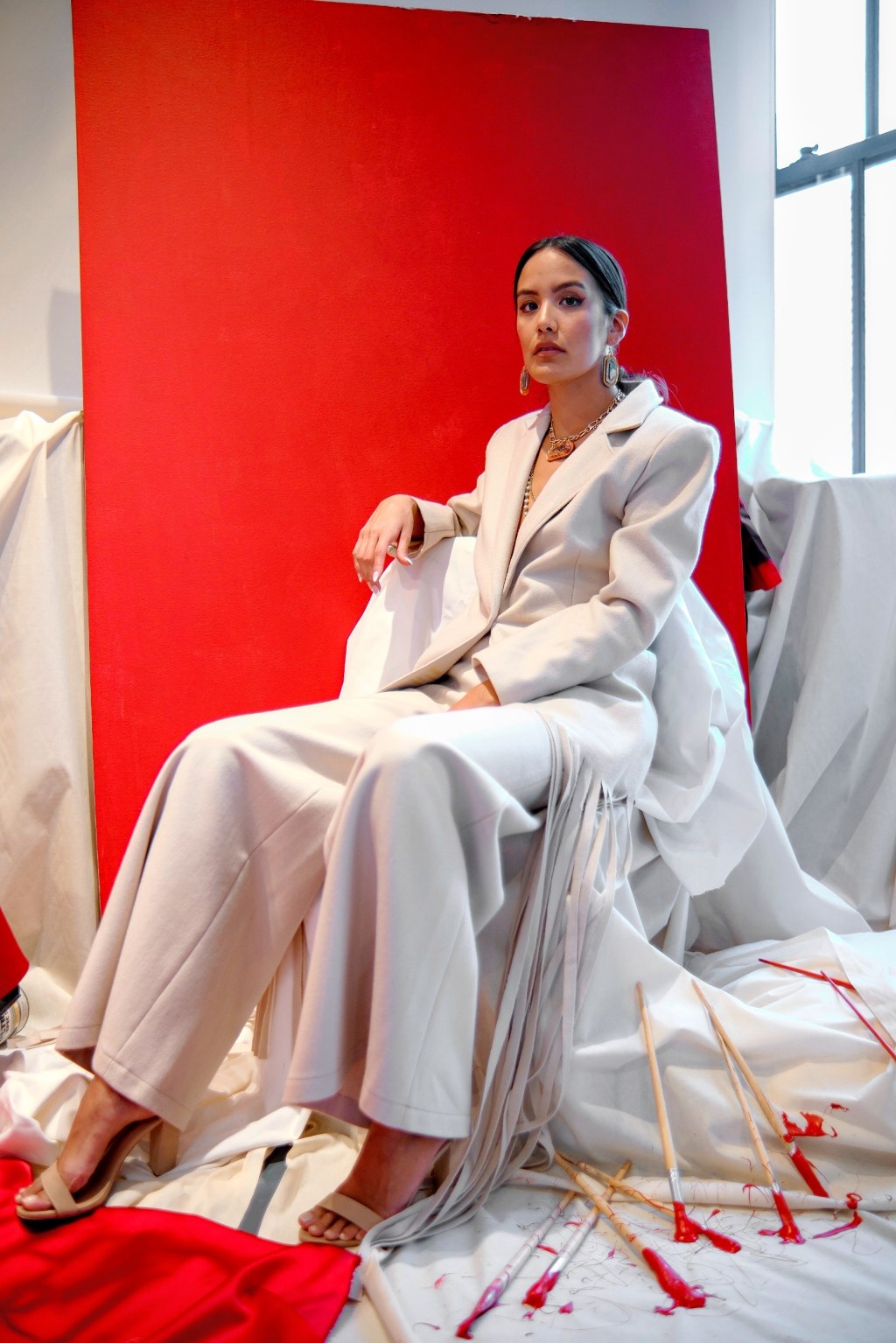
Diane von Furstenberg, former chairman of CFDA, told WWD magazine, “Fashion is by definition a reflection of what is going on in the world. We live in a moment of total disruption as our tools change and the speed increases. Everyone is surfing a tsunami, trying to understand how to deal with waves of so much information, so many images. As always when in periods of change, clarity and quality become imperative.” Von Furstenberg’s comment was in 2015. Sound familiar in 2023? I would also add, accountability, responsibility, and respect become imperative.
Slow Fashion maven and founder of EMME Studio, Brooklyn, New York-based Korina Emmerich (Puyallup), builds her body of work reflecting on social and climate related issues, shaping how we see culture through fashion and using it as a catalyst for the conversations we need to have around change.

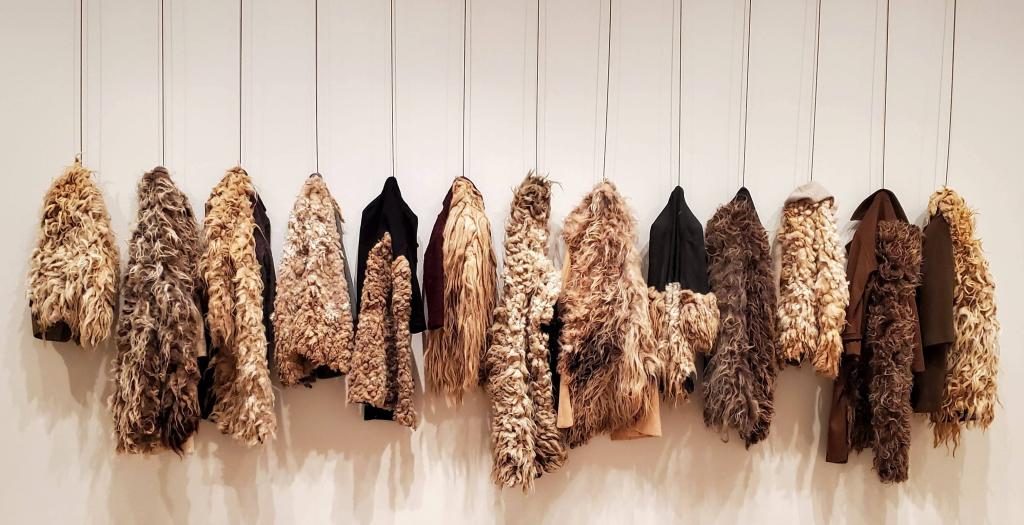
Responding to the ever-changing, so-much-in your-face information cycle of current events, Emmerich’s recent work, Misshapen Chaos of Well Seeming Forms, which debuted at NYFW, is an example of how media has impacted cultural shifts in our society. “Misshapen” captures the zeitgeist in today’s media consumption, misinformation, and pure chaos of engagement, arguably a tsunami of information. On her Instagram post, Emmerich describes “Misshappen” as an overwhelming 24-hour news cycle of anxiety inducing chaos, “A profit driven industry led by corporate ownership, creating a decline in journalistic standards and click bait with misinformation spreading like wildfire.”
When fashion has a story to tell it allows us to examine our culture; the good, the bad, and the ugly. That’s where conversations are born. Emmerich, who is originally from the Pacific Northwest, with patrilineal Indigenous heritage stemming from the Coast Salish Territory, Puyallup tribe, strikes the right balance and ingredients for a design practice that champions social and environmental justice – a timely and relevant brand position. Why not? Social and environmental justice ignite conversation, they are the hot topics du jour, with fashion taking on a transformative role.
Selected work by Korina Emmerich will be exhibited, among the works of contemporary international designers, in “CLOTH, Construct, CULTURE: fashion builds a story” … Here is a peek of what’s on view:
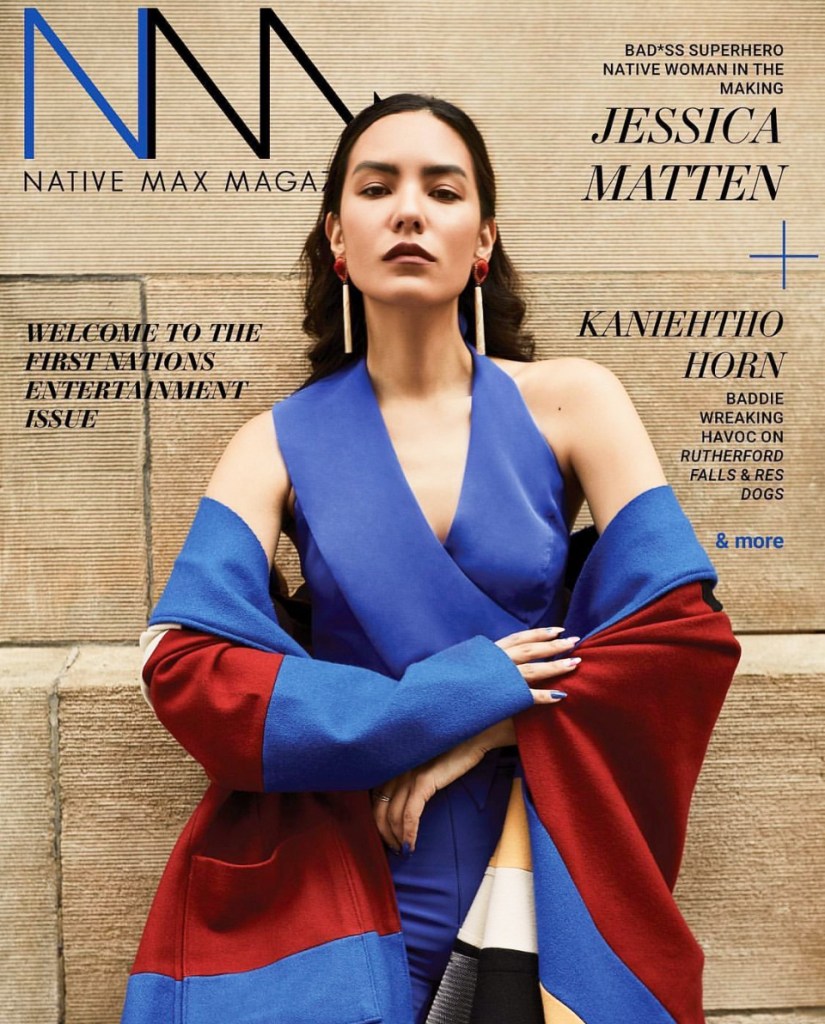
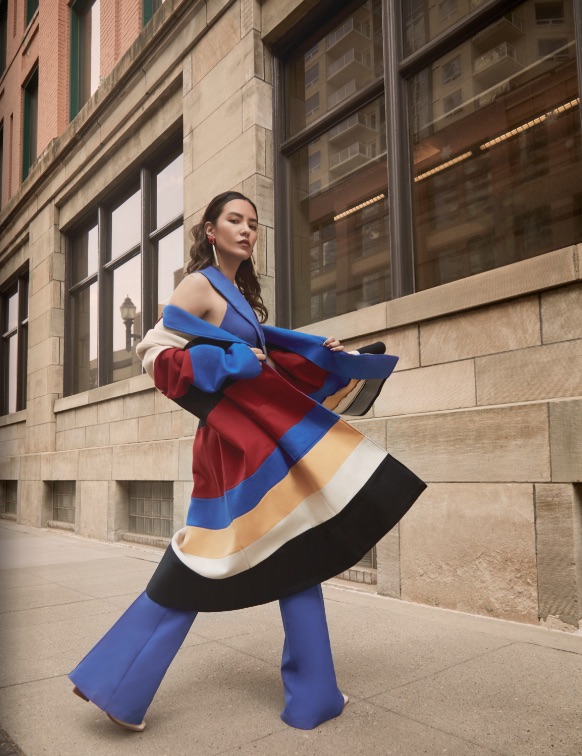
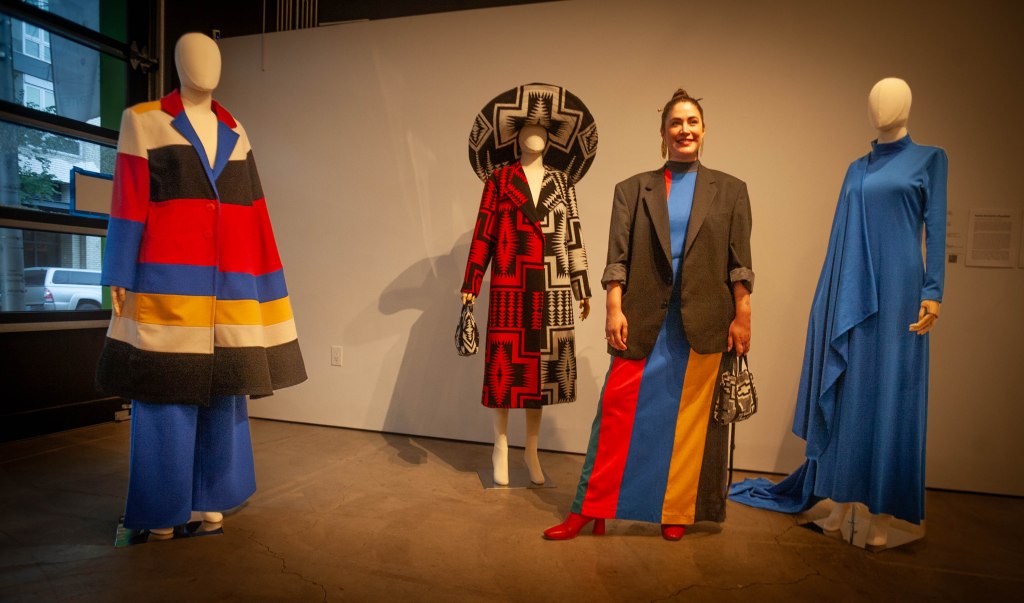
The Cape Coat ensemble, which was featured on the cover of Native Max Magazine’s July/August 2022 issue, worn by Indigenous Canadian Film, TV actress Jessica Matten, is part of the Misshapen Chaos of Well Seeming Forms collection. Knowing the meaning and story behind this look channels an appreciation and value that is mostly missed at point of purchase. Wanting to reinstate value in clothing, Emmerich operates solely within a circular fashion system and uses wool as a staple cloth throughout her brand. The ensemble is made from Pendleton® wool, offering renewable value. The look, inspired by the utility of Pendleton® blankets, preserves Emmerich’s heritage, while adopting a modern aesthetic, as she details, “The Cape Coat is inspired by blanket coats and traditional wool capes, bringing a contemporary twist to a traditional classic.”
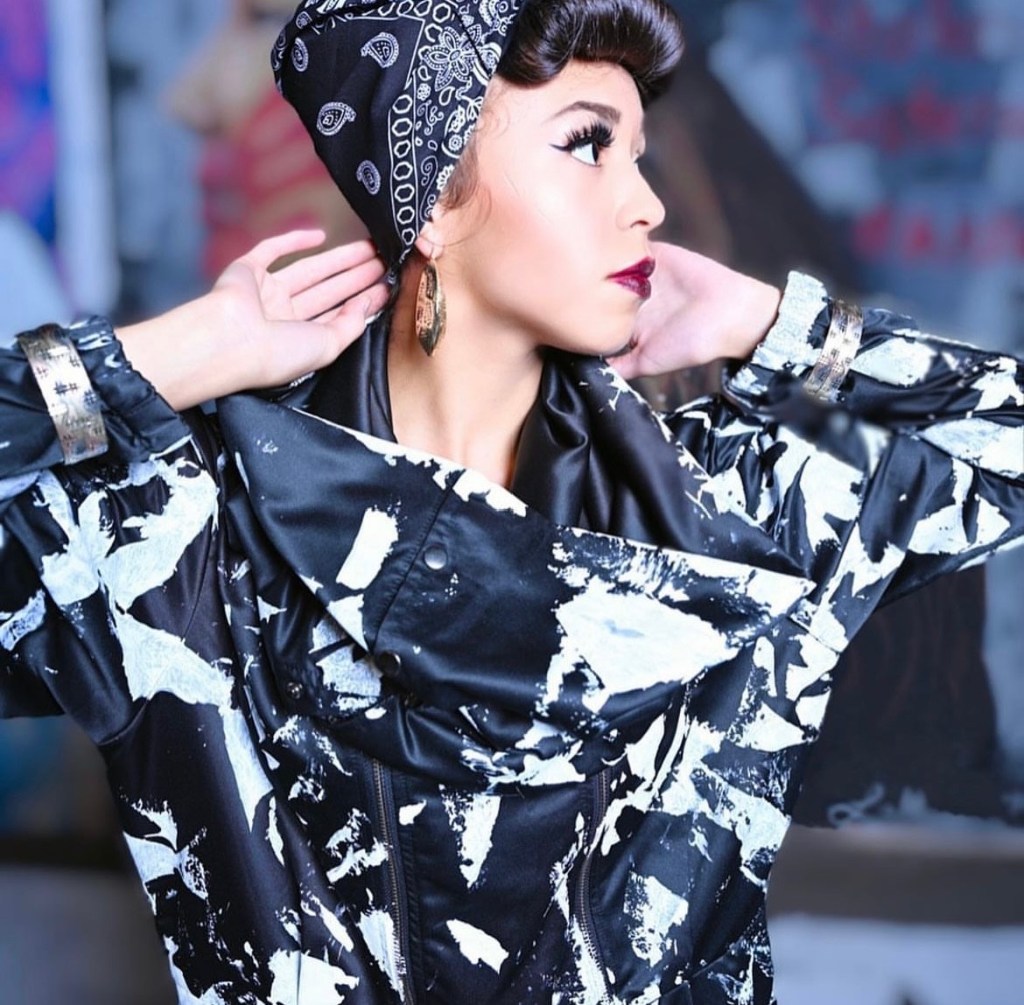
The Yakima Coat, from the Mother of Waters collection, is made of 82% wool 18% cotton Pendleton® fabric. Pendleton Woolen Mills, in particular the blankets, has a deep connection with the Native American community, for purposes of trading, ceremonial use, and gifting. The Yakima Coat is named for the Yakima River. The Mother of Waters is inspired by the bodies of water in Washington state, giving respect to the nations who steward the rivers.


“Cascade” jacket and skirt ensemble was exhibited in In America: A Lexicon of Fashion, The Metropolitan Museum of Art, September 2021 – September 2022. This was a first for the Met in recognizing American contemporary fashion, inclusive of people-of-color designers. The ensemble, made from Pendleton’s recreation of Hudson’s Bay Company’s Point Blanket, references the iconic Blanket, pointing out HBC’s brutal colonial history with Emmerich’s ancestors, amplifying its significance in North American history, a history that HBC is reckoning with today.
Emmerich’s family worked for HBC in the early nineteenth century. With a colonial history that dates back more than 350 years, HBC Point Blanket has been called a Canadian icon, a carrier of disease, a symbol of colonialism, and an essential trade item. “The Cascade look brings attention to the colonial violence perpetrated by the Hudson’s Bay Company,” Emmerich declares. “The red button symbolizes that violence. 4th x great grandfather Anawiscum (Annawiskum) McDonald worked for the HBC stationed at Fort Langley, he was York Factory first nations (Swampy Cree) from Manitoba. He went from a canoe middleman from 1826-1840 and moved up to be a cooper until his retirement in 1842, in Cowlitz, an area my family still resides in today.”

Emmerich expressed a heartfelt appreciation about the exhibition of her work, and acknowledgement of how the work of living designers (and artists), in particular, the work from the Indigenous community, should be recognized and included in the cultural narrative at the Met: “I am honored for the representation given to me and my family’s stories. I am hopeful that the push to induce a greater representation of contemporary Indigenous artists and designers are respected and prioritized when discussing “American” history.”
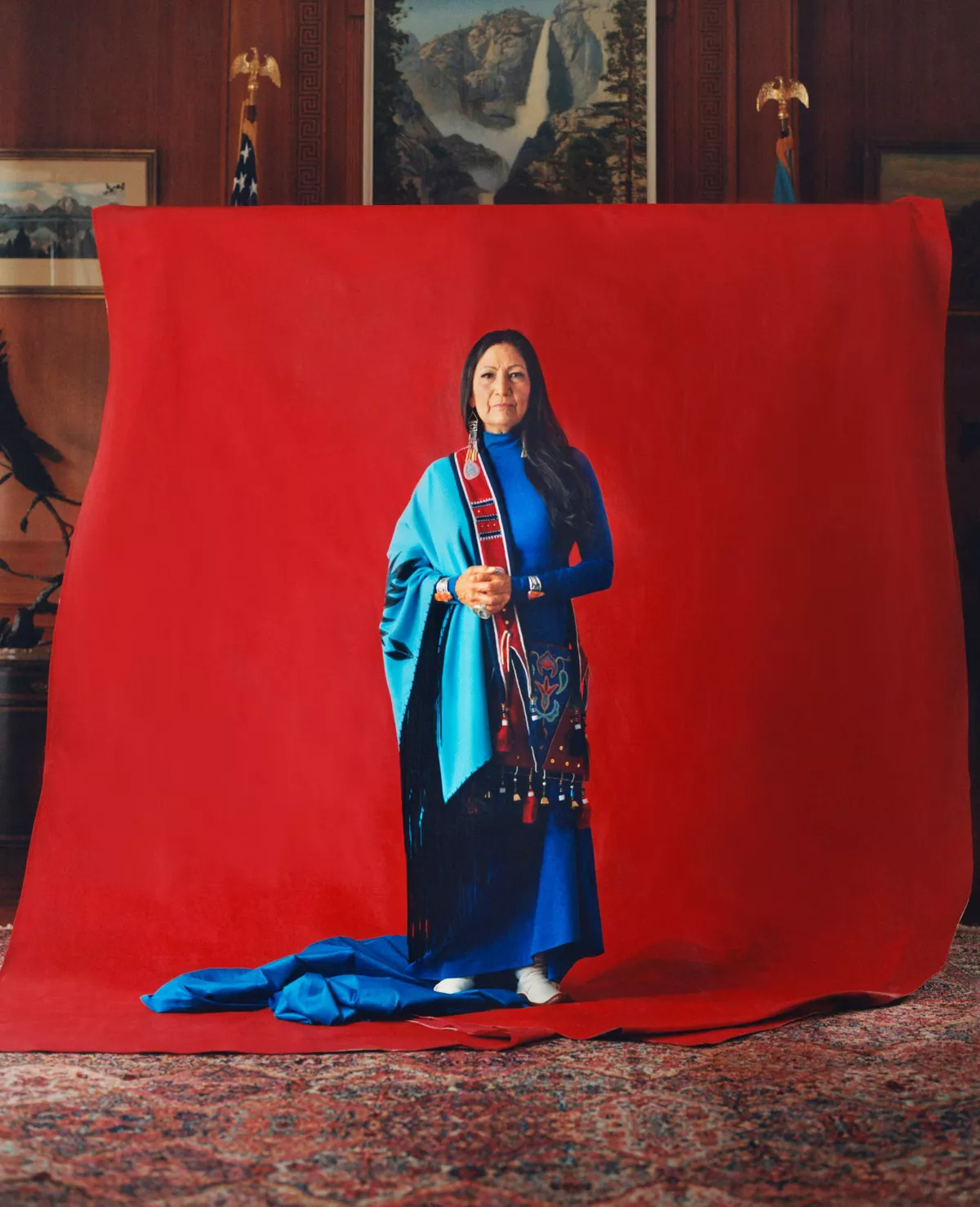
America is known for its ‘firsts’. We started with von Furstenberg’s ‘fashion is by definition a reflection of what is going on in the world’. What we know is that change is a constant and with change comes ‘firsts’. “It’s important for my work to affect change,” Emmerich told moderator Regan de Loggans, (Mississippi Choctaw), curator, The Museum at FIT, in conversation with Jeffrey Gibson (Choctaw Cherokee). America celebrated a long overdue socio-political change, a ‘first’, when Deb Haaland became the first Indigenous United States cabinet member (2021), Secretary of the Interior. Fashion has the power to transform culture and we bear witness to its contribution to culture. Secretary of the Interior, Deb Haaland wore Emmerich’s Snoqualmie dress, on view in ‘CLOTH’, and was featured on the cover of InStyle magazine’s August 2021 issue, giving InStyle the 2021 Adweek’s Magazine Cover of the Year.
More About Korina Emmerich
EMME Studio is located in Brooklyn, New York on occupied Canarsie territories, in greater Lenapehoking.
Exhibition Details
CLOTH, Construct, CULTURE: fashion builds a story, curated by Rhonda P. Hill, 24 October 2023–24 January 2024, Parallax Art Center, Portland, Oregon, USA
Feature image: Korina Emmerich, “Misshapen Chaos of Well Seeming Forms” NYFW installation, 2022 | Photography: Patrick Shannon @heypatrickshannon
 E D G E