

Throughout my journey I have met/spoken to a variety of people from different countries, cultures, races. With this I have realized that you don’t have to be Black to be Afropolitan. You simply have to have an affinity for Afro culture.
– Maryanne E. Mokoko
Many would say Africa fashion is part of popular culture. Well, it could also be said that it has been part of the global culture for centuries, pre and post-colonial times, with worldwide socio-economic and cultural impact. Historically dismissed as a key sector in the industry, African fashion historical and contemporary context are now in play, as the industry grapples with and attempts to disentangle the impact of colonialism, segregation, and misappropriation.
Today’s narrative, in part, is sparked by Victoria & Albert Museum’s Africa Fashion, curated by Dr. Christine Checinska, which presents a landmark traveling exhibition celebrating the creativity, ingenuity, and global impact of contemporary African fashion.
EDGE Out of Africa series, published June 2015, helped to redefine the perception of African fashion, as an emerging consumer market for fashion and source of global production throughout the continent. The series documented interviews from designers, Tobi Martins of Prima Rouge, Paola Masperi of Mayamiko, Fikirte Addis of Yefikir Design, Tina Lobondi, and Diarra Bousso of Diarrablu.
Mentioned in Gill Stark’s book, The Fashion Show: history, theory, and practice, “EDGE Out of Africa” showed how African-based designers and the global diaspora were preserving traditional methods, influencing government-led industry infrastructure, and empowering the workforce for economic and ecological advancement.
Multicultural and unbiased citizens of the world who are inspired and influenced by African culture embrace African fashion. This is not because it is fashion from Africa, but because it is part of the broader global fashion landscape, period! It is not in its own category, designated by a geographic area. It appeals to a cosmopolitan audience who is free from cultural, local, and national boundaries. Can we get beyond a mindset of segregating, typecasting and labeling non-white/European designers as such, like designers within the African diaspora?
London-based, Congolese born [DRC] Tina Lobondi, who has a clientele of women across the globe, sees her work cutting across regional and cultural boundaries: “I was brought up in Africa and Europe, so I guess this has a big impact on the influences in my work.”

Maryanne E. Mokoko, a naturalized American of Cameroon origin and Howard University alumna, explains that Africa fashion should not be compartmentalized and evaluated as its own category, ‘measured by unique standards’, instead should be viewed ‘according to merit/skill level on any creative platform’. “As a creative, I pride myself in creating unique designs. This is the way of a fashion influencer. I would like to think of my work as more than just a collection of exotic fabrics. If I am to position my brand, it will be as a clothing line which uses African print as the backdrop to her designs. This to me is not a special category that is measured by unique standards. It is a cloth type just like any other cloth is a cloth type used to make styles. Therefore, this wearable/fashion art should be eligible for showcase (according to merit/skill level) on any creative platform in the world. The industry has begun welcoming this notion and in due time the separation we see will be a non-issue.”

Due to the growth in consumer interest in recent decades, we have seen a convergence. African-based and diaspora designers incorporate western silhouettes with African textiles. Western designers offer looks influenced by African culture and textiles. Because we are naturally connected to our own roots, yet interconnected as a global society, it is quite understood that transcultural inspiration and cross-cultural exchange is reflected in fashion design, although cognizant, we are, that misappropriation is under constant scrutiny.
Chicago-born, San Francisco-based Herbert of Herbert Victoria describes this cross-cultural interconnectedness as a basis of differentiation in his work: “What sets my collection apart is how it personally connects to the world bit by bit. For example, my prior collection of African WEST was an influence of West African textile infused with western contemporary design. It wasn’t ‘African clothing’. It was me taking a tiny aspect of West African culture but making it modern to appeal to everyone.”
“As Africans, we accept different cultures … African fabric is made for everybody,” says Komi Jean Pierre Nugloze, owner of Portland, Oregon-based N’Kossi Boutique, who also takes a modern approach from his West African roots. Born in Lomé, Togo, he declares that you don’t need permission to wear African fabric, “I’m not going to wait for permission from someone to wear whatever I’m going to wear.” He says he may wear African fabric one day and wear a “regular” fabric another day, stressing that “we don’t need to focus on what Blacks can wear and what whites can wear. If it feels comfortable to wear, such as African print and you are white, then wear it!”


Blurring the lines, not separating cultural influences, presents an aesthetic that fundamentally defines fashion today.
Oluwatobi [Tobi] Abisola Martins, based in Lagos, Nigeria, has a love for fine art and poetry and is a speaker, writer, poet, and agriculturist. If you think that long-list of talent is enough for anyone to manage, she was also the Creative Director/Designer for Prima Rouge. Prima Rouge had an African contemporary aesthetic, even when she wanted to move away from that look, and in our 2015 EDGE out of Africa interview Martins said, “I still find myself designing and being inspired by fabric fusions between African and Western; pushing their interpretations.”
Fikirte Addis, Designer for Yefikir Design, embraced the global appetite for Ethiopian fashion, yet felt the importance to not lose connection to her culture, but to create fashion by “giving it a modern twist in bringing it to the international arena”. Experiencing a learning curve in balancing the multicultural aspect in her design practice, Addis said, “I learned different cultures, new ways of working both as a designer and as a businesswoman. But most of all, I got to see how art and fashion bring all the diversity of the world into one humbled and harmonized oneness enforcing a positive impact on the world.”
Breaking down the colonial-induced barriers is the desire of London-based designer of Yoruba Nigerian heritage, Abiola Onabulé: “I hope the system of fashion production will become a more caring one, a more creative one, that is less capitalistic, less colonial in its nature.” A mindset that many culturally astute designers actively pursue.
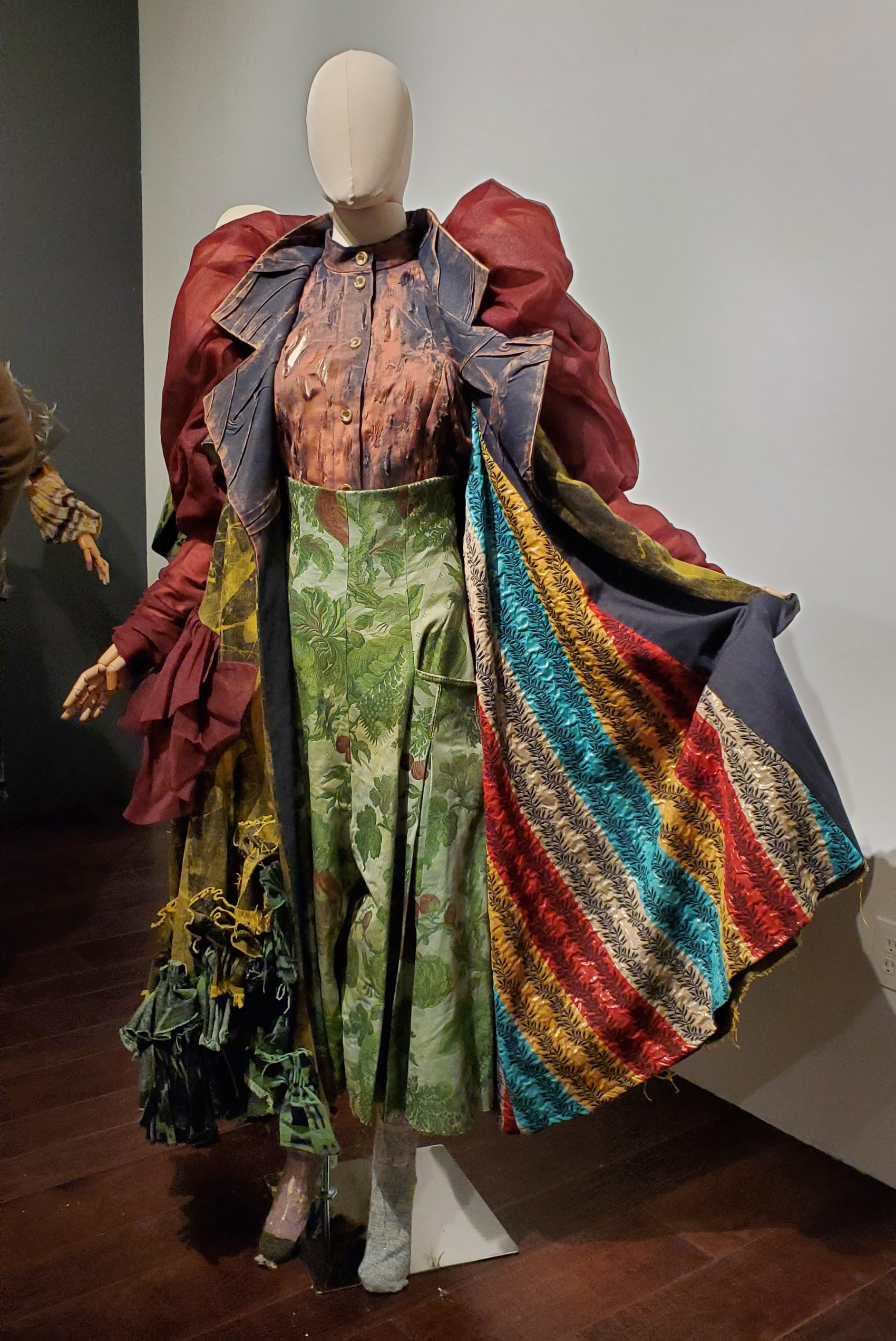
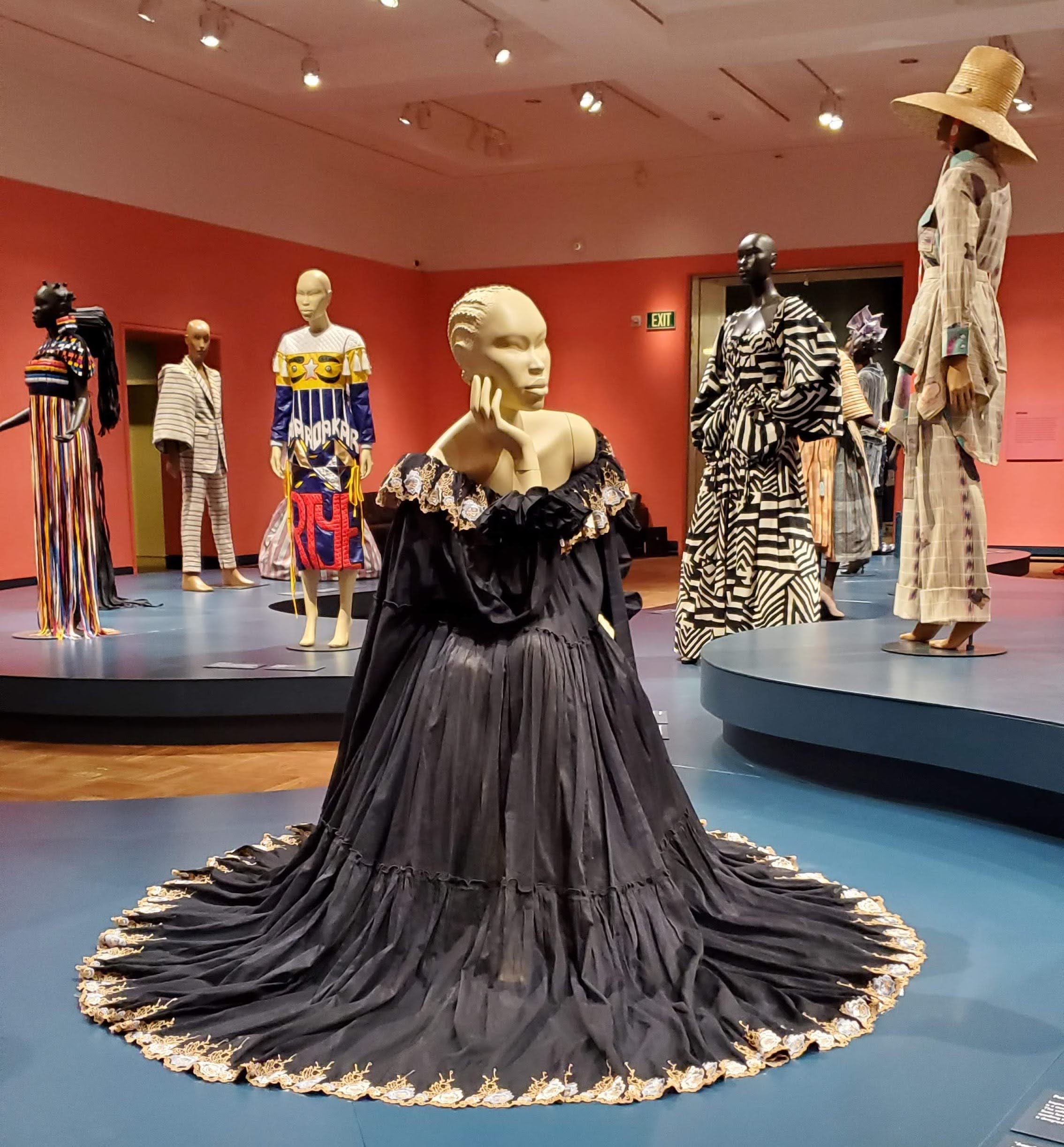
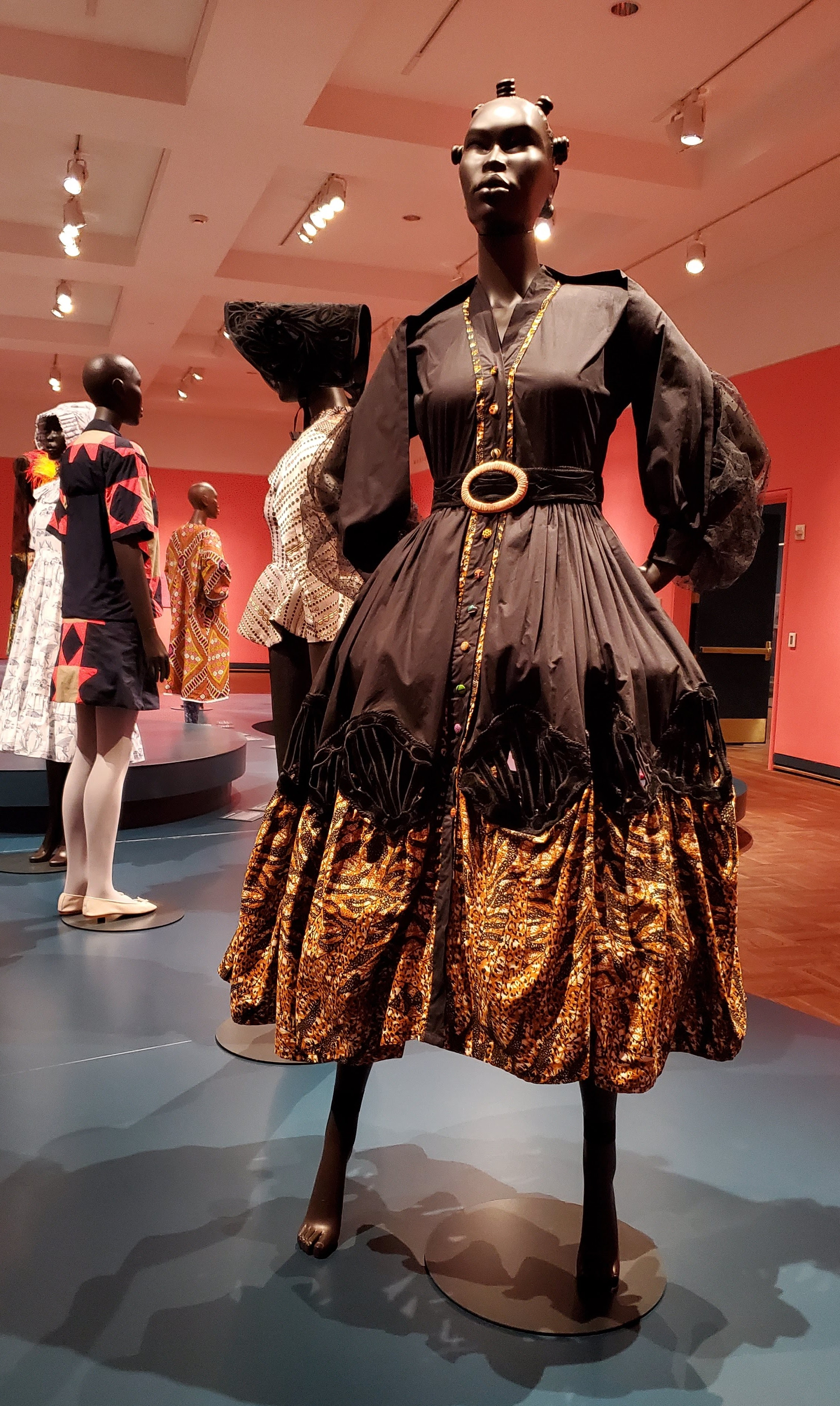
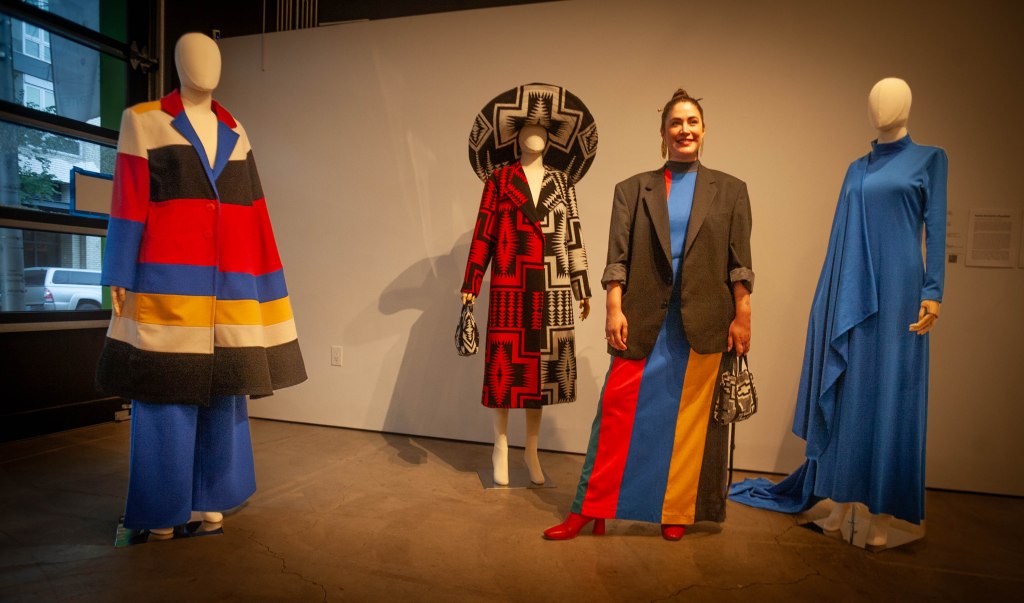
Feature image: Africa Fashion, Portland Art Museum, Portland, Oregon, 2023 | photo by Rhonda P. Hill
 E D G E