
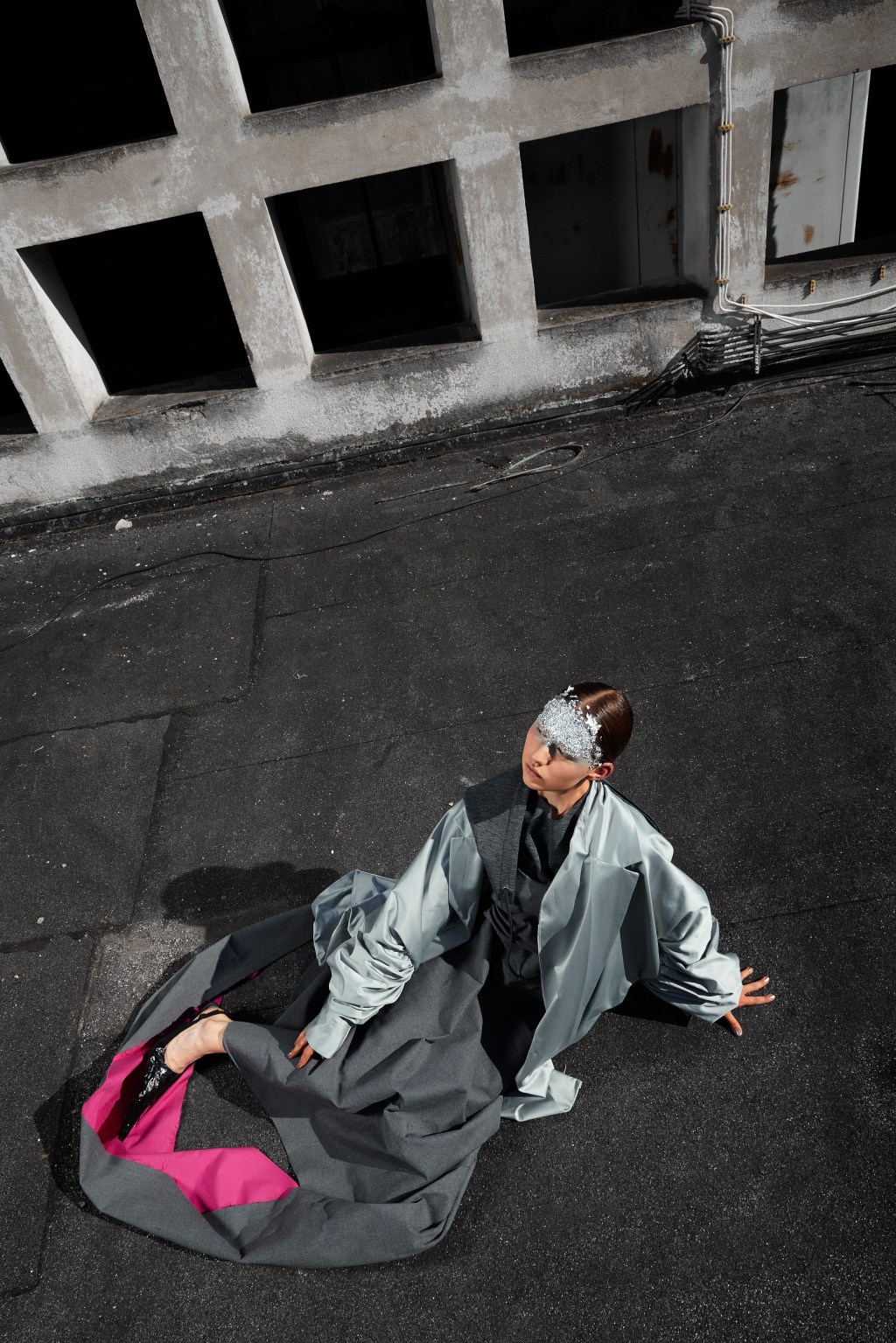
In opposition to the model of linearity, circular systems consider the before and after of what we normally look at when assessing a system. In a way, it is like the difference between the laboratory and the real world.
Question. What is circularity, a circular economy?
Answer. An economic system aimed at eliminating waste and promoting the continual use of resources, reusing what we already have in circulation, minimizing resource inputs and the creation of waste, pollution and carbon emissions.
Q. What is circular fashion?
A. A circular fashion system operates as if there are finite resources, aligning with the principles of a circular economy. Apparel, footwear, and accessories are developed within a closed-loop system, designed to re-enter after use, to be made again from recycled or renewable inputs, never ending up in the landfill.
Some brands offer sustainable fashion by using biodegradable or renewable materials, but their supply chain may produce excess materials or overruns, use toxic chemicals in dyeing, or waste valuable resources such as water, resulting in a negative impact. In a perfect loop no resources are wasted or polluted. The entire supply chain infrastructure, including the consumer, is committed to the system.
A. Examples of a circular, closed-loop fashion system:
- Design out the waste. Design products to be used more, made to be made again and made from safe and recycled or renewable inputs.
- Reducing the materials needed and waste created when making products.
- Recycling the materials used to produce new products.
- Recycling and upcycling by refurbishing deadstock and used products into new products — without re-processing the raw materials.
- Reselling second-hand or used products with no refurbishment such as online platforms like thredUp and The RealReal.
- Renting products through rental subscription services such as Rent the Runway.
- Repairing products, by professional or DIY means during the product’s use-phase — without changing ownership.
Q. What is deadstock?
A. Waste. Yarns, materials and garments that are overproduced, defective, rejected, or unsold at the manufacturing, pre-consumer stage of the supply chain, that are sold to a wholesaler/jobber, donated to educational or charitable projects, destroyed, or sent to the landfill. Luxury brands are well known for improperly disposing (slashing or burning) of deadstock to protect intellectual property.
Q. I understand that you can buy deadstock from a jobber. What is a jobber?
A. The middle person who buys deadstock in bulk from textile mills and designers to sell to fabric retailers and small fashion brands at a wholesale price.
The fashion industry contributes around 10% of global greenhouse gas emissions due to its long supply chains and energy intensive production; more than all international flights and maritime shipping combined.
Q. What is carbon neutrality?
A. Balancing the level of carbon emissions produced with an equal level of carbon removal through the shift to new energy sources, changes in industry processes, circular business models and carbon offsetting.
Q. How does the fashion industry contribute to world pollution?
A. A 2021 report from the World Economic Forum identified fashion, and its supply chain, as the planet’s third largest polluter (after food and construction). United Nations Climate Change News states, the fashion industry contributes around 10% of global greenhouse gas emissions due to its long supply chains and energy intensive production; more than all international flights and maritime shipping combined. Quantis 2018 Report found that over 90% of the emissions for apparel come from four activities: dyeing and finishing, fabric preparation, yarn preparation, and fiber production.

The industry is finally developing a closed-loop system where they plan to limit the extractive production of new raw materials and decrease textile waste by implementing large-scale collection, sorting, and recycling processes.
Q. What do you think of sustainable fashion as a career path?
A. It is the only career path to be competitive, to be relevant, and be part of a system that is moving in the direction of a circular fashion system. The industry is finally developing a closed-loop system where they plan to limit the extractive production of new raw materials and decrease textile waste by implementing large-scale collection, sorting, and recycling processes. For you to be a valid sustainable brand, there are 5 principles of a circular system that should be incorporated in your practice. These principles conserve earth’s resources, reuse what’s already in the system – renewable – with little to no negative impact on the environment:
- Mitigate or eliminate air, land, and water pollution. Supply chain manufacturing, finishing, packaging should use renewable energy, no toxic chemicals in finishing (such as dyeing), and no plastics (plastics are heavily used in packaging).
- Source renewable materials (pre or post-consumer waste).
- Design for longevity and recyclability with quality construction.
- Design out waste. According to Jonas Eder-Hansen, vice president & development director at the Danish Fashion Institute, Recycling International, up to 80% of a garment’s environmental impact is decided in the design phase. Engineer zero-waste patterns.
- Take-Back. Be part of or support a take-back consumer end-use system, whether within the local government infrastructure or your own brand.
Q. Would upcycling discarded goods be a path to take?
A. Upcycling is a broad term that can be approached using pre-consumer waste and post-consumer waste – both keep textiles out of the landfill:
- Pre-consumer waste is using factory overruns, deadstock – bolts of unused fabric, trims, etc.
- Pre-consumer waste using discarded factory cuttings for small items such as headwear. Timo Rissanen, Assistant Professor of Fashion Design and Sustainability at Parsons the New School for Design said, “approximately 15 percent of textiles intended for clothing ends up on the cutting room floor”.
- Post-consumer waste one-of-a-kinds of used garments can be restyled, deconstructed and constructed again into new, somehow they are given a new life.
- To keep textiles from ending up in the waste stream, post-consumer waste of sorted and recycled, reprocessed fibers/yarns into renewable materials is an emerging sector. The industry is adopting large-scale collection and sorting processes. But the economics do not stack up. Collecting and managing discarded textiles happens at a cost (beyond textiles with high reuse value), and sorters around the world experience challenging profitability. This is a key barrier to achieving a circular economy for textiles. Garments made from recycled cotton, polyester, and plastics are examples.
All products must be durable, made well [fast fashion products are typically not constructed well], and designed to withstand a circular system, with the ability to re-use at the end of its life-cycle.
Q. Are there examples of designers who practice a circular fashion system?
A. Yes, there are brands and independent designers whose mission is to make fashion fit for a circular economy, but they are not completely circular. There are numerous reasons why those whose objectives are to be fully circular are not. Here are a few of those reasons:
- All products must be durable, made well [fast fashion products are typically not constructed well], and designed to withstand a circular system, with the ability to re-use at the end of its life-cycle. For example, a jean manufacturer, such as Belgian denim brand HNST, who uses unscrewable buttons and bar tacks that maintain durability without rivets makes it easy to deconstruct the jean at the end of its life-cycle for remaking and recycling.
- Designers who practice mitigating waste by sourcing existing materials, such as deadstock, do not usually have the infrastructure to close the loop with a “take-back” program.
- To reap the full environmental benefits a brand’s revenue must be decoupled from the linear system of new input, new resources and production. Because the framework of how they measure performance is built on sales volume, the take-back program is usually incentivized with store credit or vouchers for the consumer to buy new products (revenue on new products in the system is not circular).
- There is a list of brands on the A-list of the United Nation and CDP’s Climate Change report making progress when it comes to climate action.
- Designers who practice zero waste include Ophir El-Boher, Paula Lessel, Narci Lee, Alena Kalana, Karen Glass, Sayoko Kojima, Yun Qu, Isabella Diorio, and more.
Using deadstock material, designer Paula Lessel created Fashion for an Empty World pointing out that we engage in useless consumption and live in an overfilled-empty world. She states her own plans for a new order of responsible fashion, “after taking a close look at the current state of our overfilled, yet empty world, my plan is to further engage in the search of finding different ways to create fashion that is responsible, ages beautifully and challenges our perceptions.”

Q. What advice would you give a consumer that wants to do their part in a circular fashion system?
A. Ask yourself Why? Why do you buy something and why do you throw it away? Buy smarter to use longer, repair, reuse, and return.
Suggested Further Study:
- United Nations Environment Programme: UNEP Sustainable_Fashion_Strategy 2021-2024
- Fashion’s Playbook for Climate Action – A Pathway to Net-Zero Carbon Emissions by 2050
- Circular Design for Fashion book: Ellen MacArthur Foundation, December 2021
 E D G E