
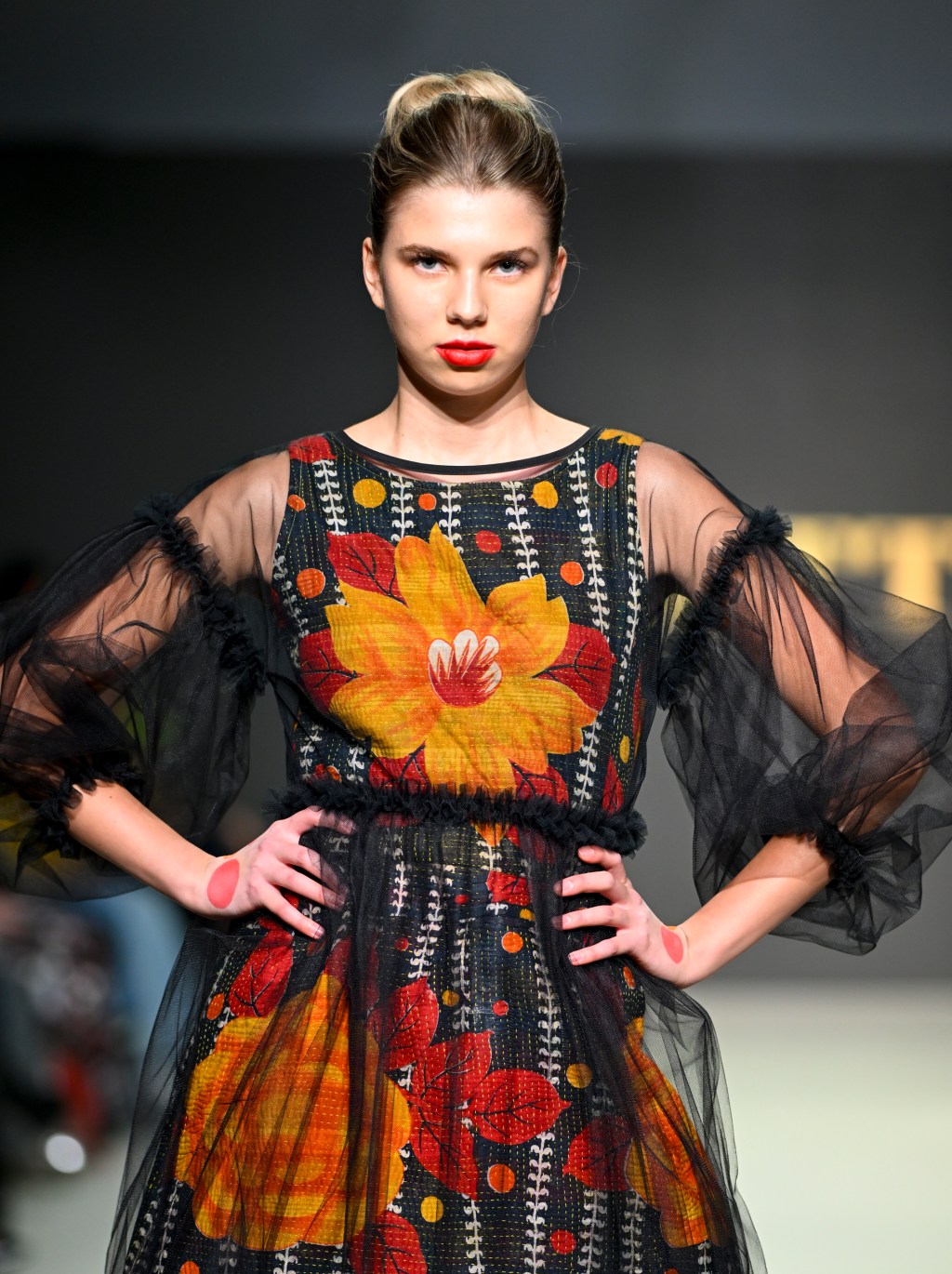
A kantha quilt begins as a single piece of fabric, journeying through decades or centuries, changing forms, and being reborn to fulfill different stages of its life cycle. My clothing designs are part of this cycle, and I hope that the pieces I create will inspire new cycles even after they leave my hands.
– Ayano Yanagi
Self-taught Japanese designer Ayano Yanagi develops her clothing brand, TETTE, utilizing Indian textiles, particularly kantha quilts from the Bengal region of India, as the cornerstone of her latest collection, “Meguru.” Originally from Fujinomiya in Shizuoka Prefecture, Japan, a town located at the base of Mount Fuji, and currently residing in the coastal city of Fujisawa, Kanagawa Prefecture, Yanagi’s fashion embodies a spirit of transcultural inspiration and cross-cultural exchange. The influences of Indian culture, textiles, cuisine, and the principles of Ayurveda have become integral to both her life and her design methodology.
Yanagi’s “Meguru” wowed the audiences at this year’s Vancouver Fashion Week through its visually striking and texturally rich composition. There is a wealth of background information to explore regarding her journey that culminated in the creation of this collection, and why she puts the life cycle of kantha quilts in direct conversation with contemporary fashion. An approach that serves to enhance storytelling, celebrate the beauty of nature, and promote textile conservation.

It all commenced when Yanagi encountered health challenges during her tenure as an architect in an architectural design firm. To enhance her well-being, she made several journeys to India to study Ayurveda, a holistic system of medicine. During her time there, she became captivated by Indian textiles, particularly block prints, and, in conjunction with her Ayurveda studies, cultivated an interest in food therapy.
Later, she left her architectural career, had a child, and expressed her creativity by making her child’s clothes and cooking Indian food, while navigating both her child’s needs and her own well-being. During this journey, she began to explore her passion for Ayurveda wellness by sharing her love for Indian cuisine and offering curry cooking lessons at local cafes. However, when COVID-19 struck and the cafes closed, she quickly adapted, taking her teachings online. This pivot not only expanded her audience globally but also inspired her to create and sell aprons crafted from Indian block print fabrics, giving birth to her brand, TETTE.
I have never formally studied clothing design, but my background in drafting architectural blueprints and observing people through Ayurvedic diagnostic techniques has helped me understand shapes and structures. These experiences have made it easier for me to create and express forms in clothing.
– Ayano Yanagi
After her initial focus on aprons, Yanagi progressed to the creation of garments, stating, “eventually, I expanded from aprons to making clothes, including garments using ralli quilts, a material that captured my heart.” Ralli (Central Asia) and kantha (South Asia) quilts, which have been passed down through generations, embody similar traditional techniques. Quilts serve various functions within the home and are constructed by layering multiple pieces of reclaimed fabric, such as saris and dhotis, and integrating stitching and patchwork. In some instances, the quilts may consist of more than ten layers. The preservation and revitalization of textiles represent the essence of these crafts, underlining the significance of her work.
As the quilt ages and frays, these imperfections transform into a unique kind of beauty, where the lower layers’ colors bleed through like art.
– Ayano Yanagi
Composing “Meguru”
RP Hill: “Meguru” celebrates India’s kantha quilt tradition. What is the importance of quilt making and kantha quilts that inspired you? Please explain the meaning of “Meguru” and the overall concept.
AY: “Meguru” is a Japanese word meaning “to circulate.” I feel that the essence of kantha quilts reflects natural cycles, such as the changing seasons (spring, summer, autumn, and winter) or the cycle of life itself (from birth, growing older, and eventually returning to the earth). This concept applies not only to large cycles but also to smaller ones, such as the cycles within cells.
People live their lives by overlapping these various cycles and gradually aging over time. I aspire to live like a kantha quilt — growing more beautiful, deep, and cherished as I age.
Kantha quilts start as a single piece of cotton fabric, which gets worn out over time. These old fabrics are layered and stitched together, increasing their strength and giving birth to a new quilt. As the quilt ages and frays, these imperfections transform into a unique kind of beauty, where the lower layers’ colors bleed through like art.

Even if the surface wears thin, the strength of kantha quilts lies in the multiple layers stitched beneath. The jackets I sell include both relatively new quilts and older, damaged ones. The latter are particularly beautiful, rare, and highly valued. A kantha quilt begins as a single piece of fabric, journeying through decades or centuries, changing forms, and being reborn to fulfill different stages of its life cycle.
My clothing designs are part of this cycle, and I hope that the pieces I create will inspire new cycles even after they leave my hands. Through the “Meguru” collection, I wanted to express the essence of kantha quilts in my own way.
RP Hill: Your profound appreciation for nature is evident, particularly in the “themed” descriptions accompanying each of your ensembles. Kindly elaborate on how nature influenced your childhood experiences and where you currently reside.
AY: I was born in Fujinomiya, Shizuoka Prefecture, Japan, a town at the foot of Mount Fuji. It’s a beautiful area surrounded by nature, with majestic mountains and delicious spring water. As a child, I spent my days running through the mountains and forests.
Now, I live in Fujisawa, Kanagawa Prefecture, a coastal city. Although I lived in Tokyo and Kyoto during my student years, perhaps because I grew up near the mountains, I always felt drawn to the sea. After getting married, we moved to this town. Here, I can see Mount Fuji beyond the ocean, and the gentle sea breeze is pleasant.
RP Hill: Your themed descriptions such as “Mountains Laughing” signify distinct and culturally unique expressions within the Japanese context. Please explain.
AY: Mountains Laughing refers to the bright and vibrant scenery of spring when flowers begin to bloom on the mountains.
RP Hill: Speaking of flowers, they show up all over the collection. What’s the significance with flowers?
AY: For me, flowers symbolize happiness and smiles. As a child, I loved watching my mother nurture the flowers in her garden. I even included the character for “flower” in my daughter’s name. The fabrics from India often feature vibrant floral patterns that resonate deeply with my aesthetic sense.
About the Cloth
RP Hill: Share some insight into the actual methods or style of the materials/quilt cloth used.
AY: Their patterns include kantha stitching, patchwork, embroidery, and weaving — a complex and layered mix of techniques.
RP Hill: Some materials have more depth and texture to the construction than others. For example, explain the differences between the black floral pattern and pink dresses.
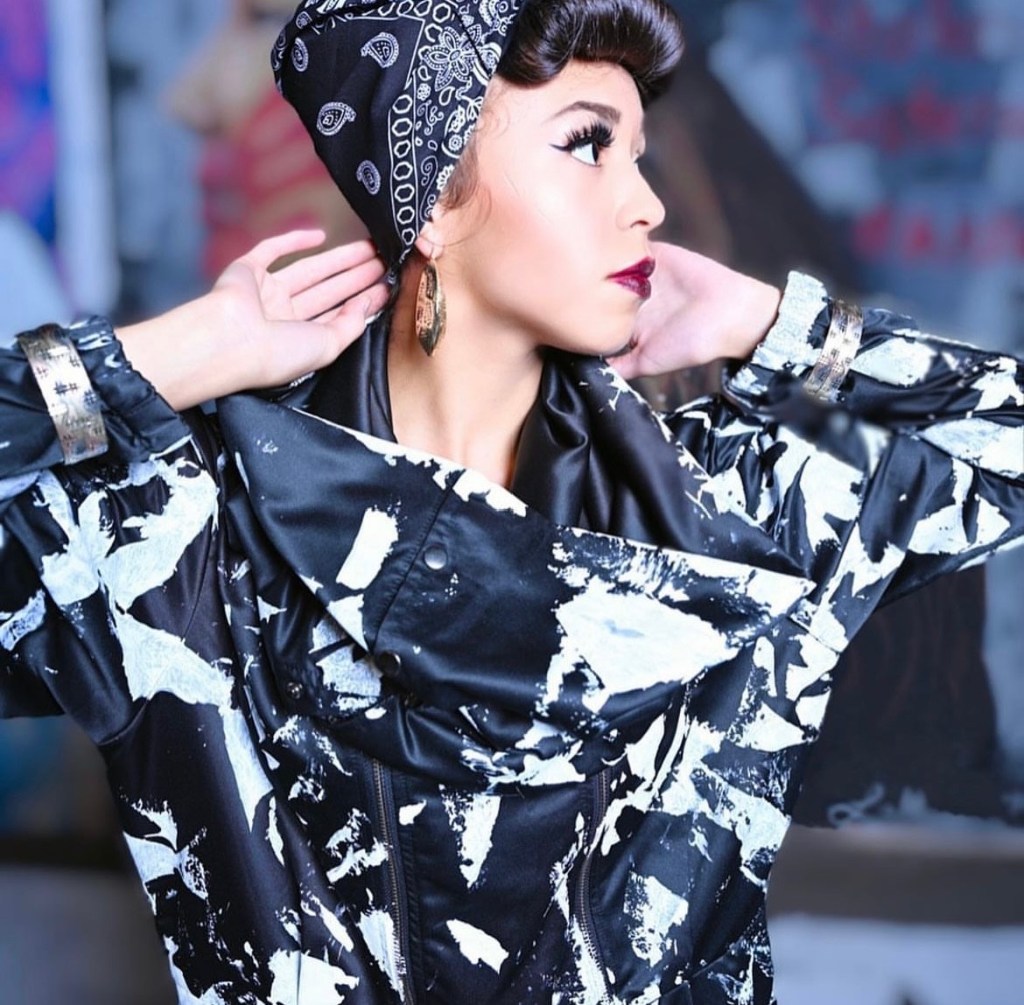
AY: The floral patterns are from relatively newer fabrics, such as the floral prints on the black dress. Stitching is added to these fabrics to enhance their beauty.

The pink dress, however, is made from fabric that is believed to be several hundred years old. All the stitching is done by hand, and creating a finely stitched quilt can take more than six months. In some cases, these quilts are passed down through generations, with each adding new stitches or patchwork over time.

RP Hill: I love your use of tulle, where do you source it? I’m just curious, why do you incorporate tulle – is there a message or reason why you design with tulle?
AY: The tulle fabric is made in Japan. To me, tulle embodies elegance, fragility, and transparency. By combining the solid presence of kantha quilts with the delicate nature of tulle, I wanted to express something mysterious and fragile, like the essence of life itself.

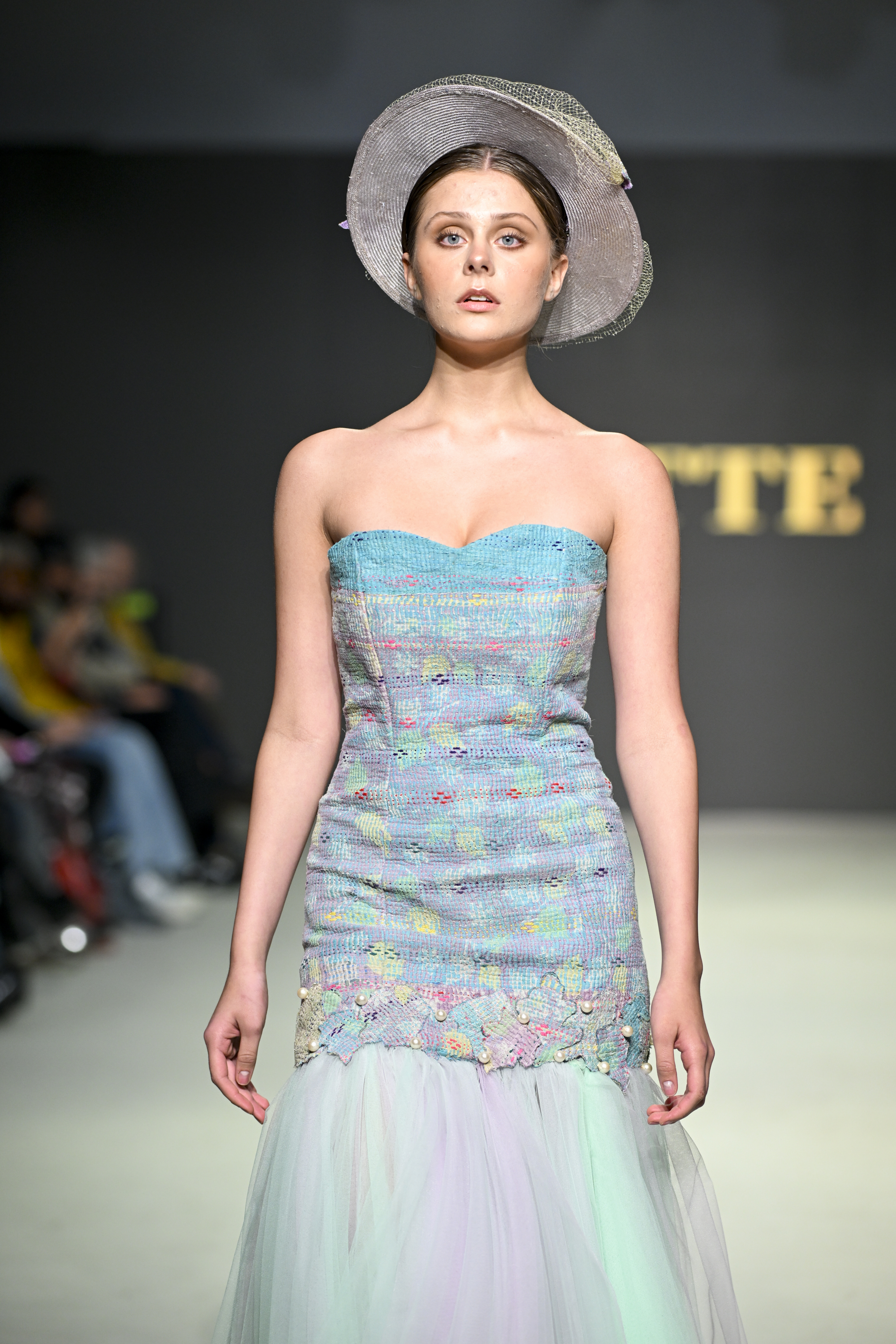
The women there [India] wore colorful, vibrant traditional clothing that made me feel liberated. This sense of liberation likely stems from cultural differences; in Japan, people tend to feel comfortable blending in with others.
– Ayano Yanagi
Cultural Influences
RP Hill: Because we are naturally connected to our own roots, yet interconnected as a global society, it is quite understood that transcultural inspiration and cross-cultural exchange is reflected in fashion design.
Most artists are influenced by their surroundings, experiences, and transcultural exchange. Your background stems from your training in architecture along with your studies and use of Ayurveda. What is it about the Indian culture, their textiles, their food, and the Ayurveda system that influenced your life and design practice?
AY: I have never formally studied clothing design, but my background in drafting architectural blueprints and observing people through Ayurvedic diagnostic techniques has helped me understand shapes and structures. These experiences have made it easier for me to create and express forms in clothing.
I once stayed at an Ayurvedic hospital in southern India, where I lived surrounded by herbs and natural flowers, experiencing their healing power. I loved this pure and energizing lifestyle.
The women there wore colorful, vibrant traditional clothing that made me feel liberated. This sense of liberation likely stems from cultural differences; in Japan, people tend to feel comfortable blending in with others. (How is it in the U.S.?)
RP Hill: It’s the same in the US. The masses prefer blending, they do not want to stand out, however higher profile people, such as celebrities, and artists much prefer their own unique style. Please continue.

AY: Rather than choosing clothes based on personal preference, many Japanese people select items similar to what others are wearing. This tendency becomes stronger when working in a corporate environment or participating in school-related gatherings as a parent, where safe, unremarkable attire feels reassuring. Over time, people may lose sight of their true preferences.
While I deeply admire Japan’s unique beauty, I was amazed by the abundance of diverse colors and patterns in Indian daily life. It was there that I discovered the colors and patterns I truly love.
I realized how fulfilling it is to express what I genuinely like, wear what makes me happy, and live without hesitation in doing so.
Kantha quilts are infinitely unique, just like people — no two are alike in pattern or color.
When customers find their “destined” piece, they often rediscover their genuine preferences and long-lost excitement.
This is why TETTE’s tagline is “Clothing that makes life fun.”

RP Hill: What’s on the horizon, what’s next? Will you continue to design collections with meaning and storytelling?
AY: I am deeply grateful for the invitations and opportunities I’ve received after exhibiting at this year’s VFW. Moving forward, I hope to continue presenting designs that embody TETTE’s unique concepts. TETTE is still a very small brand managed solely by me, and I would greatly appreciate your patient support as it continues to grow.
Congratulations Ayano! I wish you continued success.
@tette.ralliquilt88 | TETTE website
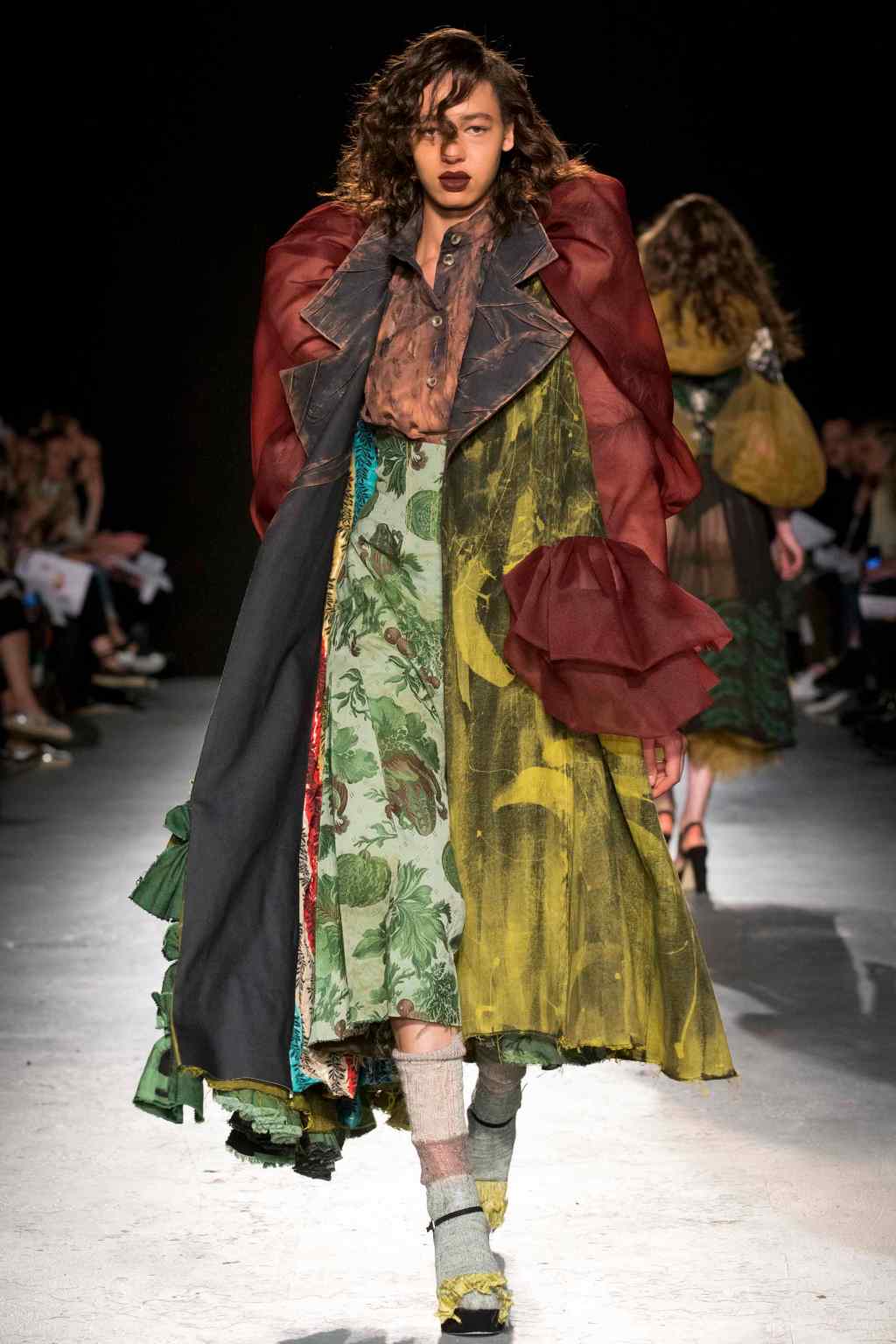
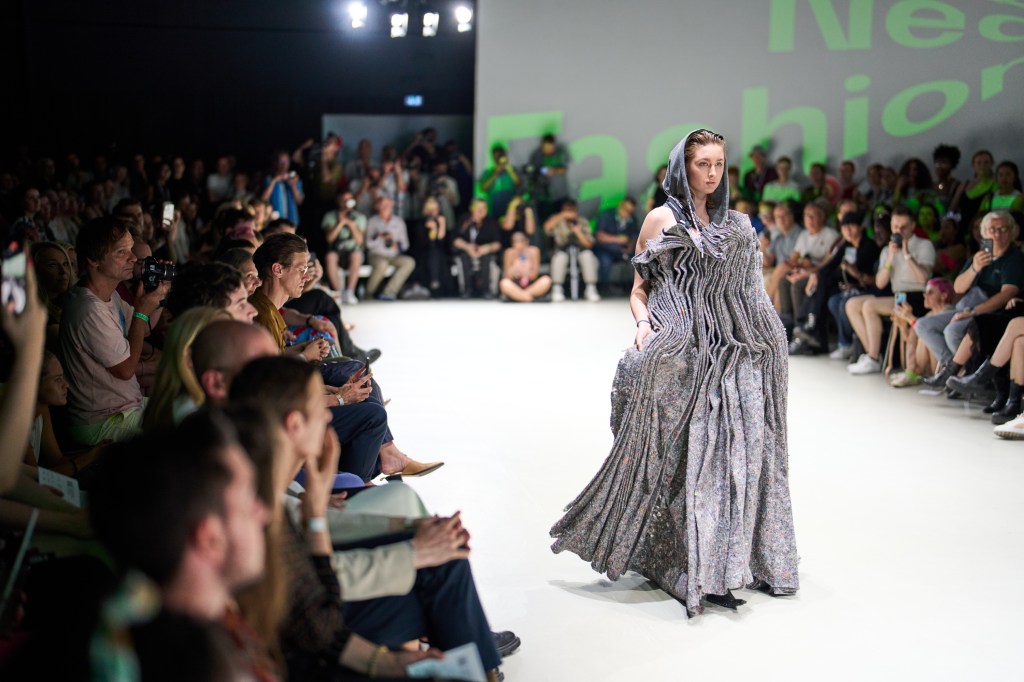
Feature Image: Meguru, “Abundance, Autumn Splendor” by Ayano Yanagi, SS25 Vancouver Fashion Week, Courtesy of Vancouver Fashion Week, October 2024
 E D G E