
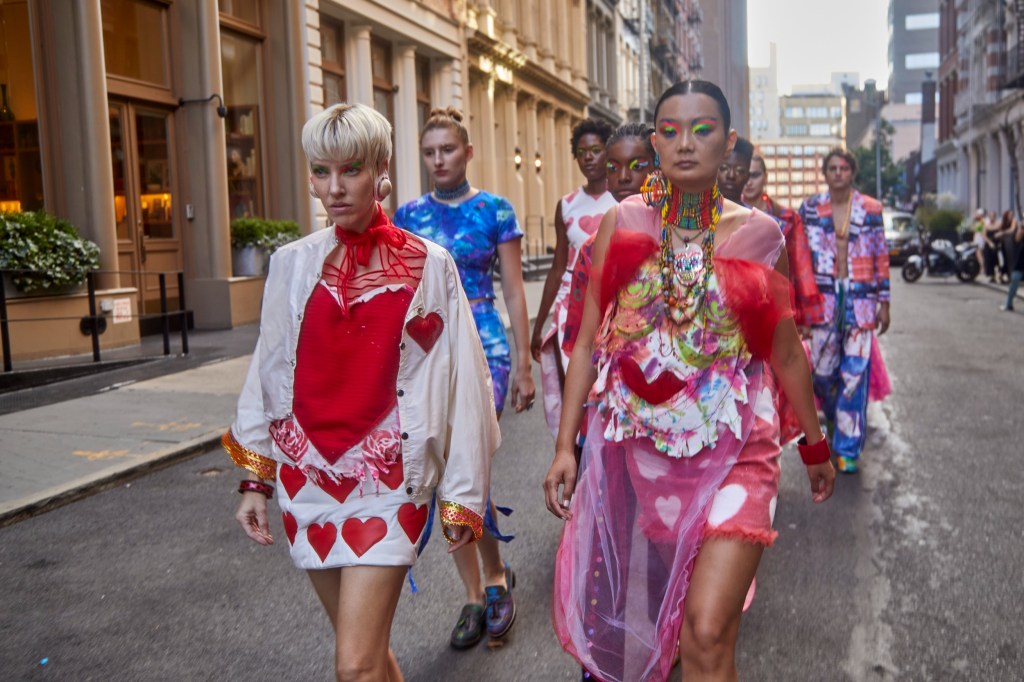
Fashion has the power to transform not only how we see ourselves but also how we connect with the world around us. That’s what feeds my soul and keeps me driven to create collections that are as joyful and bold as the people who wear them.
Lauren Altman
Multidisciplinary artist and designer, Lauren Altman, creator of Brooklyn-based Lauren Altman Studio, boldly embodies a sense of freedom, inspiring wearers to cast aside conventions and immerse themselves in a realm of lighthearted indulgence. Her upcycled, hand-crafted limited editions are for the audacious, the visionaries, the unconventional—the ones who perceive fashion not as a rigid framework but as an exuberant playground. Altman’s work, blending contemporary art and fashion, is individualism redefined, transforming dressing up into a powerful statement of ultra-modernism, artistic expression, and pure joy. “For me, all the mediums I work with—whether canvas or clothing—are interconnected, constantly inspiring and influencing one another,” she explains, emphasizing the fluidity between different forms of artistic expression.
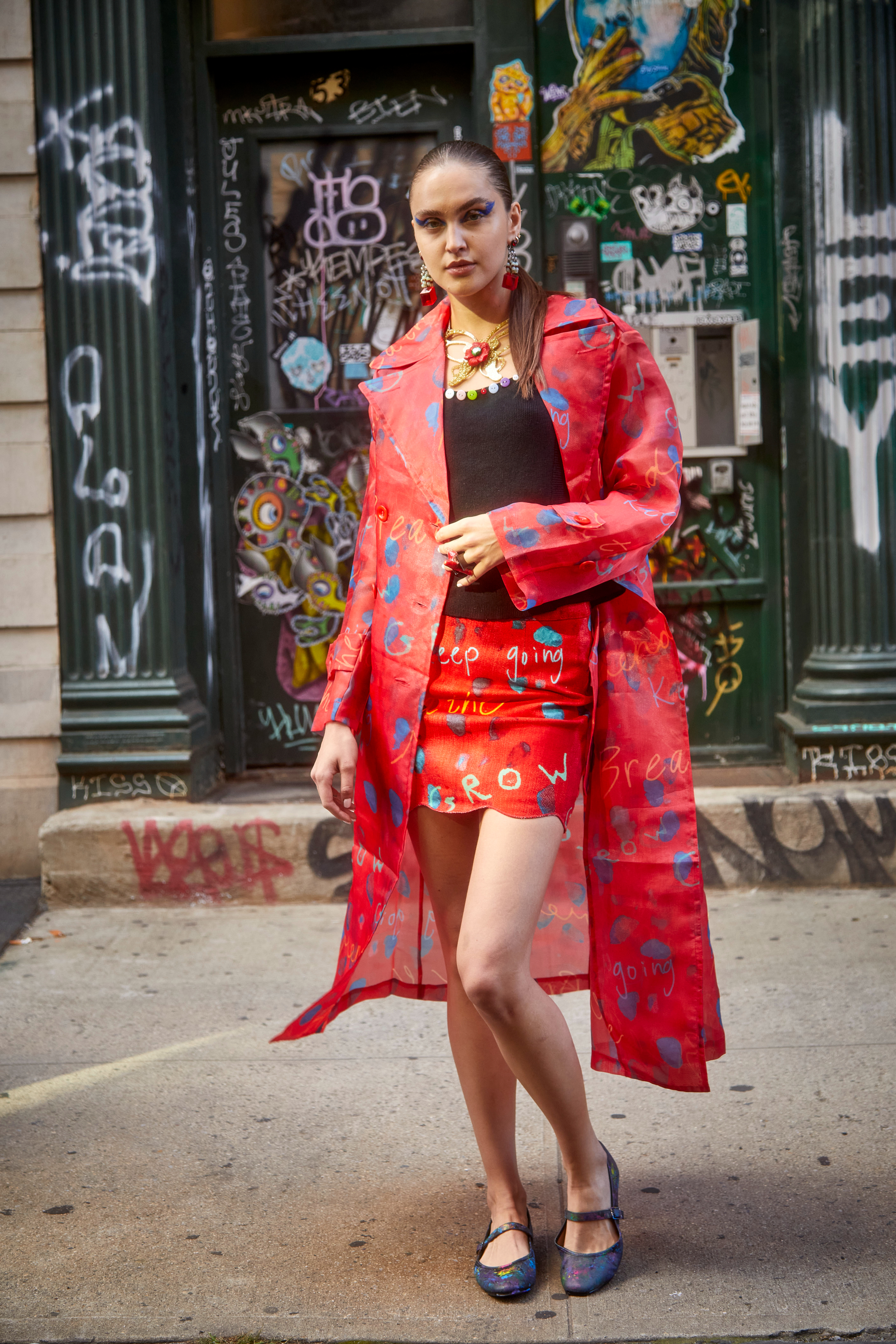
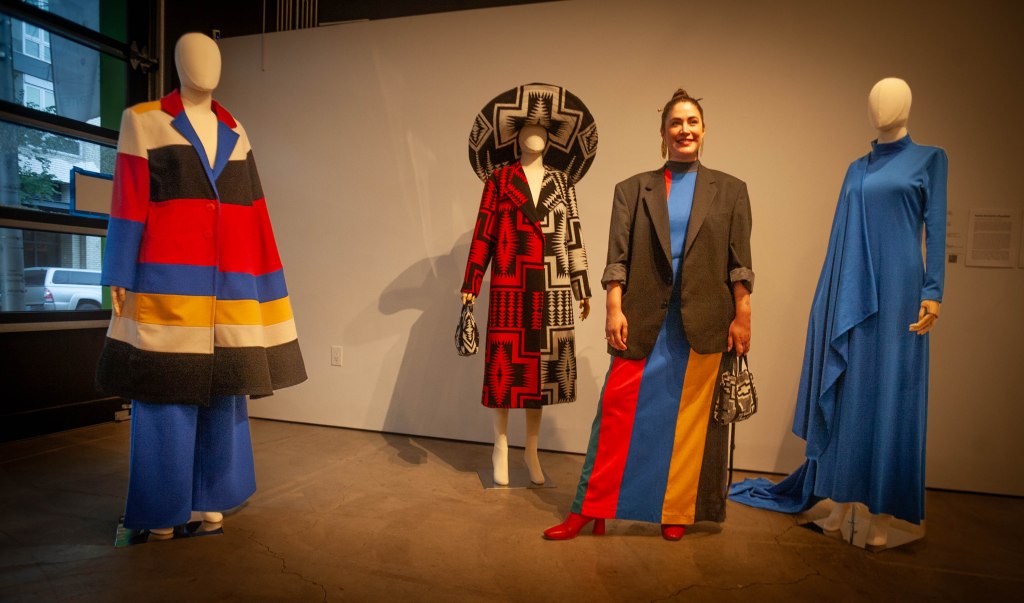
Libby Hartung, the proprietor of Zelda’s Shoe Bar in Portland, Oregon, introduced me to Lauren during a pop-up event hosted by Zelda’s. As an ardent supporter of boutiques like Zelda’s, Libby, a seasoned professional with three decades of experience, skillfully curates a diverse array of captivating and distinctive international brands, many of which prioritize environmental sustainability, such as Lauren Altman Studio.
Consumers love pop-up events and the dynamic of shopping for a new brand is thrilling. It was refreshing to witness such enthusiasm surrounding Altman’s collection. Altman, whose collections are upcycled, using recycled garments, deadstock, and other discarded materials, reflects on her experience emphasizing the profound connections consumers have with their local boutiques:
“Libby is incredible, and I’m so inspired by what she has created at Zelda’s Shoe Bar,” says Altman. “It’s so much more than a boutique—it’s a community. What I learned at the pop-up is that the relationship between the retailer and the customer is very important. People who shop at Zelda’s know that Libby won’t sell them just anything—she only sells what she believes in. Seeing that in action was a reminder that sales aren’t just transactions; they’re built on relationships.”
[Lauren Altman with customer, Matthew Walsh, wearing Lauren Altman Studio, at Zelda’s Shoe Bar, Portland, Oregon, October 2024, photo: EDGExpo.com]
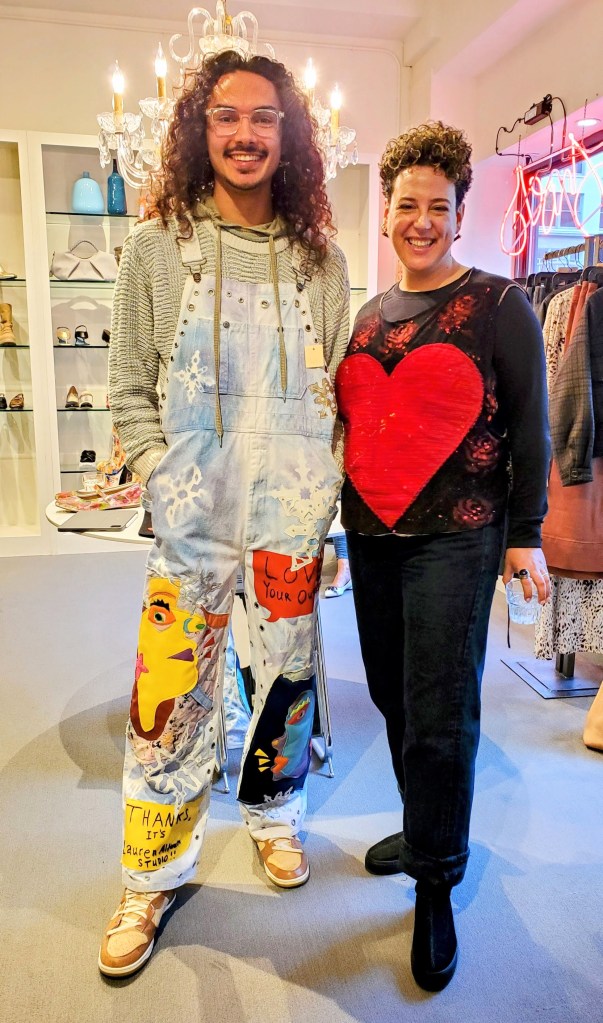
At its core, her brand is about creating positive experiences for individuals. She voices her mission clearly: “making people feel good, feel seen, and feel connected. That’s what art and fashion mean to me … it’s about creating pieces that spark joy, inspire creativity, and invite people to engage with the world—and each other—with a little more color, lightness, and humor.” This message resonates deeply in her creations, as she aims to forge connections between people through her art and designs.
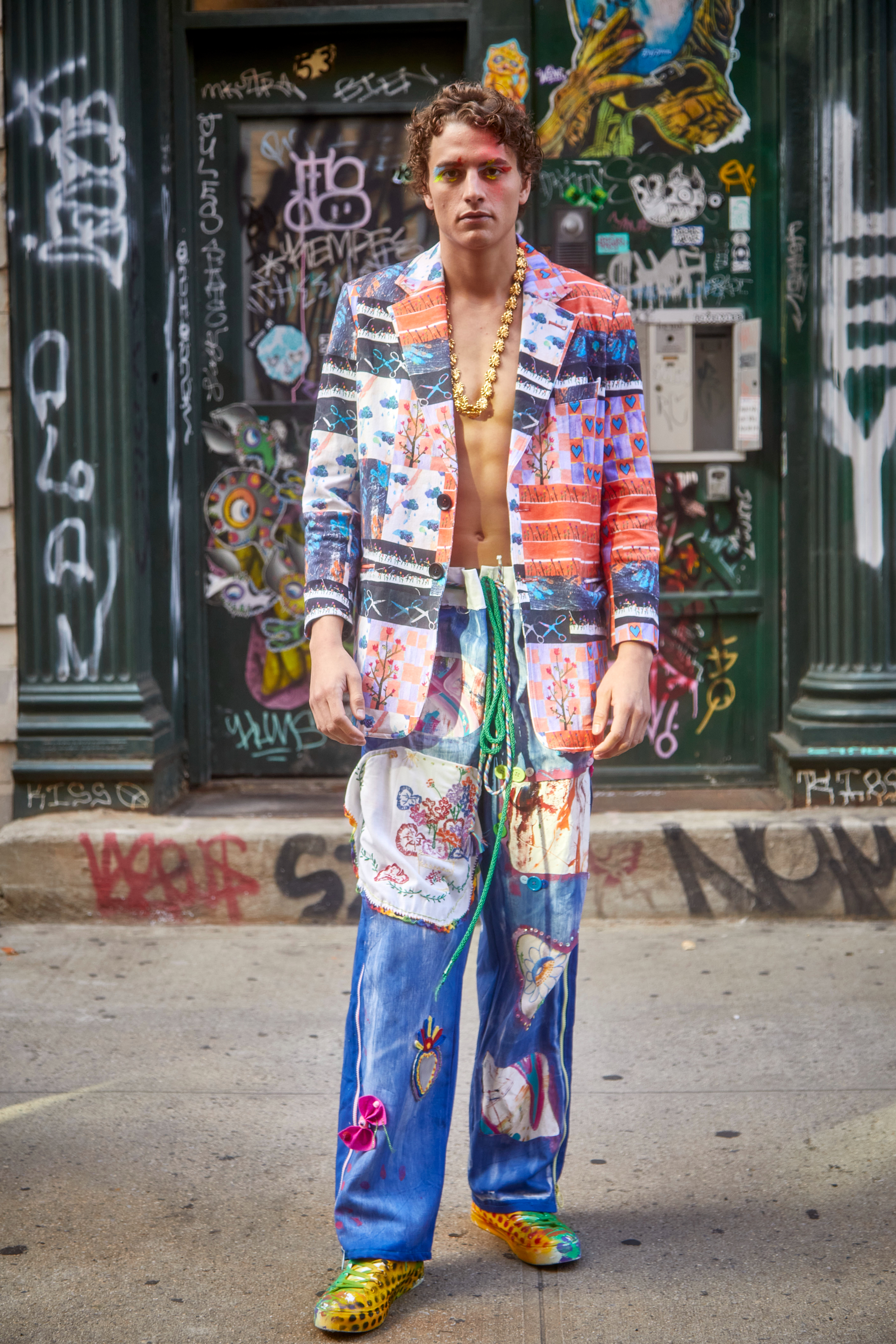
Examples of this have been evident in the exposure of her work, including her presentations at Art Basel Miami, Untitled Space—an art gallery located in Tribeca, NYC—and her collaboration with Latin Grammy nominee AleMor for the Latin Grammys. When asked about the AleMor connection, Altman expressed with enthusiasm, “Yes! I dressed AleMor, a three-time Latin Grammy nominee and Grammy nominee for an event during the Latin Grammy week. Our connection came through her mother, who attended a show I was part of during Art Basel in Miami last year.”
Art and design is a discipline that has always been about problem-solving and finding beauty within constraints. For me, upcycling is a way to address these challenges head-on by re-imagining what’s possible with the materials we already have.
Lauren Altman
Art and Fashion
Rhonda P. Hill: Lauren, with degrees from Sotheby’s Institute of Art and Parsons School of Design, plus an MFA from the University of Pennsylvania, what inspired you to become a multimedia artist? Any key influences? Did you start with painting and then shift to fashion?
Lauren Altman: Growing up in an artistic family deeply influenced me. My aunt is a painter, and my grandfather was a graphic illustrator.
As a child, my first painting was a recreation of a portrait my aunt had painted. Seeing our works side by side—her meticulous realism versus my vibrant, expressive style—revealed my love for bold colors and creativity early on!
In high school, I apprenticed with a tailor and local designer, Carlos Chavez, who made custom work suits for my parents.
Watching his process of blending vintage inspirations with bespoke design sparked my own multidisciplinary journey, and my passion for combining different techniques and styles.
Traveling and engaging with other cultures and their traditions have also deeply shaped my work. During my MFA at the University of Pennsylvania, I received a scholarship from the South Asia Center to attend a residency in Chennai, India, where I learned about block printing, natural dyeing, and handloom weaving. I also visited garment manufacturing hubs like Tirupur, where I met with manufacturers and gained exposure to the business side of clothes making, and saw their environmental impacts first-hand.
These experiences profoundly shaped my perspective long before I considered launching a brand.
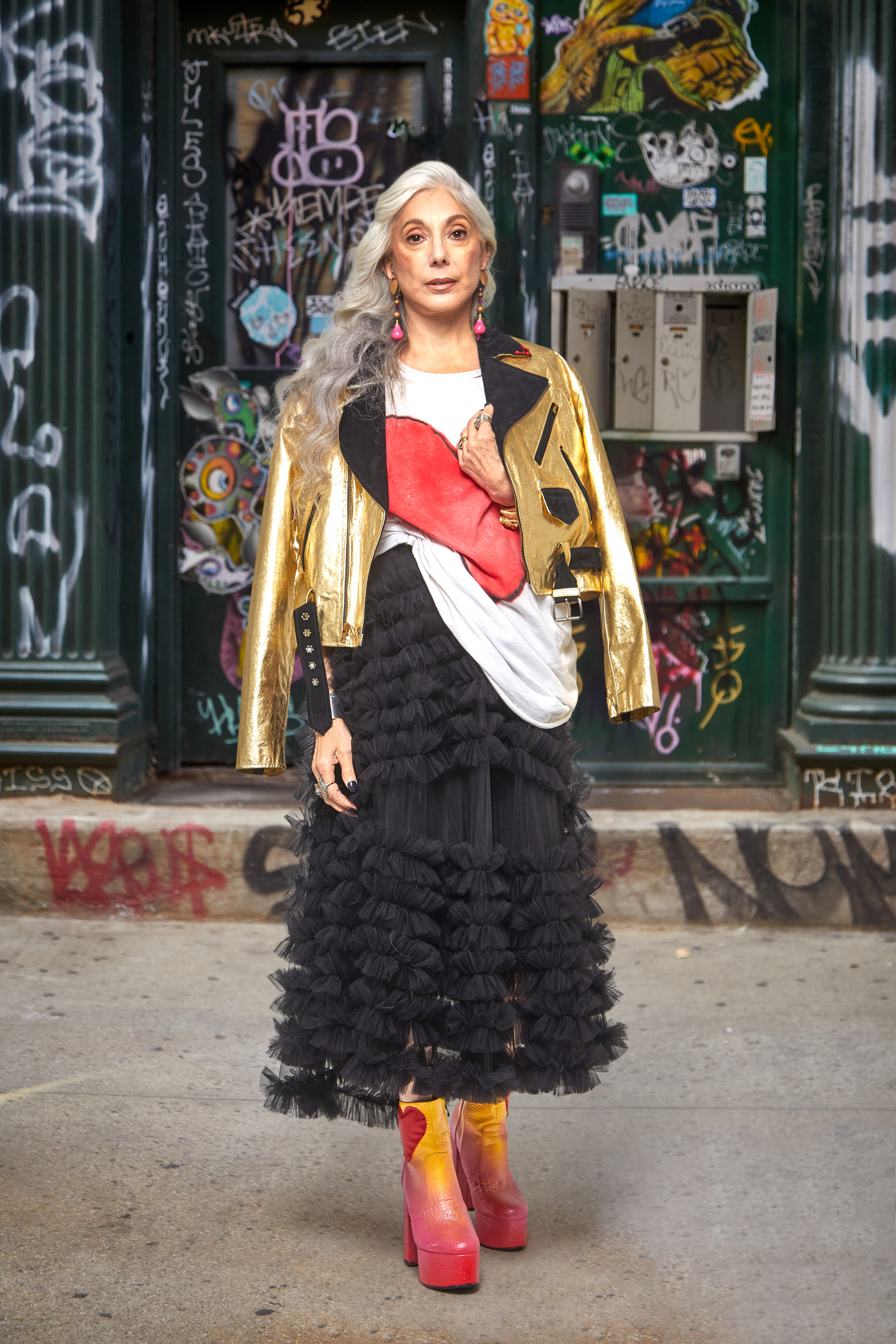
What I love most about fashion is its ability to create connections. Wearing something bold and colorful immediately invites authentic conversations.
Lauren Altman
RP Hill: Yes, I can understand how the influences from your background shaped your foundation today. What do you love most about fashion and why do art and design matter?
LA: What I love most about fashion is its ability to create connections. Wearing something bold and colorful immediately invites authentic conversations. For example, if I’m at an event and someone says, “I love your jacket, it’s so unique!”—it sparks a moment of connection that’s genuine and personal. Fashion has this incredible way of bringing people together, and that’s something I find exciting and inspiring.
What drives my passion to create a collection like this is the belief that the world needs more joy. We’re constantly surrounded by heavy news, particularly about the climate crisis and the challenges we face. While those realities are important to acknowledge, I see my work as a way to remind people that hope still exists.
Art and design is a discipline that has always been about problem-solving and finding beauty within constraints. For me, upcycling is a way to address these challenges head-on by re-imagining what’s possible with the materials we already have.
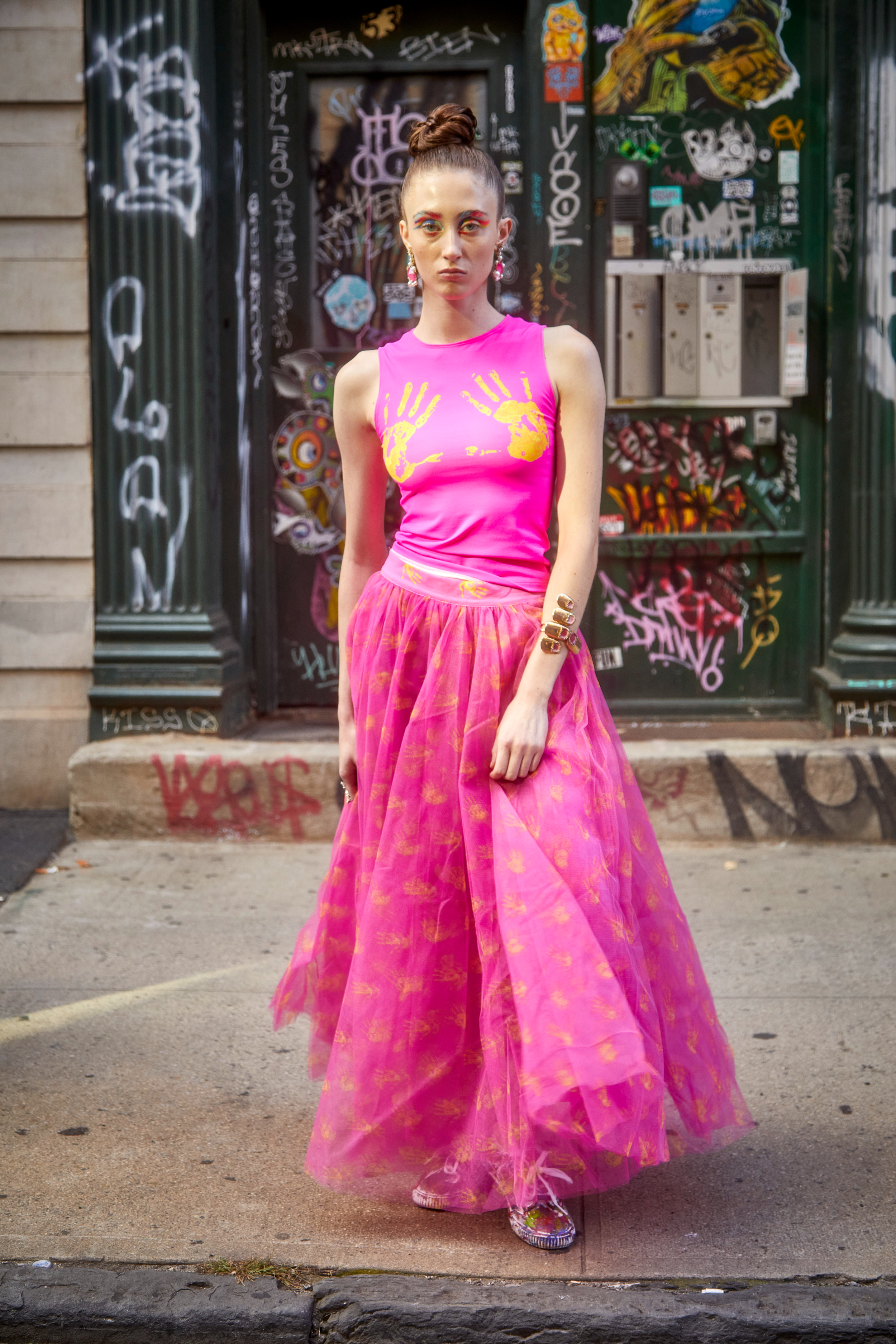
It affirmed my belief that showcasing fashion in spaces like galleries and museums can offer a deeper, more immersive experience for audiences, connecting them with the artistry and the intention behind the work.
Lauren Altman
RP Hill: The fashion audience loves exhibitions! Cheers on launching your Spring/Summer 2025 collection at Untitled Space in Tribeca. Your work and presentation of your work is non-conventional and inclusive. I say this when I see models of all ages, body types, and abilities, plus you seek to empower women and are inspired by women artists.
What was the experience like showcasing “A Defining Moment”, both art and fashion? Any feedback from gallery attendees unaccustomed to seeing art and fashion together?
LA: Thank you so much for your kind words about the show and the meaning behind it.
I see my art as the vehicle to tell the story for my viewers about my fashion collections—as a way to create an engaging experience for viewers. One of my key missions is to create a conversation between art and fashion, bringing the depth of storytelling from the art world into the wearable, personal realm of fashion.
We’re at an interesting cultural moment where the luxury fashion market is facing pushback—people are looking for something more meaningful, fresh, and authentic. That’s why I love creating these special experiences around my fashion shows. Because it’s about the experience and showing fashion in a new way.
For my SS25 show the gallery was filled to capacity, with people spilling out onto the streets—it felt like a fashion block party!
Passersby were drawn in by the vibrancy of the event, peeking through the windows to see models perched on ladders, holding paint brushes and exchanging FabBRICK’s recycled textile bricks as part of the installation, and wearing colorful pieces from my collection. It was inclusive and celebratory, with attendees of all ages and backgrounds engaging with the space and the work.
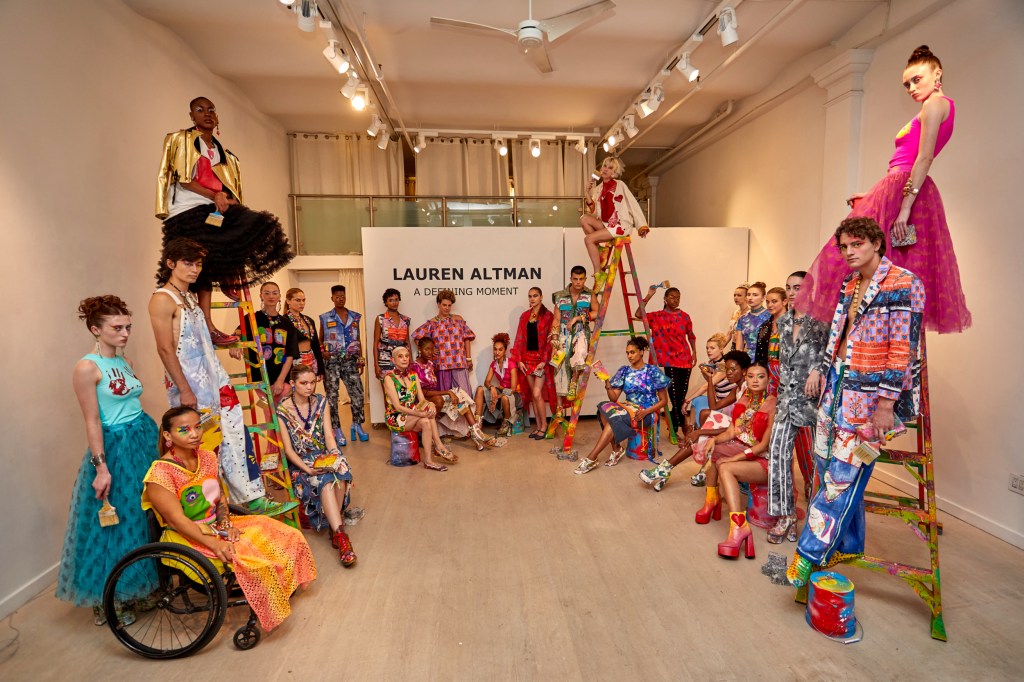
One of the most common pieces of feedback I received was that people wanted more—they asked, “How long is this show up for? Can we touch the clothes? Where can we buy them and see more of your art?” They were shocked my show was only up for 2 days!
It affirmed my belief that showcasing fashion in spaces like galleries and museums can offer a deeper, more immersive experience for audiences, connecting them with the artistry and the intention behind the work.
It’s something I hope to expand on in the future – preferably with a curator who can put my work into different contexts and conversations beyond what I could think of or come up with!
RP Hill: Tell me more about the mixed media art on fabric bricks, made from the French company, FabBRICK, that recycles discarded textiles through a reprocessing method. Why and how did you discover them?
LA: Thank you so much!
I discovered FabBRICK on Instagram and was struck by their innovative approach to recycling discarded textiles into functional, sustainable building materials. Their work is forward-thinking and deeply resonated with my values as both an artist and designer.
The connection came to life with the help of my friend Annabelle Kajbaf, a sustainable fashion journalist and founder of the Wear the Future showroom in LA. Annabelle, who also speaks French, pitched my idea to Clarisse, FabBRICK’s founder in Paris. Clarisse was incredibly supportive and offered to donate leftover deadstock bricks from previous projects, which I used as a central element in my SS25 show during New York Fashion Week.
The bricks became more than materials—they symbolized collaboration, transformation, and sustainability.
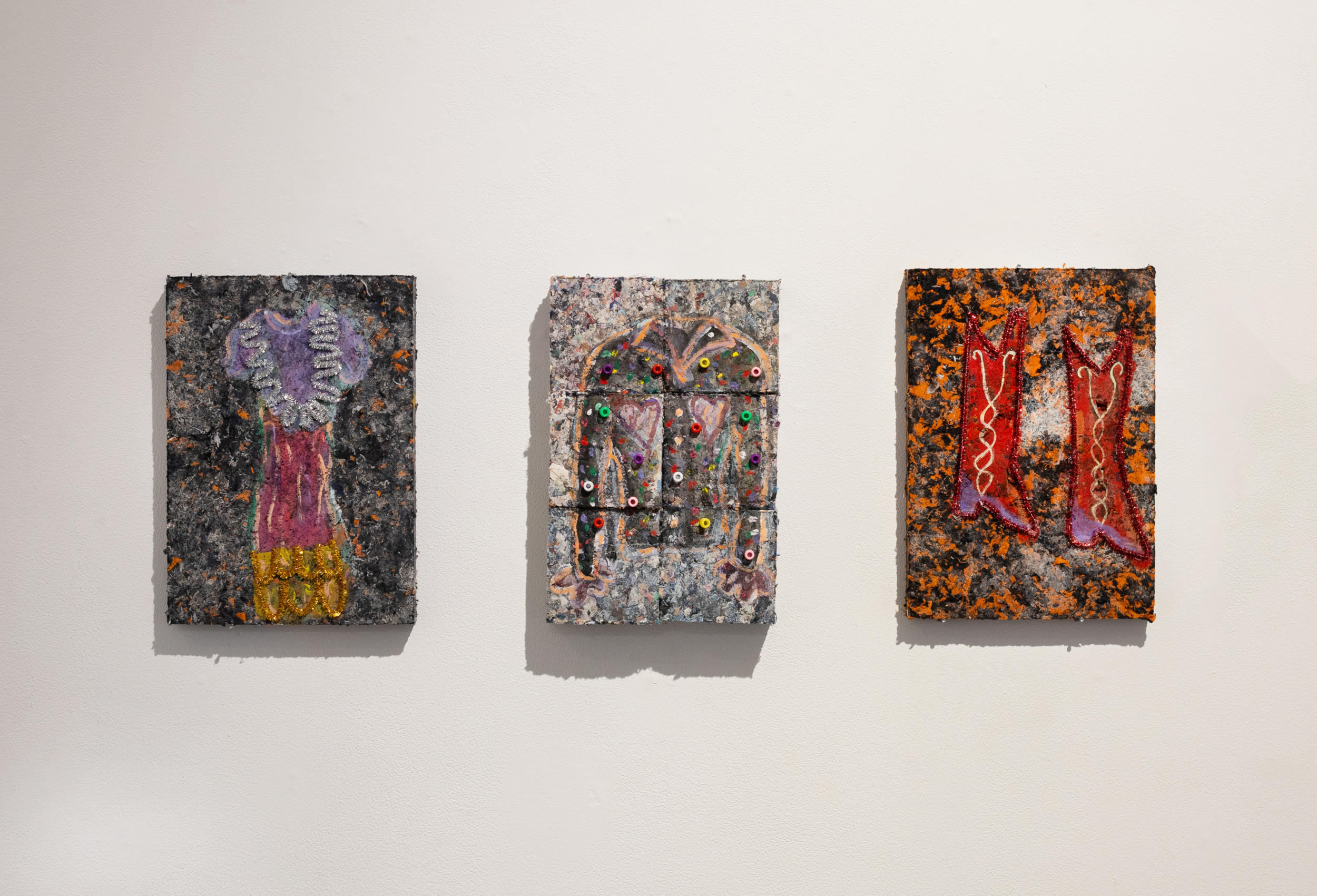
“A Defining Moment” was a two-day event. The first was the fashion show and the second was an art show inspired by the fashion show.
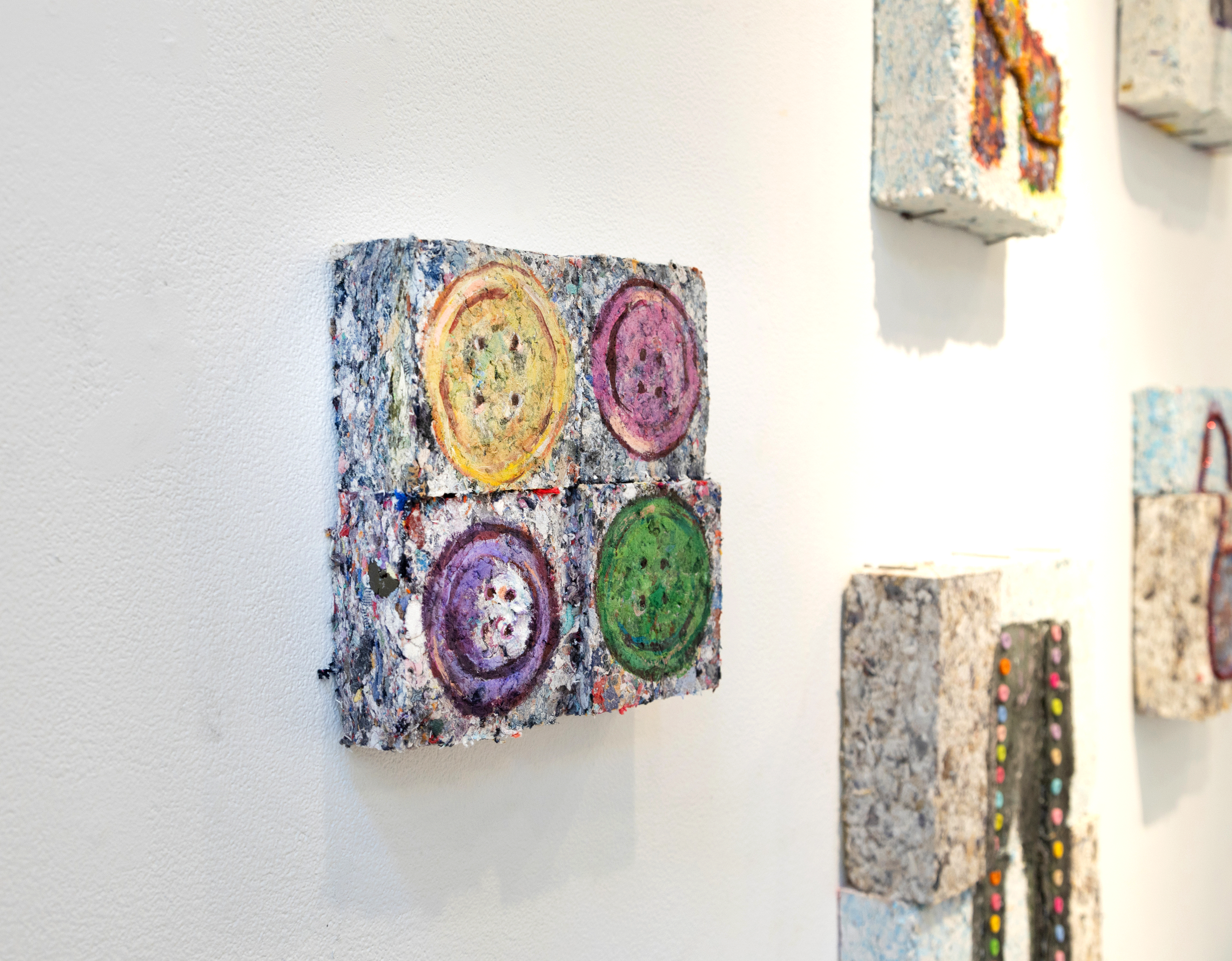
“Models passed FabBRICKS to one another as if building an inspiring new world. For the art show, I painted portraits of clothing from the collection on the bricks to invite reflection on how fashion, whether worn or depicted in art, can be a call to action for a sustainable and inclusive future.”
[Lauren Altman work on FabBRICK, 2024, Untitled Space, Tribeca, NYC. Photo by Alyssa Lester]

RP Hill: Who or what, if any, has influenced your “inclusive” design practice?
LA: I’m deeply influenced by the times we’re living in. Artists have always been at the forefront of advocating for change, and I’m committed to observing the world around me and exploring how sustainability can lead us toward greater compassion …
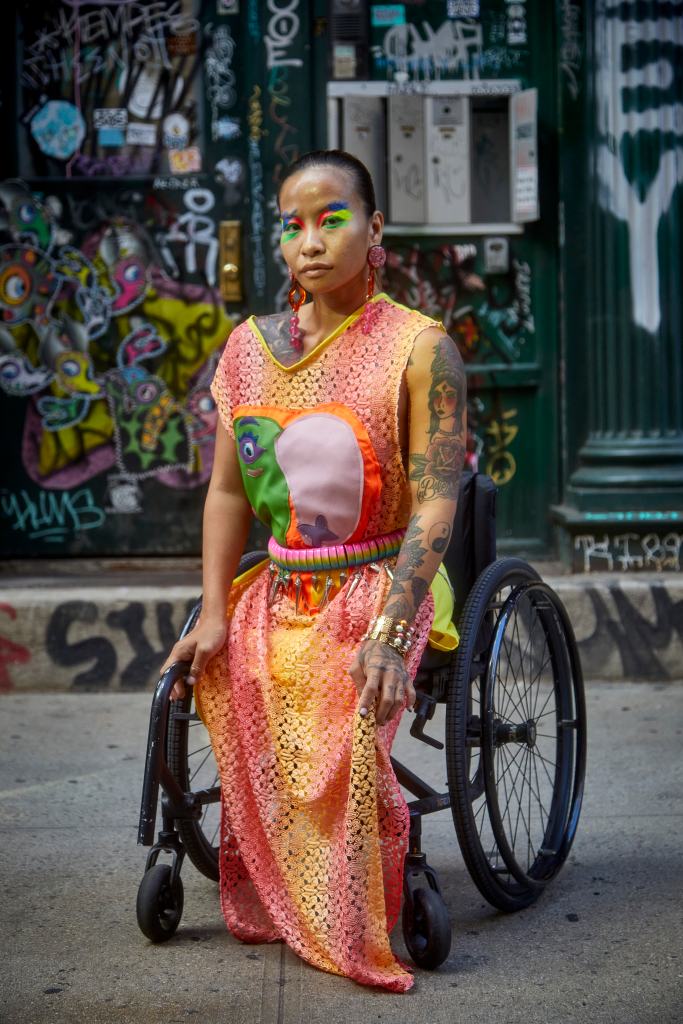
“I believe clothing should be an extension of the wearer’s personal story, celebrating individuality regardless of age, ability, or background. My job is to create pieces that resonate with a variety of people. In my SS25 collection, for example, I worked with models like Kanya Sesser, a Paralympian who brought incredible energy while wearing an upcycled piece in her wheelchair …”
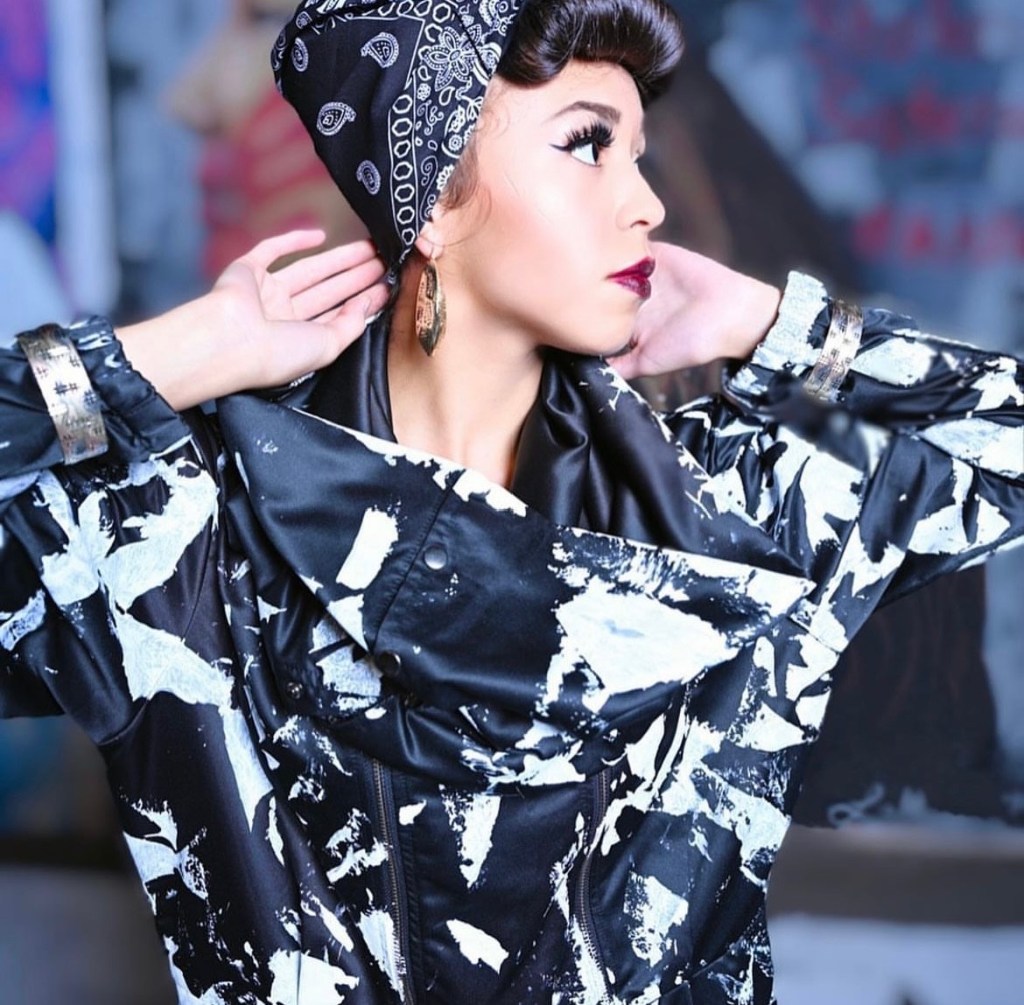
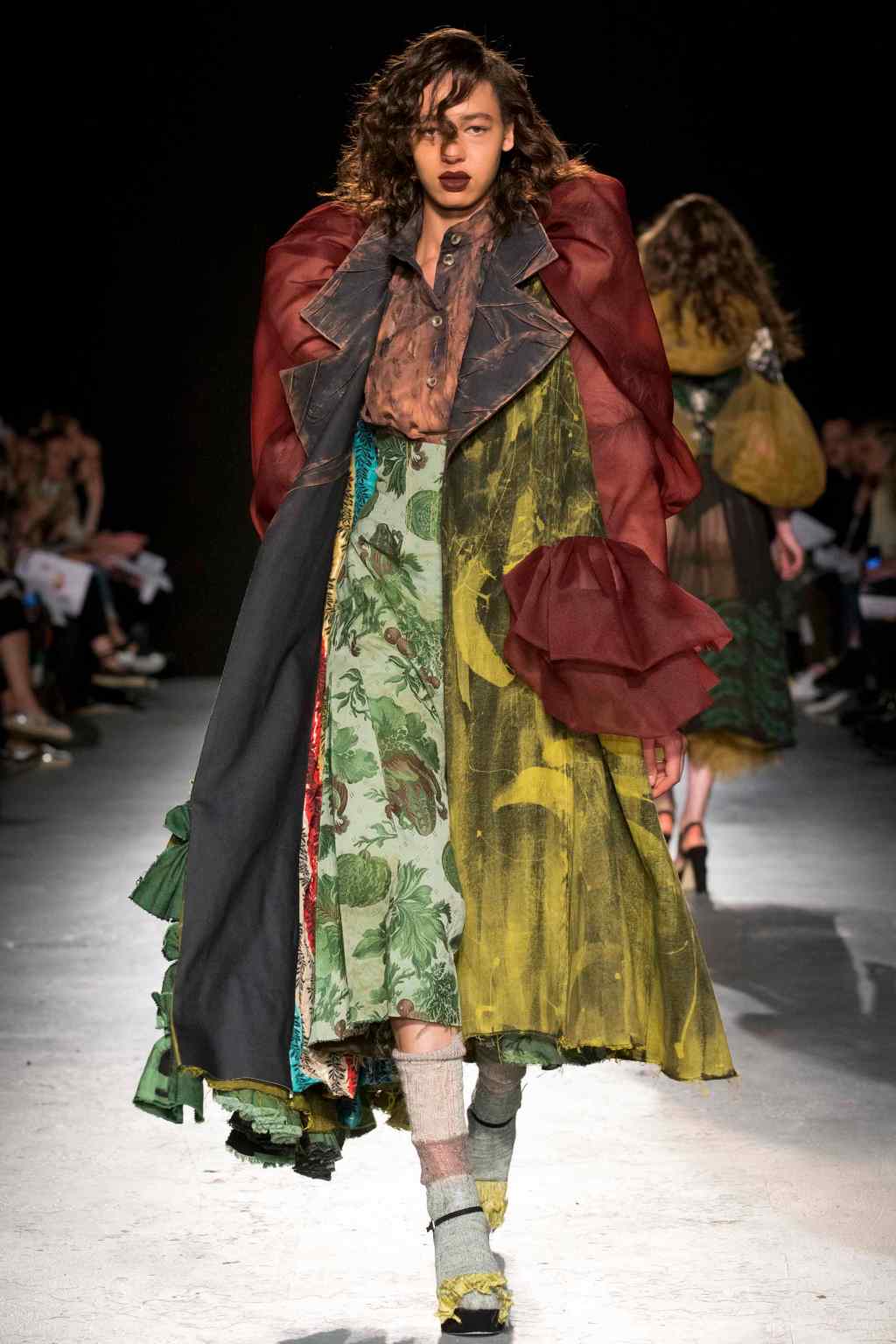
[Lauren Altman New York Fashion Week, 2024. SS’25 collection. Photo by Alex Korolkovas, Model: Kanya Sesser]
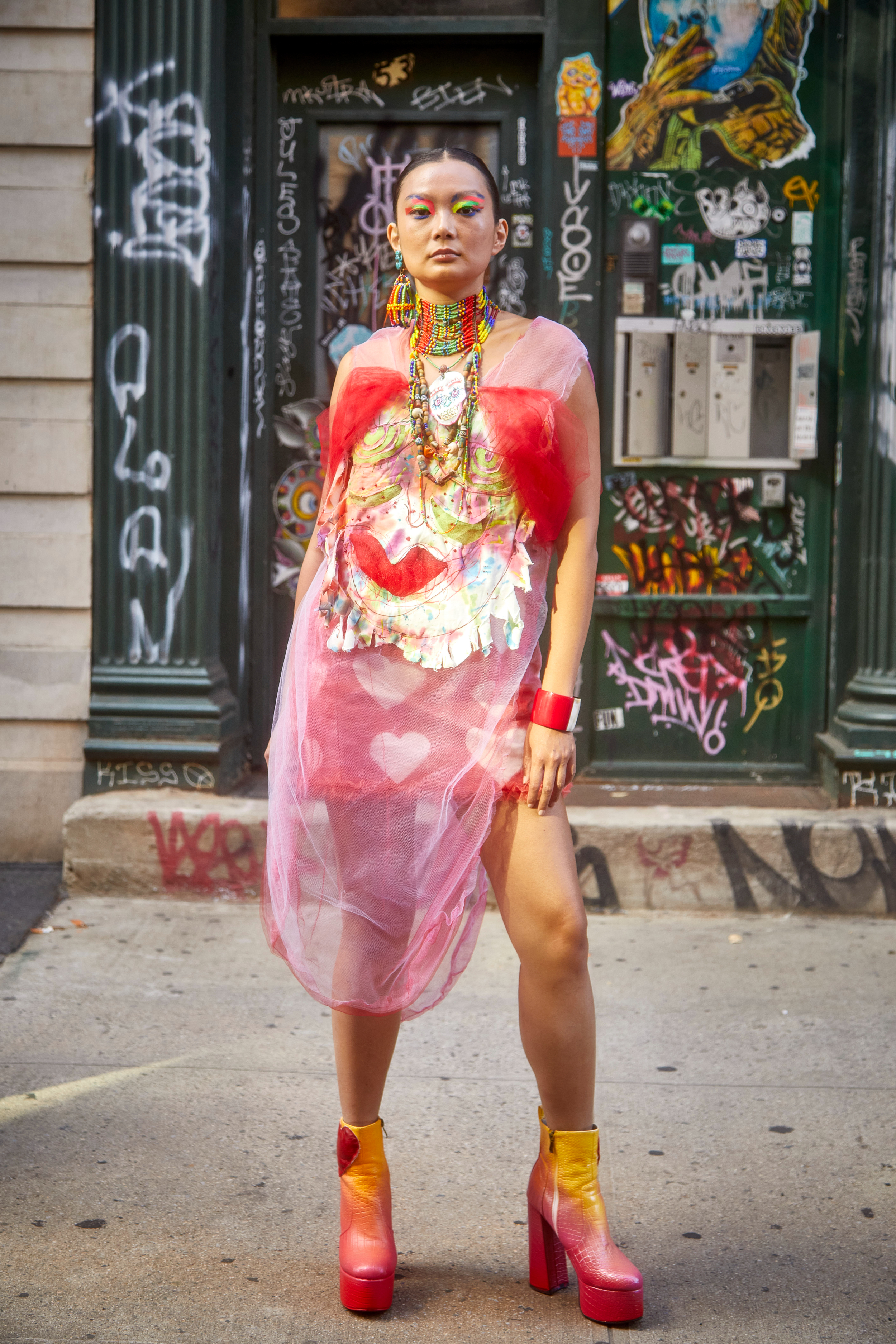
“… and Lauren Ezersky, a New York fashion icon, who has been breaking boundaries since the 1980’s. Seeing how these designs connected with such dynamic individuals reinforced why inclusivity is so important.”
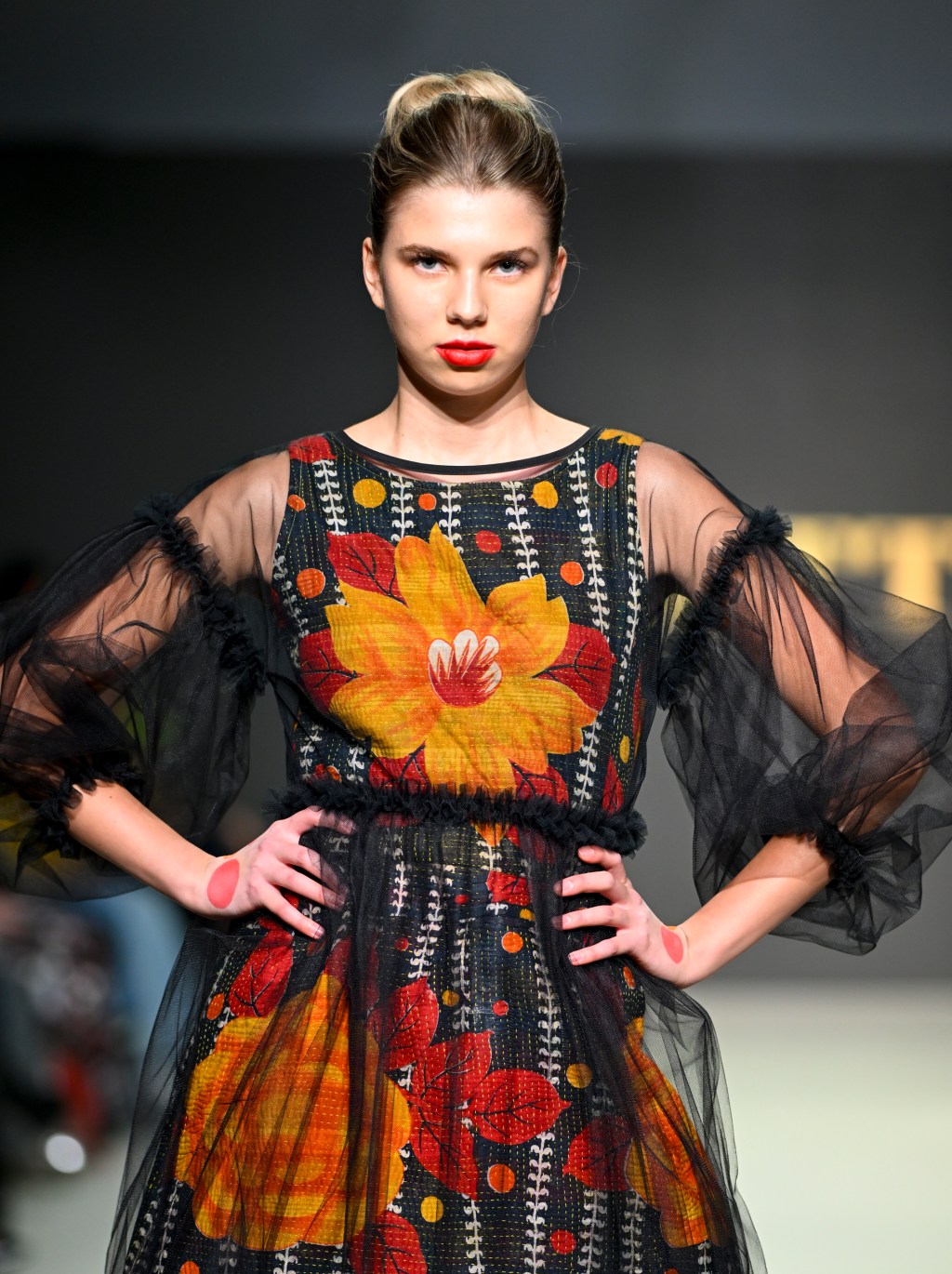
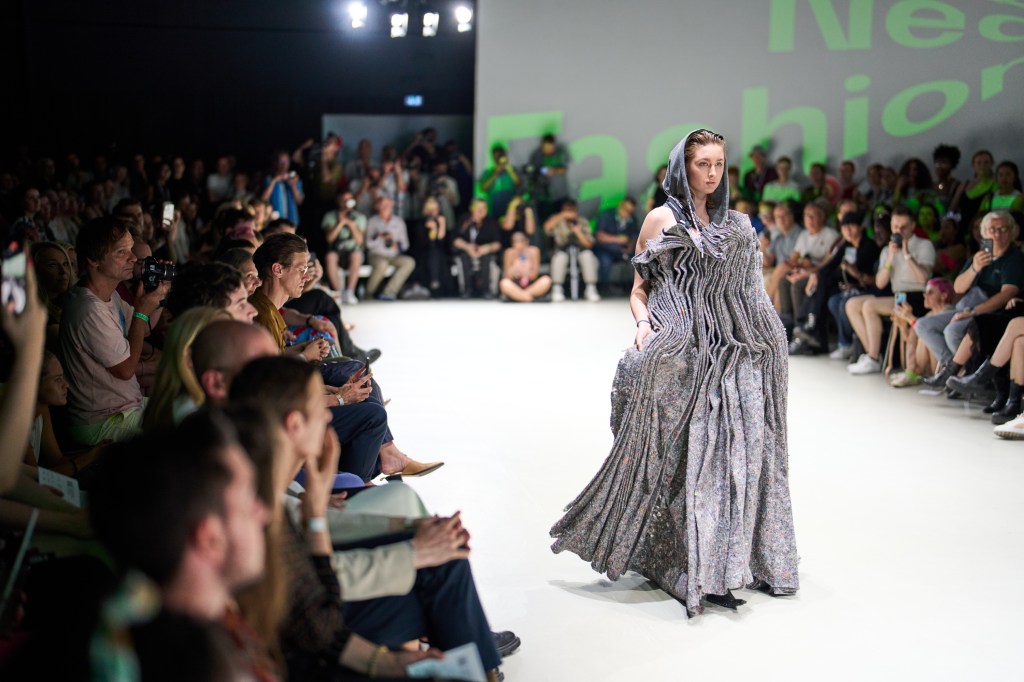
[Lauren Altman New York Fashion Week, 2024. SS’25 collection. Photo by Alex Korolkovas, Model: Lauren Ezersky]

Creative Process & the Use of Scraps, Deadstock, and Vintage
RP Hill: What’s your deeper message about upcycling and fashion’s transformative power in connecting people?
LA: Upcycling and using deadstock fabrics are at the heart of my creative process. It’s not just about taking garments apart and giving them a second life—though I love that too—but also about asking, “How can we make the most compassionate choice at every step?”
Whether it’s sourcing deadstock fabric or designing with intention, I believe in making in a way that contributes to the solution. And beyond sustainability, it’s about creating pieces that spark joy, inspire creativity, and invite people to engage with the world—and each other—with a little more color, lightness, and humor.
Fashion has the power to transform not only how we see ourselves but also how we connect with the world around us. That’s what feeds my soul and keeps me driven to create collections that are as joyful and bold as the people who wear them.
RP Hill: Where do you source your materials, including the embellishments?
LA: I’m intentional about where I source my materials and how I approach the life cycle of my designs. My goal is to make use of what already exists – and, for other things, I try to source from small businesses and fellow artisans.
A significant portion of my fabrics comes from deadstock suppliers like FabScrap in Brooklyn, New York. They’re a great resource, offering everything from small remnants to full rolls of deadstock fabric.
I also happily accept donations. For example, my showroom in New York has occasionally found themselves with excess inventory, such as unused T-shirts from canceled orders by their clients.
Instead of discarding them, they’ve donated these items to me, which I have repurposed into pieces for my Hearts Collection, which I have sold at Zelda’s for example.
Even within my own collections, if there are unsold pieces returned from stores, I don’t let them go to waste—I take them apart and transform them into new designs. This cyclical approach ensures that every material has a second (or third!) life in my work.
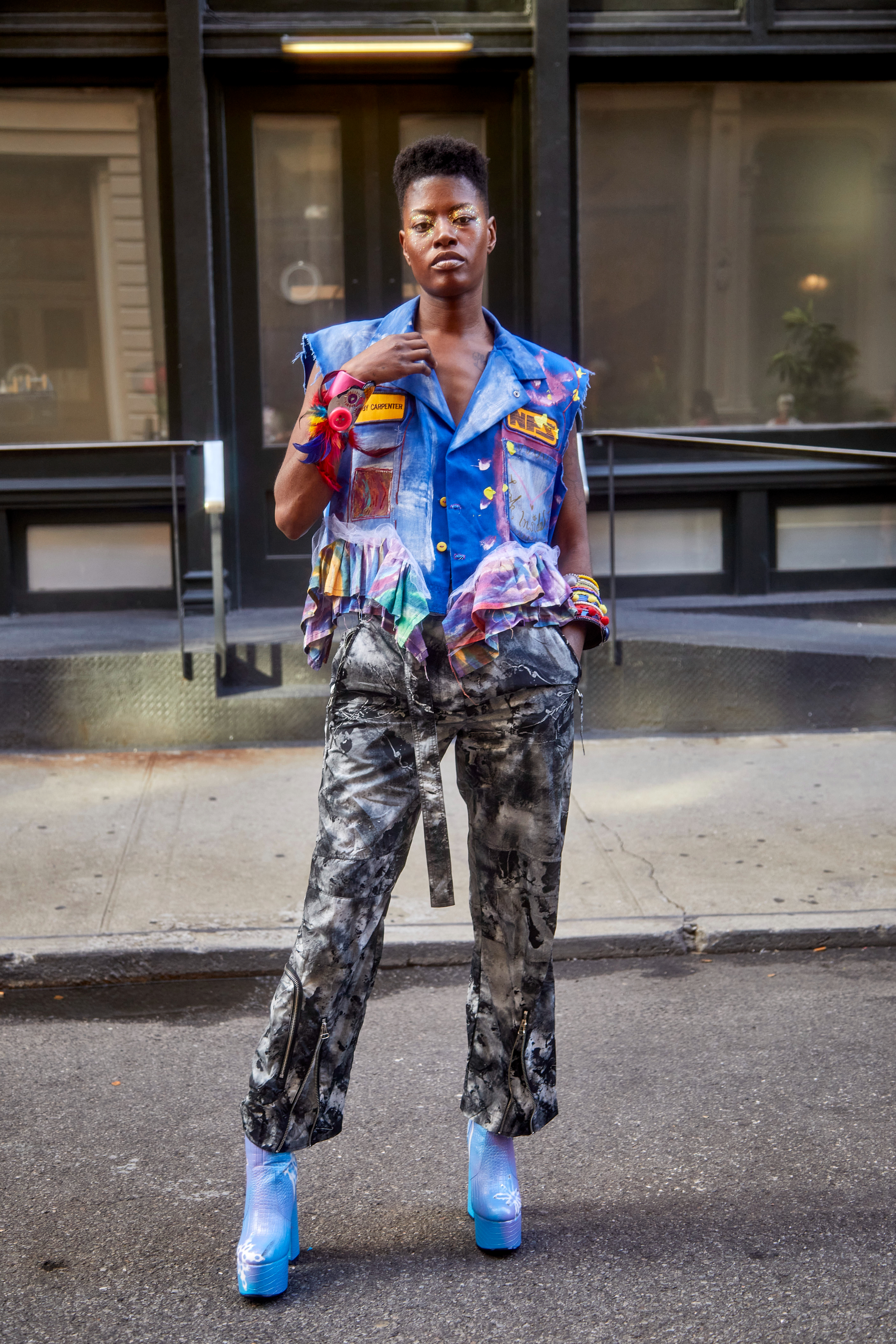
Thrifting and sourcing vintage materials is another favorite practice of mine. There’s something so inspiring about pre-loved items—their textures, colors, and histories all add a unique element to my designs.
For embellishments, beads, buttons, and yarn, I often source from independent artisans found online or lately, during round-trips to towns in upstate New York.
Lauren’s Advice to The Dreamers
My advice is to embrace uncertainty and trust the process. Allow yourself to explore without rigid expectations about the outcome.
Lauren Altman
RP Hill: What advice would you give art and fashion design students and those who dream of doing what you do?
LA: I never set out to start a fashion brand—I’ve always been an artist at heart. My soul is rooted in creativity, making things with my hands, and my journey has been about following that creative spark wherever it leads. If I were to give advice to art and fashion design students, I would say: stay open. Sometimes, we feel a strong desire to create, but we don’t yet know how or where our work will land in the world. And that’s okay. The key is to try everything, explore different mediums, and remain curious about where your passion might take you.
For me, it was my love of color, mixed media, and the tactile experience of working with paint, fabric, and materials that guided my path. Over time, I discovered that fashion became the perfect vehicle to showcase my creations. If I hadn’t stayed open to the idea that my art could find its audience in the fashion world—rather than strictly in galleries or traditional art spaces—I might have missed this incredible opportunity to merge art and design in a way that feels authentic to me.
My advice is to embrace uncertainty and trust the process. Allow yourself to explore without rigid expectations about the outcome.
The vessel for your art might surprise you, and that’s part of the beauty of the journey. Stay curious, stay adaptable, and keep creating—your work will find its place and its audience when you follow what truly excites you.

That was so beautifully said, and true. Thank you, Lauren, and congratulations on your exuberant and environmentally conscious work!
Lauren Altman Studio is located in Brooklyn, New York | @laurenaltmanstudio
Lauren’s pop-up event at Zelda’s Shoe Bar, Portland, OR, USA
Feature image: Lauren Altman, New York Fashion Week, 2024. SS’25 collection. Photo by Alex Korolkovas
 E D G E