
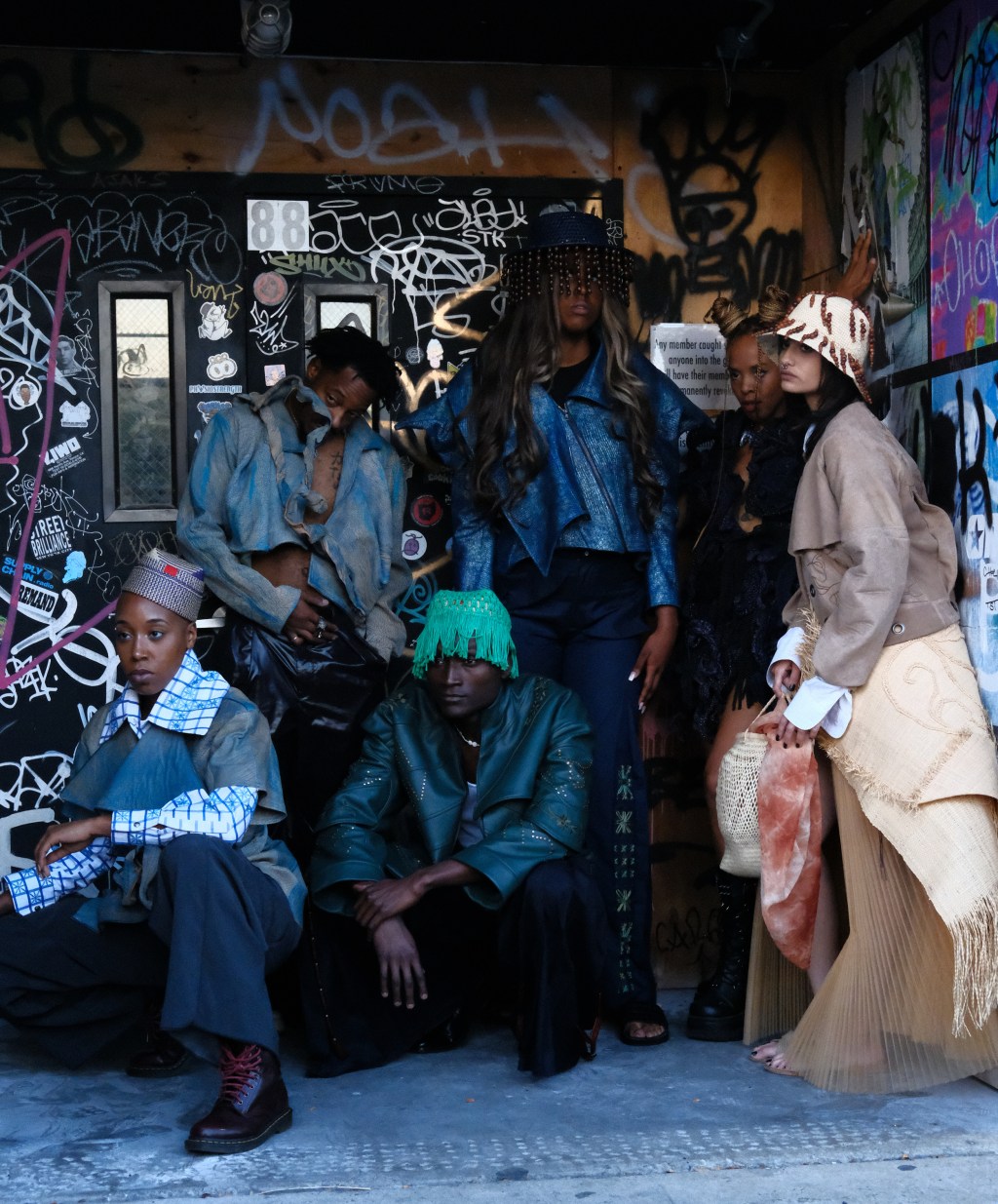
The fashion industry often struggles between making money and creativity. What’s good for commerce minimizes creativity, curiosity, and experimentation. London-based designer Fabiola Soavelo’s latest work, Unsettling Fihavanana, shows that storytelling, innovation, and commercial viability can go hand in hand.
“I find it frustrating that art, including fashion, becomes more valuable if the designer dies or experiences tragedy”, observes Soavelo, of Swiss-Malagasy heritage, who holds BA, Media Interaction and Design, ÉCAL (École Cantonale d’Art de Lausanne), Switzerland; MA Biodesign and Graduate Diploma in Fashion, Central Saint Martins, London; MFA, Parsons School of Design, New York. “The fashion industry often prioritizes spectacle over substance, focusing too much on a designer’s personal image rather than the meaning behind their work.” This feeling is shared by vanguards in fashion, like Soavelo, who incorporate cultural, environmental, and social influences in their designs.


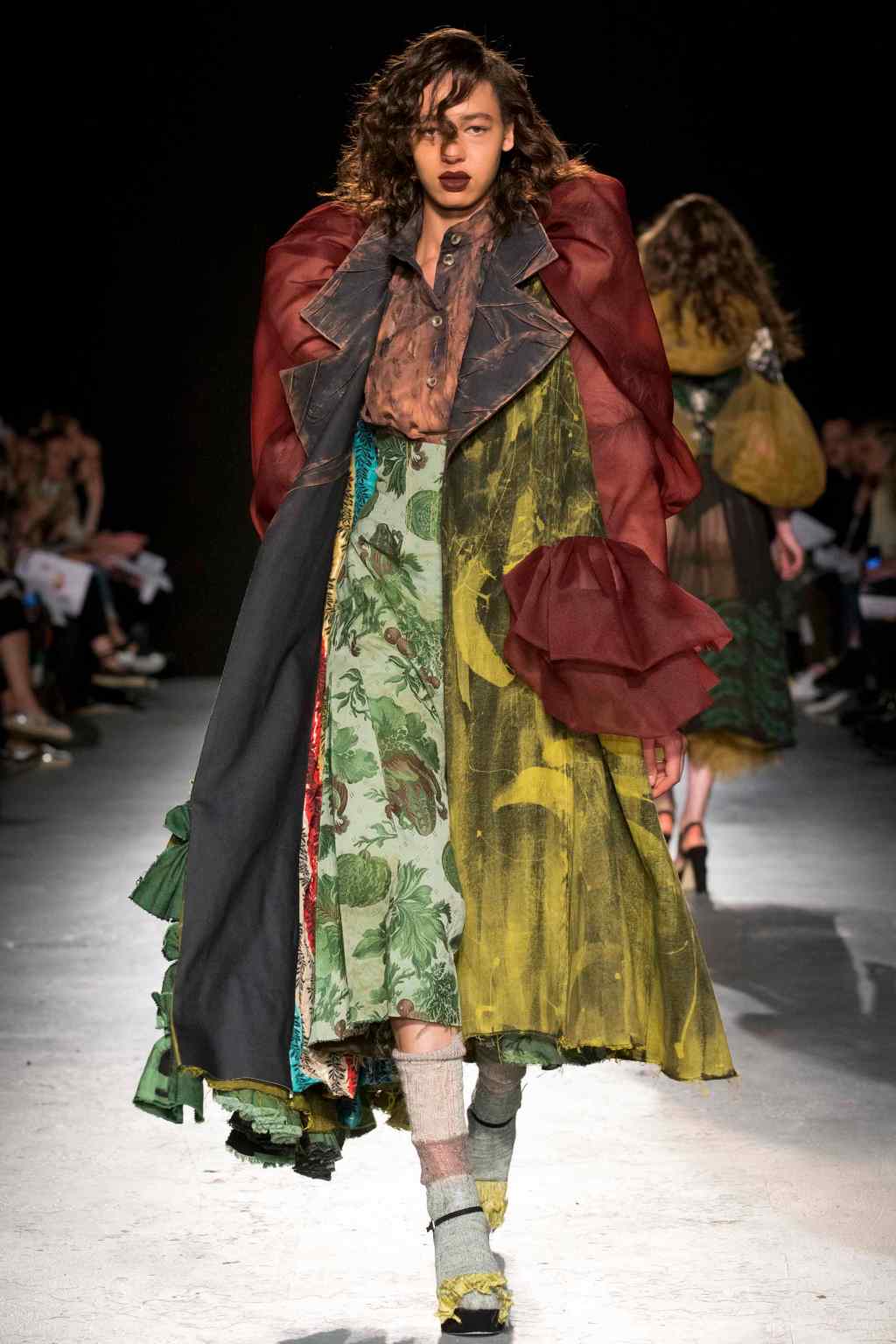
Soavelo skillfully blends textile traditions from Madagascar and Switzerland, using deadstock materials, raffia fibers, and complex shapes. Unsettling Fihavanana is based on a concept from Madagascar called “Fihavanana,” which highlights unity, harmony, and strong connections among people. Drawing inspiration from science fiction stories, such as Octavia Butler’s “Kindred” and Ridley Scott’s “Blade Runner,” which explore themes of race, identity, and memory, the collection looks closely at the duality of identity and its connection to collective memory,
“My dual heritage, Swiss and Malagasy, significantly influences my work,” Soavelo says. “While Swiss culture emphasizes minimalism, functionality, and social hierarchies, Malagasy culture possesses a strong historical connection to the body and ancestors. My designs sit at the intersection of these two worlds, illustrating how Madagascar’s colonial history and deep African heritage shape the perception of African descendants regarding their bodies.”
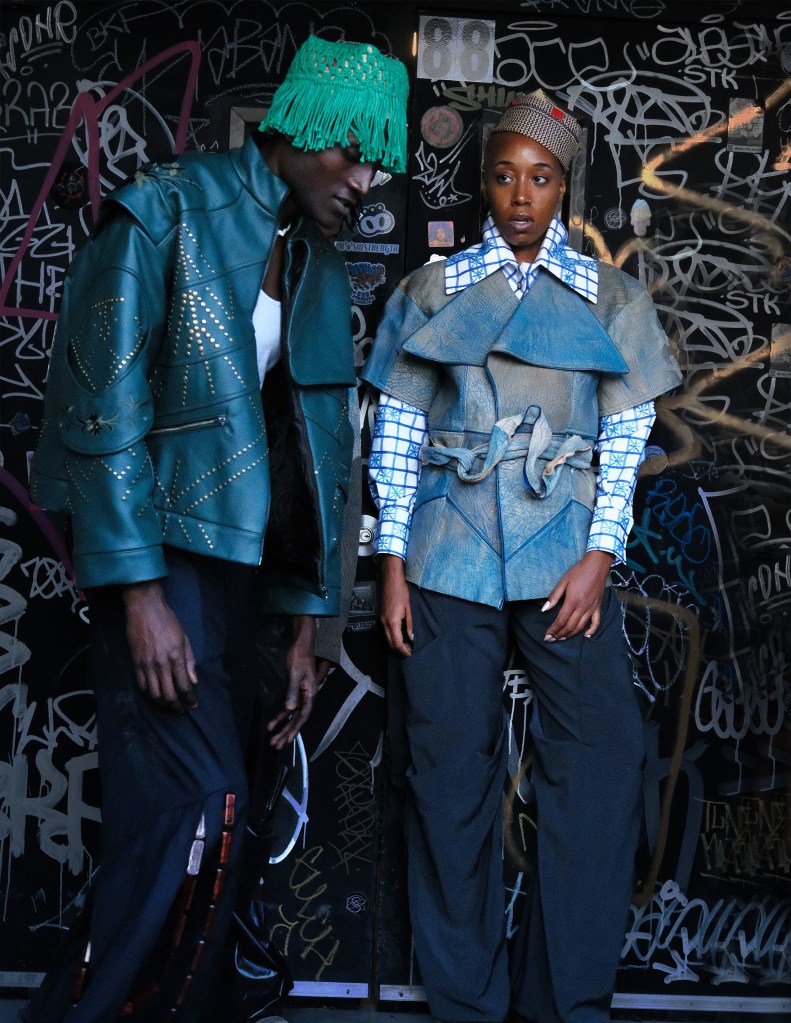
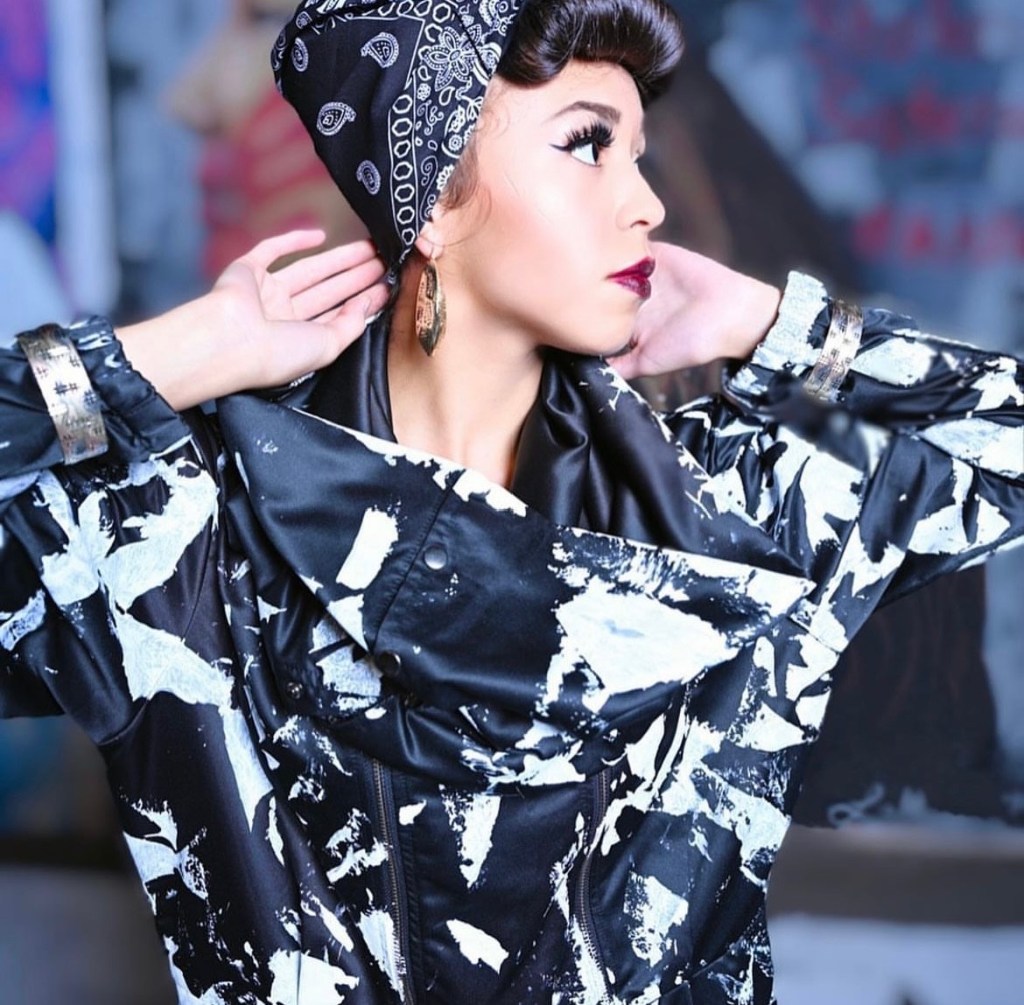
Additionally, the collection emphasizes Soavelo’s mixed heritage in today’s post-colonial, multicultural world. It examines how we view our bodies through time. A key feature is the deconstruction of the shoulders, making them look exaggerated, strange, and almost robotic, which challenges how viewers see the familiar. The headpieces are also important, inspired by Malagasy customs of balancing items on the head, treating the whole body as a tool. Through these artistic choices, the collection encourages viewers to think about their connections to memories—both real and imagined—and how those memories can shape the future.
Rhonda P. Hill: Fabiola, tell me about your upbringing. Where were you born?
Fabiola Soavelo: I was born in Nosy Be, a small island in the northwest of Madagascar. I lived there until I was 10, so I still have vivid memories and speak the language. My mother is Malagasy, from the Sakalava tribe, while my father is Swiss, from the Canton of Vaud, near Lausanne in the French-speaking part of Switzerland. We moved to Switzerland when I was 10, and I lived there until I was 24.
RP Hill: Why fashion? What interested you in designing fashion?
FS: I’ve always been fascinated by the human body—the muscles, movement, and how what we wear fuses with our identity, tastes, and actions. What drew me to fashion is the meaning behind every detail of what we wear. I love how clothes can accentuate the curves of the body, and I’m intrigued by the differences between male and female anatomy. I find myself observing people’s bodies—sometimes more than I should (haha)—not out of critique but in admiration. The body is a masterpiece, shaped by time and decisions. We may love or hate our bodies, but they are the only vessel we carry with us through life.

In today’s postcolonial society, the “white gaze” on the Black body is still present, representing the power imbalances and systemic racism that promote the idea of white superiority.
Fabiola Soavelo
RP Hill: Unsettling Fihavanana matters in today’s fashion system and is fascinating on many levels. First, it visually draws you in with the complexity of layered materials, textures, and shapes. Secondly, it’s rooted in Madagascar’s unique ecosystem. And there’s a socio-cultural message too. What inspired you to build this body of work, and what is your story?
FS: Unsettling Fihavanana is inspired by a complex concept from Madagascar, where “Fihavanana” emphasizes unity, harmony, and strong relationships between individuals. It’s a term that is often untranslatable but essentially treats all citizens on various scales as family. It’s about fostering a sense of belonging and valuing positive relationships in all aspects of life.
In today’s postcolonial society, the “white gaze” on the Black body is still present, representing the power imbalances and systemic racism that promote the idea of white superiority. My dual heritage, Swiss and Malagasy, heavily influences my work. While Swiss culture emphasizes minimalism, functionality, and social hierarchies, Malagasy culture has a strong historical connection to the body and ancestors. My designs sit at the intersection of these two worlds and show how Madagascar’s colonial history and deep African heritage shape how African descendants see their bodies.
The collection explores balancing traditional Malagasy crafts with natural fibers, like raffia, alongside large, dramatic silhouettes and smaller, more intricate designs. Looking back at my African roots, I often wonder how others in my position feel, and how the African/Black diaspora’s collective memory has been affected by the loss of a continuous historical narrative.

My memories from Madagascar are vivid, but sometimes they feel unreal because of the drastic change in lifestyle when I moved to Switzerland. It often felt like I was living a parallel life or that my earlier life was a dream—a feeling of “uncanny” memories.
Fabiola Soavelo
RP Hill: What are the science fiction influences in your work, and why?
FS: I draw on different sci-fi references to anchor my designs, particularly Octavia Butler’s “Kindred” and Ridley Scott’s “Blade Runner.” Both works explore the intersections of race, memories, and identity, as well as the idea of whether our memories are truly ours or shaped by collective experiences. As someone of mixed- race background, I connect with the hybrid characters in these sci-fi stories. My memories from Madagascar are vivid, but sometimes they feel unreal because of the drastic change in lifestyle when I moved to Switzerland. It often felt like I was living a parallel life or that my earlier life was a dream—a feeling of “uncanny” memories. I’m deeply interested in how memories can feel both familiar and foreign, particularly in the context of painful or significant life transitions, and how we interact with old memories to form new ones.
RP Hill: Now, let’s talk about the power of cloth. What is the importance of the materials used as they relate to a circular fashion system and your Malagasy heritage?
FS: I’m drawn to the idea that fabric, much like skin, evolves over time. The majority of my collection uses deadstock materials, particularly leather. These leather skins are considered unusable due to imperfections, but I see their irregularities as a strength. The texture of the skin, including its scars and details, is important to me because it grounds us in the natural world, reminding us that nothing is perfect, and everything evolves.

Craftsmanship is also a key element in my designs. Hand embroidery—Swiss and Malagasy—crochet, and weaving all play a role in how I bring my dual heritage into my work. Crafts represent cultural identity and tradition, creating a tangible connection between the maker and the final product. Growing up surrounded by raffia objects, I associate these materials with warmth and humanity, and I try to incorporate that feeling of nature and connection into my designs.

RP Hill: Fashion has the ability to reaffirm one’s sense of self and to transform identity and culture. How does Unsettling Fihavanana reflect today’s cross-cultural, post-colonial times of redefining identity?
FS: The collection emphasizes the duality of identity in today’s post-colonial world. It looks at how past and present intersect in our perception of the body. One key element is the way I deconstruct the shoulders, making them exaggerated, alien, and almost robotic—challenging the viewer’s perception of the familiar. Headpieces also play a significant role in the collection, inspired by the Malagasy tradition of carrying objects on the head, where the whole body becomes a tool. Through these elements, the collection asks the viewer to reconsider their relationship to memories, whether real or imagined, and how those memories shape the future.
RP Hill: Fabiola, your work is getting a lot of attention. What media, fashion events, and platforms has your work been featured in?
FS: It’s exciting to see more people taking an interest in my work than I ever expected! While it’s still relatively new on many platforms, I’ve already been featured in some notable media outlets and fashion events, including NYC Fashion Week, where I showcased my graduation project. Other notable shows include Culture Experience Fashion Show, Vanderbilt Fashion Week, and the Sankofa African Fashion Show at Princeton. My work has also been featured in platforms such as London Fashion Crossover, 1 GRANARY, ColorBloc Magazine, Artells Magazine, Vogue USA and China (for NYC Fashion Week), Bazaar Italia, Fashion United, FIB, Hypebeast and Elle Italia magazine.
The response has been very encouraging, and I’m excited to see how it continues to grow.
The industry should prioritize meaningful engagement … and focus more on innovation, sustainability, and authentic storytelling rather than just chasing trends and using famous celebrities to call it fashion.
Fabiola Soavelo
RP Hill: How do you feel about the fashion industry, and it’s OK to be candid? What can they improve on?
FS: I find it frustrating that art, including fashion, becomes more valuable if the designer dies or experiences tragedy.
The fashion industry often prioritizes spectacle over substance, focusing too much on a designer’s personal image rather than the meaning behind their work. There’s also a tendency for big fashion houses to play it safe, recycling old ideas instead of taking creative risks. Additionally, while progress has been made in inclusivity and sustainability, it sometimes feels performative.
The industry should prioritize meaningful engagement with these issues and focus more on innovation, sustainability, and authentic storytelling rather than just chasing trends and using famous celebrities to call it fashion.
RP Hill: I agree!
RP Hill: With your amazing educational background and talent, what’s next for you?
FS: I want to stay in fashion but expand into multiple platforms and mediums. I’m interested in exploring the sculptural side of fashion—pushing the boundaries of thought while creating more wearable, dreamlike, and free-flowing pieces. I don’t see myself working for a big fashion house for the moment. But I am really interested in evolving on the cinematography side and storytelling in exhibitions.
RP Hill: There must be a reason you chose London as your base. What are your plans, and what challenges do you see ahead?
FS: I’m grateful to have lived in three major fashion cities: Paris, New York, and now London. It’s no secret that connections are key to securing a stable job in fashion, which often means sacrificing time, friendships, and important events. New York was incredible, but I found it easier to build my community in Europe, as I’m closer to family and more familiar with the European way of life.
As for London, I can’t fully explain it, but it just felt like the right place to be. There’s something about the city—its creativity, underground energy, and freedom—that is both addictive and inspiring.

Congratulations Fabiola! Keep pushing the boundaries and creating substantive work, using fashion as a storyteller.
A selection from Unsettling Fihavanana is exhibited in “FACT: fashion + art construct tomorrow”, Sheehan Gallery at Whitman College, Walla Walla, Washington, USA, 28 January—4 April 2025.
Featured Image: Unsettling Fihavanana, Fabiola Soavelo, designer. Photo: Courtesy of Fabiola Soavelo
 E D G E