
In a world of constant flux, fashion exhibitions can act as a cultural anchor, providing a historical mirror, a catalyst for dialogue, and a space for reflection on pressing societal issues. The Barbican’s Dirty Looks: Desire and Decay in Fashion, which explores the complex interplay between aesthetics and societal values; Dress, Dreams, and Desire: Fashion and Psychoanalysis at The Museum at FIT, a groundbreaking exhibition that delves deep into the intertwined cultural histories of fashion and psychoanalysis; the RISD Museum Liz Collins: Motherlode, showcasing innovative textile artistry and its intersections with contemporary themes; and the North American debut of Andrew Gn: Fashioning the World at Peabody Essex Museum, which highlights Gn’s legacy and trans-cultural influences in modern fashion, are featured exhibitions in the Fall 2025 lineup of “Must See,” meeting the vital role fashion plays in reflecting societal narratives and prompting critical discourse in both academic and public spheres.
These exhibitions are categorized into two themes: Dirty Fashion, Dreams, and Desire, and Retrospective and Cross-culturalism, followed by a full list of “Must See” exhibitions containing pertinent links and dates.
Dirty Fashion, Dreams, and Desire
At London’s Barbican, Dirty Looks: Desire and Decay in Fashion is a bold new exhibition that dives into fashion’s ongoing love affair with dirt, imperfection, and decay. Showcasing over 100 looks from 60 iconic and emerging designers across the globe, the exhibition reveals how soiled trainers, rusted dresses, and bog-inspired aesthetics have long challenged traditional ideas of beauty, luxury, and modernity.

From the rebellious roots of the 1980s—with pioneers like Vivienne Westwood and Rei Kawakubo—to the rust-infused garments of Hussein Chalayan, fashion has consistently used decay as a tool for resistance and renewal. Today’s designers continue this legacy, turning to mud, soil, and waste to critique mass consumption, celebrate earth-bound cycles, and imagine regenerative futures.
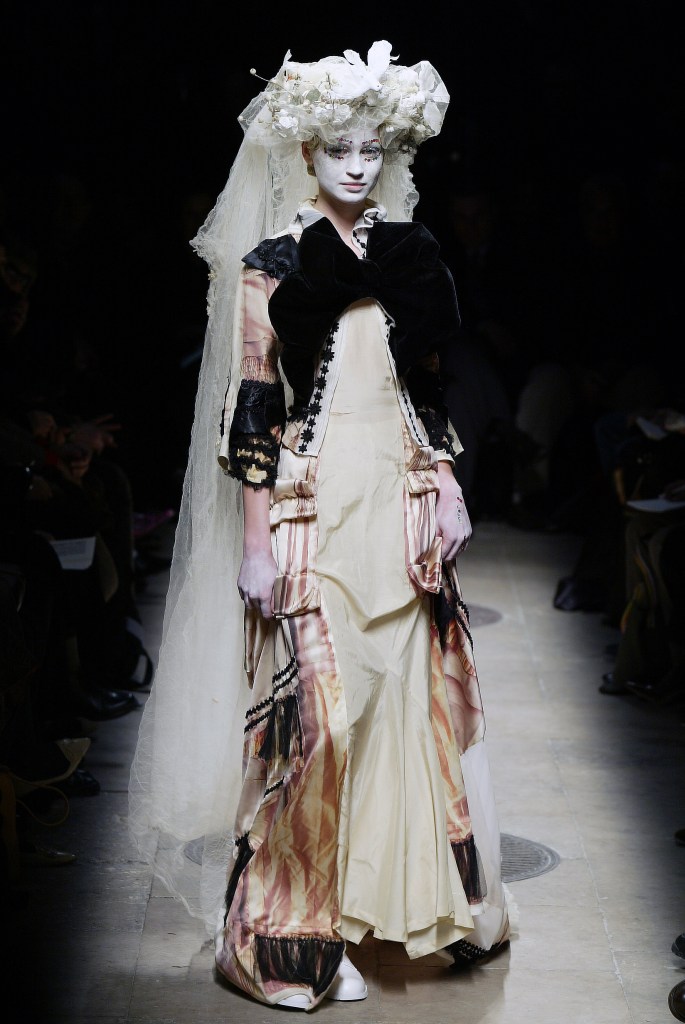

Thematically curated across two floors, Dirty Looks explores not just the visual appeal of ruin, but its deeper social, political, and spiritual meanings—touching on colonialism, sustainability, and identity. Highlights include new commissions by cutting-edge designers like Paolo Carzana and Michaela Stark, who draw inspiration from folklore, queerness, and eco-conscious craft.
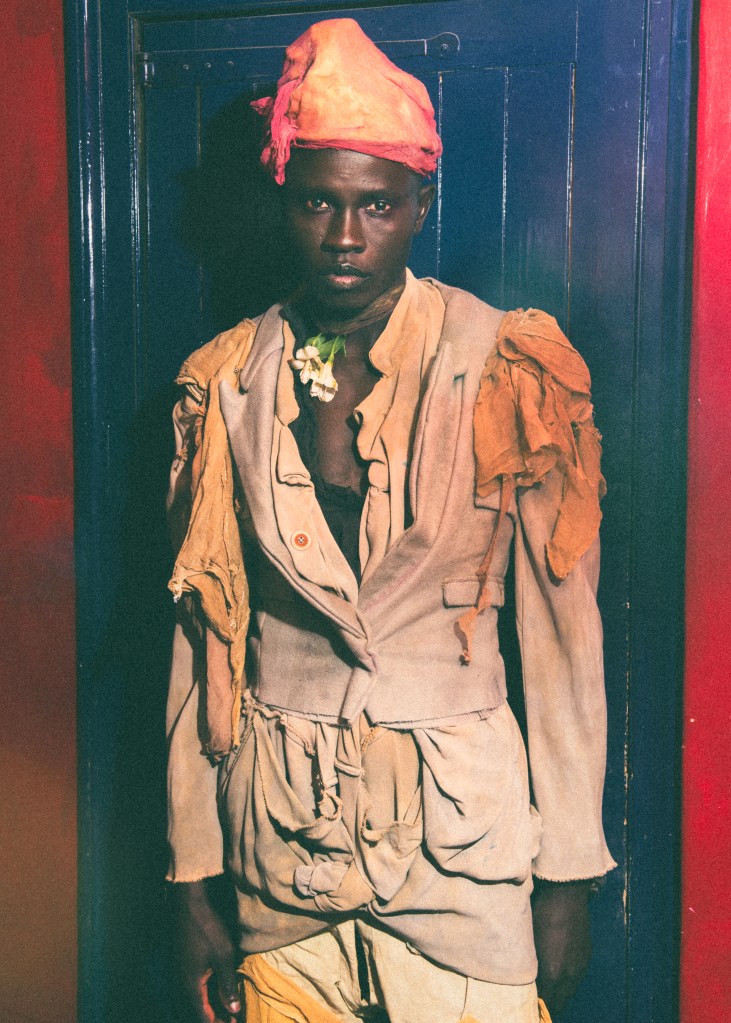
Bubu Ogisi’s recent work for IAMISIGO, a Nigerian fashion label, focuses on using natural materials, such as clay, mud, and raffia, to reconnect with the land affected by colonialism. Solitude Studios incorporates cloth soaked in Danish bogs, linking their designs to the bogs’ historical significance for fertility and good luck in the Iron Age. In this ‘sacrificial’ act, the fabric isn’t just dyed by the earth; it is consumed by the very microorganisms that thrive within the bog, creating an intimate union between creation and decay.

Shanay Jhaveri, Head of Visual Arts, Barbican, said: “Dirty Looks signals the Barbican’s bold return to fashion as a vital strand of our visual arts programming—one that recognizes fashion not only as a form of artistic expression, but also as a lens through which to examine cultural, environmental and political urgencies. This exhibition brings together a remarkable breadth of global designers who are radically reshaping what fashion can mean and do today. With its focus on decay, renewal and the aesthetics of imperfection, Dirty Looks invites us to reconsider beauty, value and the regenerative power of making in a world in flux.”
With immersive gallery design by Studio Dennis Vanderbroeck, the exhibition promises an atmospheric journey through fashion’s dirtiest—and most provocative—ideas.
On view 25 September 2025 – 25 January 2026
Dress, Dreams, and Desire: Fashion and Psychoanalysis, curated by Dr. Valerie Steele, director of The Museum at FIT, explores how psychoanalytic theories have shaped fashion’s understanding of sexuality, identity, and the unconscious. Developed over five years, the exhibition and accompanying book examine key concepts like the mirror stage, skin ego, desire, and sexual difference.

Fashion is a primary lens through which we see ourselves—and how others see us. Far from being superficial, fashion can be regarded as a ‘deep surface’ that communicates our unconscious desires and anxieties, with none of us fully aware of the messages we send.
-Dr. Valerie Steele, MFIT Director and Chief Curator
Featuring around 100 garments by designers such as Chanel, Kawakubo, McQueen, Schiaparelli, Versace, Wales Bonner, Westwood, and Yamamoto, the exhibition is organized both chronologically and thematically. It begins with Freud’s early ideas—his views on fashion as “narcissistic” and “exhibitionistic”—and moves through evolving psychoanalytic interpretations in the 20th century. Figures like the British psychoanalysts J.C. Flügel and Joan Riviere offered more nuanced takes on femininity and adornment, while later feminist and LGBTQ+ thinkers reframed psychoanalysis as a tool for liberation rather than oppression.
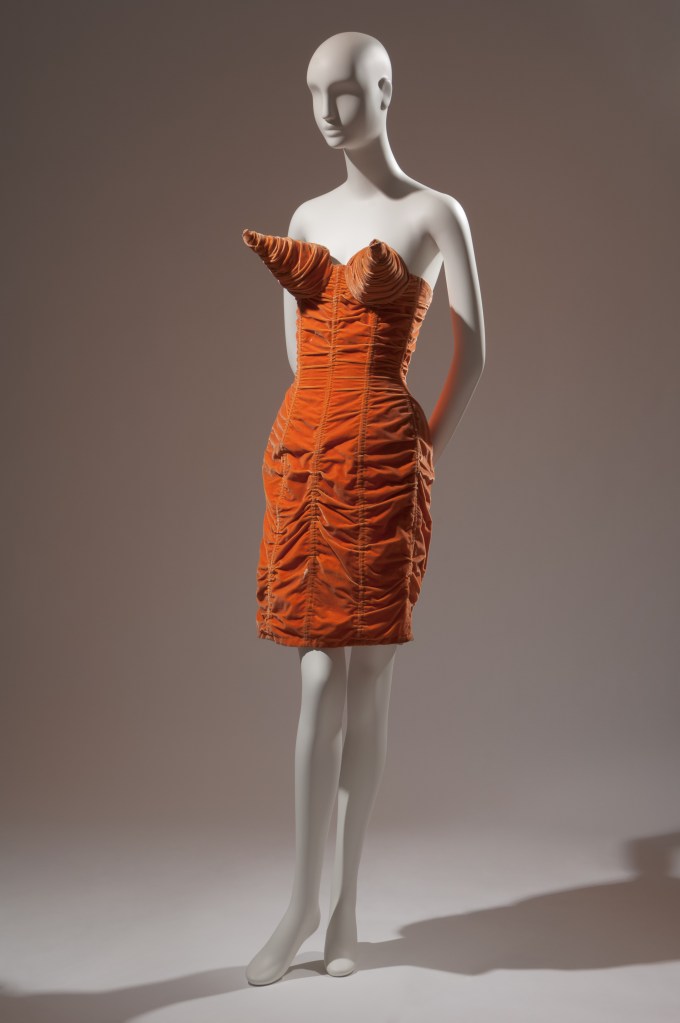
Thematic sections explore fashion as it relates to dreams, desire, and death—from Freud’s pleasure principle—visualized by Moschino’s chocolate bar dress, the drive to seek pleasure and avoid pain, to Carl Jung’s archetypes, and from Rick Owens’s “priestesses of longing” to Jun Takahashi’s symbolic contrasts of Eros (life and love) versus Thanatos (death and destruction). The exhibition also delves into identity and body image, referencing Jacques Lacan’s mirror stage and Didier Anzieu’s skin ego, suggesting clothing acts as both second skin and psychological armor. It concludes by examining fetishism, desire, and today’s embrace of nonbinary and gender-fluid fashion.


On view 10 September 2025 – 4 January 2026.
Retrospective and Cross-culturalism
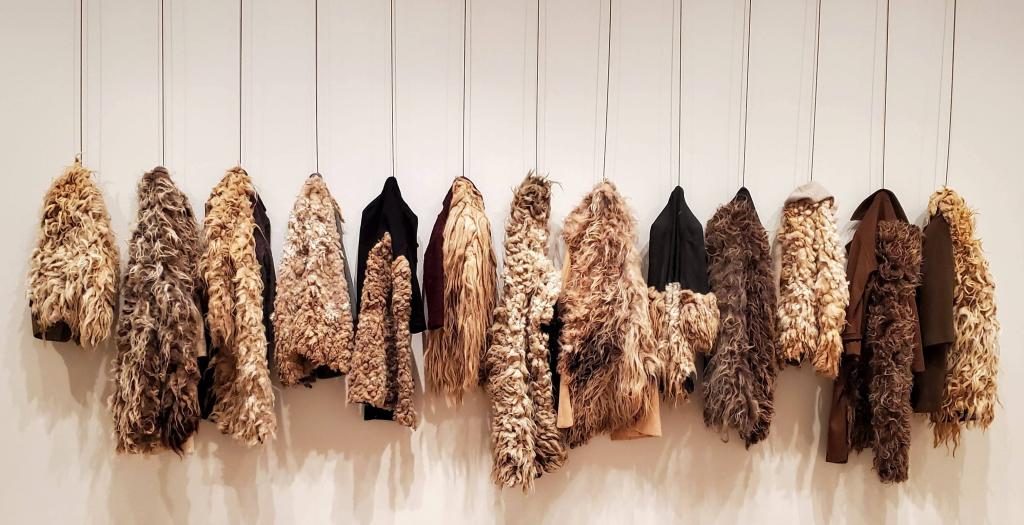
The RISD Museum presents Liz Collins: Motherlode, the first U.S. survey of the trailblazing artist’s boundary-pushing work. Currently on view through January 11, 2026, the exhibition spans more than 30 years of Collins’ vibrant career across fine art, fashion, and design, featuring over 80 works—textiles, installations, fashion pieces, drawings, performance ephemera, and more.

Collins, a RISD alum, is known for her bold, experimental approach to fiber and textiles, and her deep commitment to Queer feminist creative practice. Her radical approach has firmly asserted the power of these elements to hold and convey meaning, dismantling notions of textiles as “lesser art.” Motherlode highlights everything from her early knitwear designs to her standout fashion pieces like the Samurai Coat, 2001, and monumental woven works like Rainbow Mountain Weather (2024), and includes a salon-style showcase of Queer artists curated with RISD students in an inclusive, conversational space.


The show is curated by Kate Irvin and accompanied by Liz Collins: Motherlode, the artist’s first monograph, with contributions from leading thinkers like art historian and critic, Julia Bryan-Wilson, historian Glenn Adamson, and Eileen Myles.
For Collins, RISD is both a launchpad and home base: “It’s a tremendous honor to be showing my life’s work at a place so essential to who I am.”
Collins’ work is also exhibited in the “Labor” section of MoMA’s Woven Histories: Textiles and Modern Abstraction.
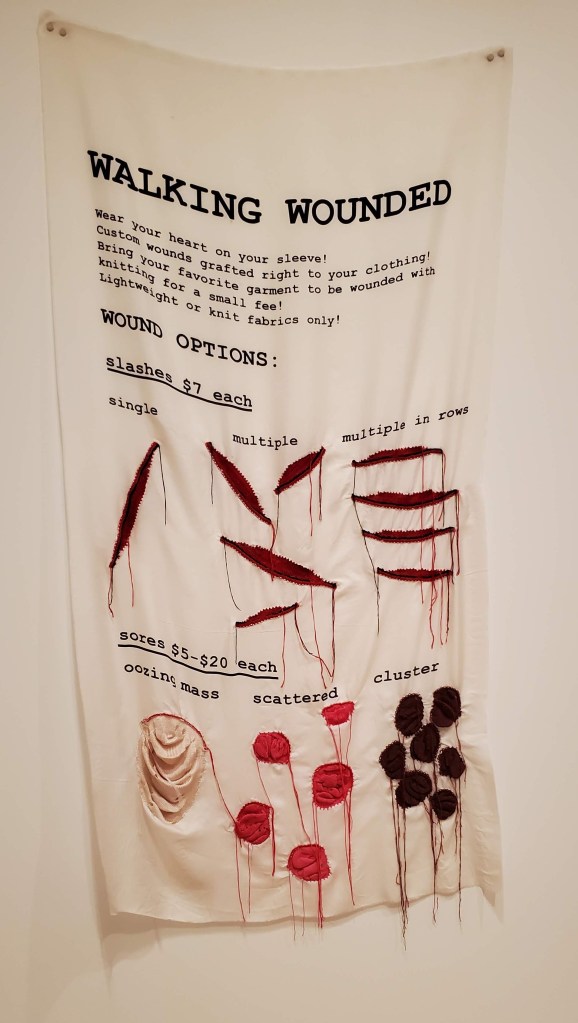
The Walking Wounded, 2011
Printed silk, cotton, and rayon
Museum of Art, Rhode Island School of Design, Providence

“Vein Bustier”, 1999, cotton, wool, rayon, and cellophane
Museum of Art, Rhode Island School of Design, Providence. Gift of Irene Lawrence and Barnaby Evans
The Peabody Essex Museum (PEM) invites fashion lovers and art enthusiasts alike to experience Andrew Gn: Fashioning the World, a breathtaking exhibition that explores the bold vision and legacy of Singaporean designer Andrew Gn. Making its North American debut, the show offers a rare glimpse into the mind of one of the most influential figures in contemporary fashion.

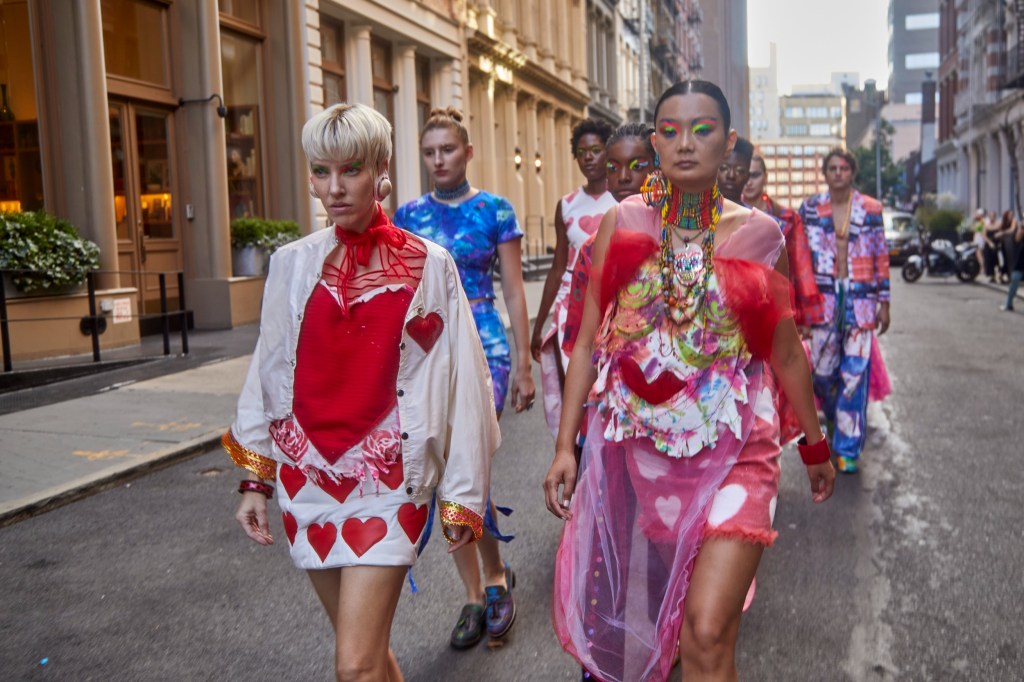
Showcasing nearly 100 works—including lavish garments, accessories, original illustrations, and digital media—Fashioning the World is more than a display of beautiful clothes. It’s a celebration of Gn’s deep connection to both Eastern and Western design traditions. The exhibition is organized into thematic sections that highlight the designer’s signature blend of Asian decorative arts, Western aesthetics, and art history.
Born in Singapore in 1966, Gn studied at world-renowned institutions such as Central Saint Martins (London), Parsons School of Design (New York), and Domus Academy (Milan). He honed his craft under the legendary Emanuel Ungaro before launching his own fashion house in Paris in 1995. In nearly three decades, Gn would go on to create over 80 collections and more than 10,000 meticulously crafted ensembles—many inspired by his Asian heritage and love of ornate detail.
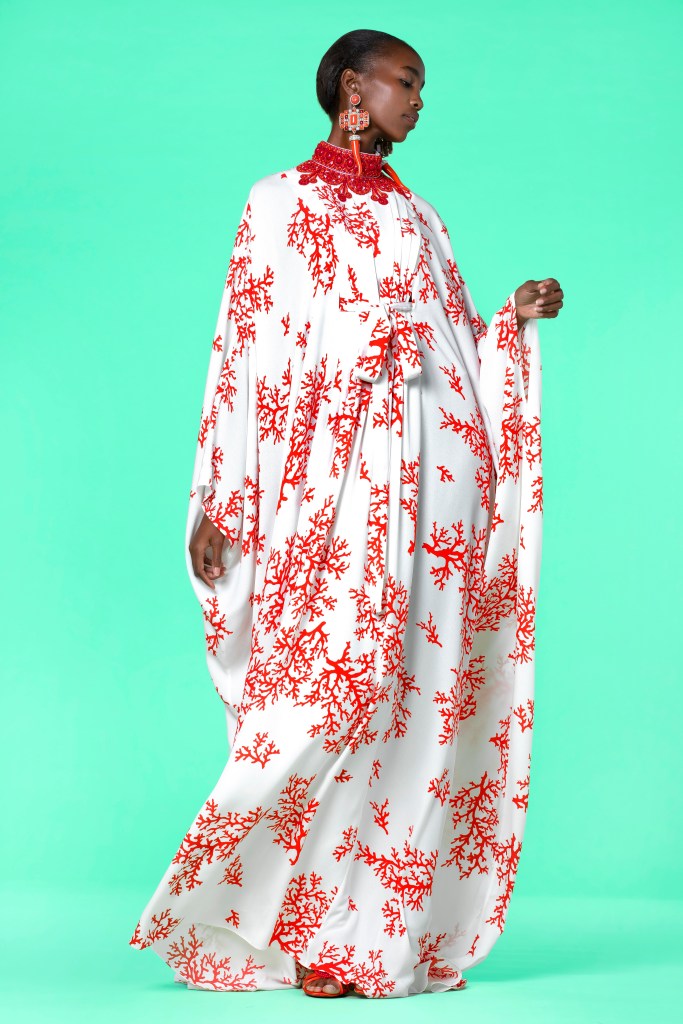
Known for his opulent fabrics, jewel-like embellishments, and masterful use of color, Gn’s style is often described as “demi-couture”—ready-to-wear pieces infused with the quality and care of haute couture. Everything from fabric design to embroidery and buttons is often created in-house, reflecting Gn’s all-encompassing approach to fashion as both craft and art form.

“Gn’s presentations are designed to engage audiences with wonder, and his deliberate selection of motifs and art historical references reflects his own spirit of inclusivity, says Petra Slinkard, PEM’s Director of Curatorial Affairs and The Nancy B. Putnam Curator of Fashion and Textiles. “Gn does more than design clothing; he promotes an aesthetic and an ideology that celebrates cross-cultural exchange, beauty and technical precision.”
Gn’s Peggy Guggenheim collection marks a turning point in his aesthetic. He moved away from ornate embellishments to more streamlined motifs, drawing inspiration from 20th-century modernist artists like Gio Ponti, Carlo Mollino, Fernand Léger, Georges Braque, and Pablo Picasso.
Andrew Gn, sleeveless chartreuse
and synthetic pearl grey silk
georgette top with Cubist-inspired
insets, white cotton jacquard
patchwork skirt with black
grosgrain trim, and black belt with
front metallic ornament, 2014.
Promised gift of Andrew Gn.
Peabody Essex Museum. Photo
courtesy of House of Andrew Gn.

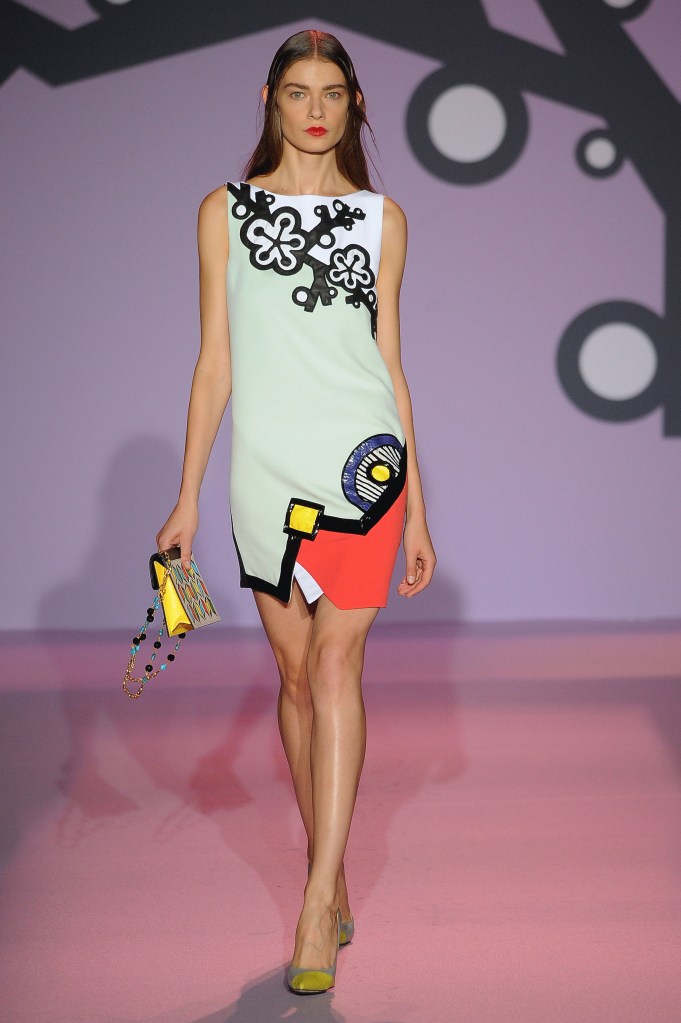
Gn visited Kyoto as a teenager and absorbed Tokyo’s street styles as an adult, blending these influences with the bold colors and simple geometric forms of the 1980s Memphis Design movement from Italy.
Andrew Gn, white, mint, and
synthetic coral patchwork triple
crepe sleeveless shift dress with
cherry blossom-inspired and
Memphis-inspired appliqués, 2015.
Promised gift of Andrew Gn.
Peabody Essex Museum. Photo
courtesy of House of Andrew Gn.
With the support of longtime business partner Erick Hörlin du Houx, Gn built one of Paris’s few financially independent fashion houses. His creations have been worn by some of the most influential women in the world, including Queen Rania of Jordan, the Princess of Wales, Beyoncé, Emma Stone, Lady Gaga, Janelle Monáe, and Kareena Kapoor Khan.
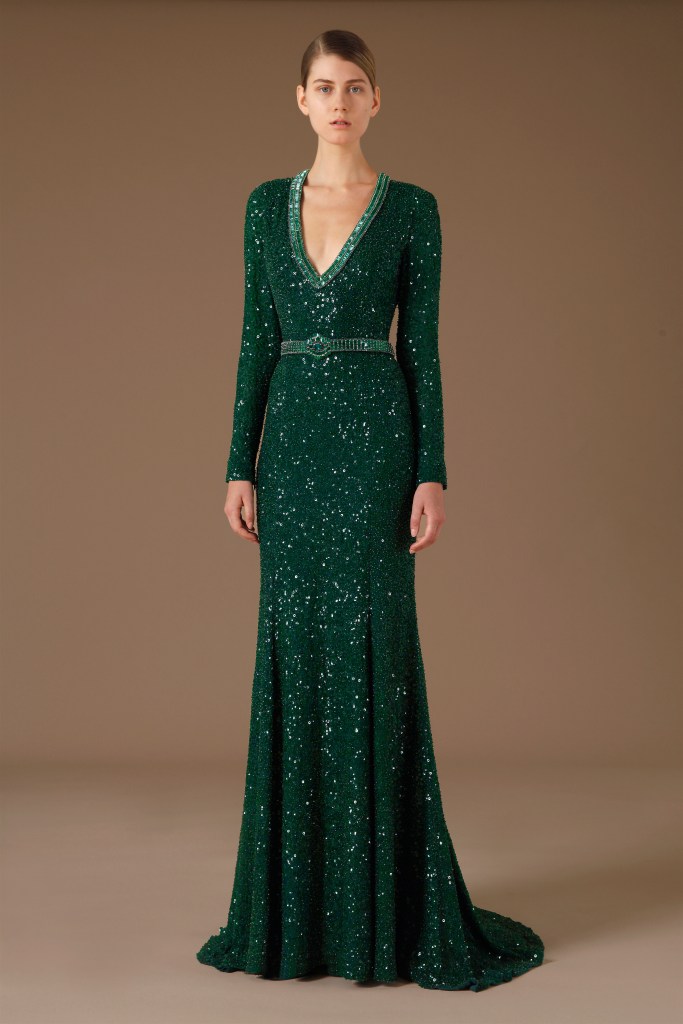
Promised gift of Andrew Gn. Peabody Essex Museum. Photo courtesy of House of Andrew Gn.
Reenvisioned at PEM from a 2023 retrospective in Singapore, and organized by PEM in collaboration with the Asian Civilisations Museum (ACM).
On view at PEM 13 September 2025 – 16 February 2026.
Must See Exhibitions, Closing Soon
- Woven Histories: Textiles and Modern Abstraction, Museum of Modern Art (MoMA), New York; 20 April – 13 September 2025.
Fall 2025 MUST See Exhibitions
- Liz Collins: Motherlode, RISD Museum, Providence, RI; 19 July 2025 – 11 January 2026
- A Meeting of Cultures: Fashioning North Africa, Kent State University Museum, Kent, OH; 05 September 2025 – 10 May 2026
- Dress, Dreams, and Desire: Fashion and Psychoanalysis, The Museum at FIT, New York, 10 September 2025 – 04 January 2026
- Andrew Gn: Fashioning the World, Peabody Essex Museum, Salem, MA; 13 September 2025 – 16 February 2026
- Dirty Looks: Desire and Decay in Fashion, Barbican, London; 25 September 2025 – 25 January 2026
- André Leon Talley: Style Is Forever, SCAD FASH Museums, Atlanta and Savannah, GA; 15 October 2025 – 01 March 2026
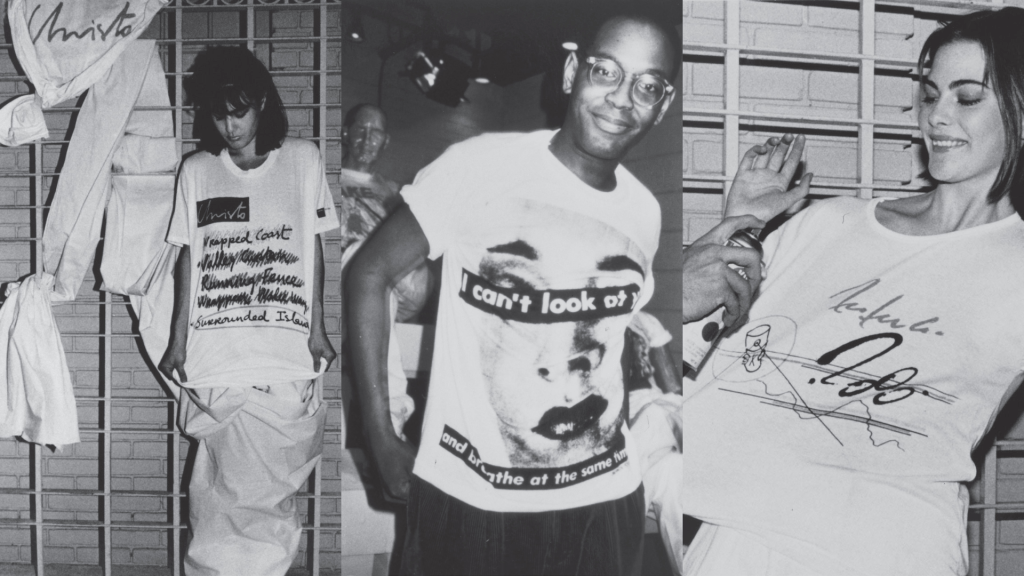
- Collecting Fashion: From T-Shirts to Haute Couture, Textile Museum St. Gallen, St Gallen, Switzerland; 24 October 2025 – 25 May 2026
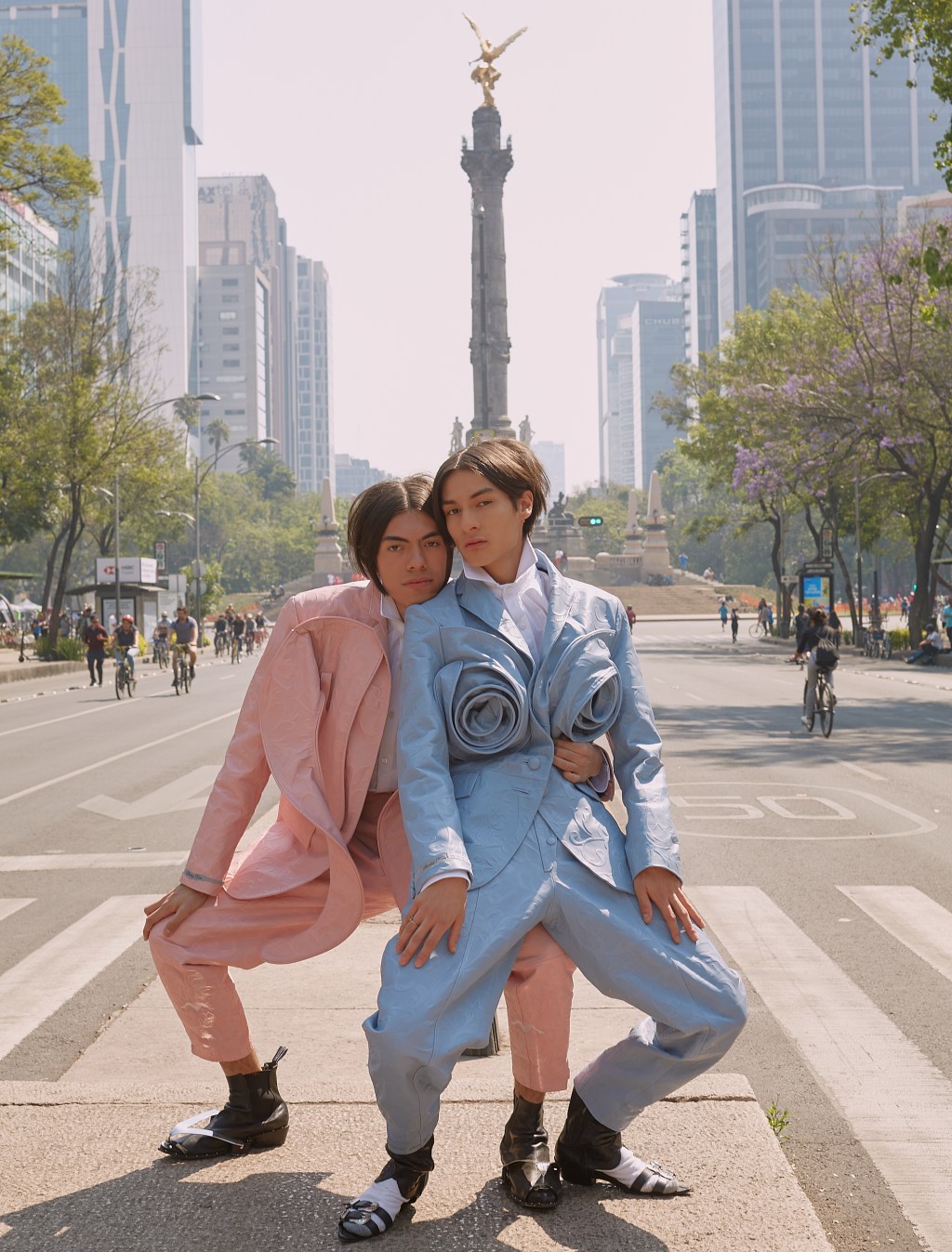
Feature image: Mamado pantsuit by Bárbara Sánchez-Kane as featured in “Amantes Encontrados” for Vogue Italia, 2019. Photo by Paola Vivas. Styling by Chino Castilla. Models: Emiliano and Samuel for Güerxs Agency.
 E D G E